You know that feeling when you finally get the thing you’ve been wanting forever, and then… meh?
Last year, I saved up for months to buy this fancy espresso machine. I’m talking the kind with all the bells and whistles, the one that would supposedly transform my mornings into a barista-level coffee experience. For exactly three weeks, I was obsessed. I made lattes for everyone who walked through my door. I perfected my foam art (badly, but still). Then one Tuesday morning, I walked right past it and grabbed instant coffee instead.
What happened? The same thing that happens to all of us: hedonic adaptation kicked in.
If you’ve ever wondered why happiness fades after a promotion, why the excitement of a new relationship mellows out, or why that dream vacation feels like ancient history two weeks after you’re back, you’re asking the right questions. And lucky for us, scientists have been obsessing over these questions for decades.

Understanding Hedonic Adaptation: Why Happiness Fades So Predictably
Let me introduce you to the most annoying feature of your brain: hedonic adaptation. Basically, it’s your mind’s tendency to quickly adjust to positive (or negative) changes and return you to your baseline happiness level. Think of it like emotional gravity. You can jump really high, but eventually, you’re coming back down to earth.
The term sounds fancy, but the concept hit mainstream psychology in 1978 when researchers Brickman, Coates, and Janoff-Bulman published something that made everyone go “wait, what?” They studied lottery winners. People who’d won life-changing money. The dream, right?
Here’s the kicker: a year after winning, these lottery winners weren’t significantly happier than a control group of regular people. They even found less pleasure in everyday activities like chatting with friends or eating breakfast. Meanwhile, people who’d become paraplegic after accidents? They weren’t nearly as unhappy as you’d expect after some time had passed. Everyone had adapted.
Honestly, I laughed when I first read that study. Not because it was funny, but because it was so absurdly true. I’d just gotten a raise I’d been angling for, and I was already stressed about the next one.
This research basically exploded what we thought we knew about happiness. Money, success, that perfect life we’re all chasing? Turns out it’s not the golden ticket we thought it was.
Enter the Hedonic Treadmill (Or Why You’re Running but Not Getting Anywhere)
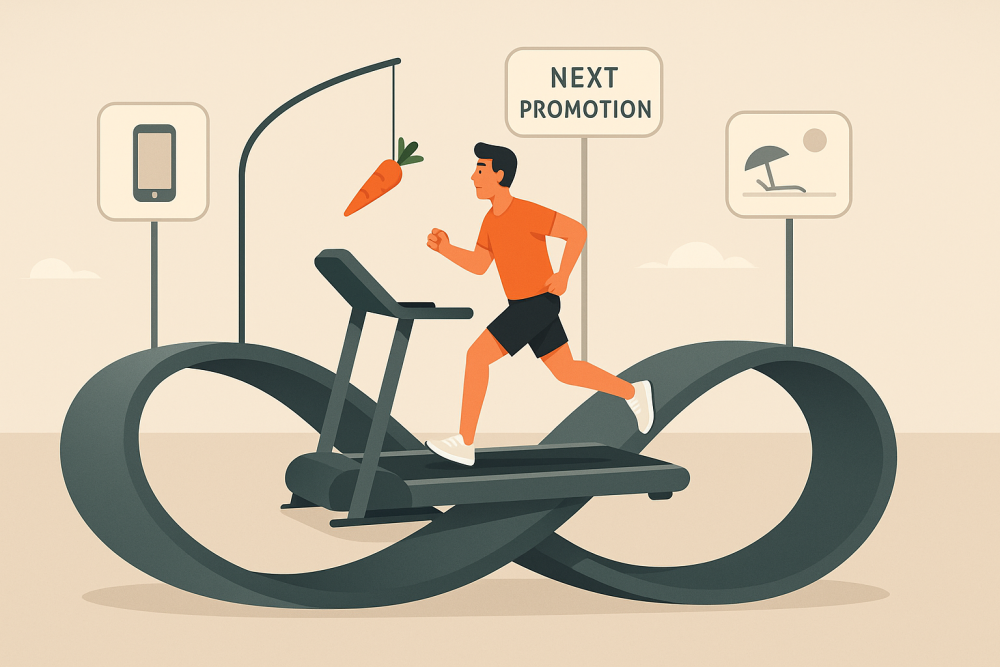
Two psychologists, Brickman and Campbell, had actually coined the term “hedonic treadmill” back in 1971, but it really took off after that lottery study. The metaphor is perfect. You’re on a treadmill, working hard, sweating buckets, but when you look around, you’re still in the same spot. That’s what happens when we chase happiness through external achievements or stuff.
Daniel Kahneman, who won a Nobel Prize for his work (in economics, funny enough, not psychology), spent years studying this phenomenon. He found that people are terrible at predicting what will make them happy and for how long. We think the promotion will change everything. We think the new house will solve our problems. We think if we just had that relationship, that income, that body, we’d finally be satisfied.
Spoiler alert: we won’t.
But wait, before you throw your hands up and decide nothing matters, there’s good news. Sonja Lyubomirsky, a happiness researcher at UC Riverside, discovered something game-changing. She found that while 50% of our happiness is genetically determined (thanks, Mom and Dad), and only 10% comes from life circumstances (job, relationship status, income), a full 40% is under our control through intentional activities.
Forty percent! That’s huge. That’s the difference between feeling stuck on the hedonic treadmill and feeling genuinely alive. That’s your opportunity to make happiness last longer than the typical few weeks or months.
Why Evolution Wired Us This Way (Blame Your Ancestors)
Okay, quick evolutionary psychology lesson. This adaptation thing? It kept your ancestors alive.
Imagine you’re a caveperson who just found an amazing new cave. Waterfront property, southern exposure, no bears. If you got too comfortable, too satisfied, you might miss the signs of danger. That rustle in the bushes? Probably nothing, you think, admiring your cave paintings. And then you get eaten.
The ancestors who survived were the ones who adapted quickly to good fortune and kept striving, kept watching, kept wanting more. They passed on their “never quite satisfied” genes to us. In a world where we needed to constantly search for food, shelter, and safety, hedonic adaptation was a feature, not a bug.
But now? When the biggest threat most of us face is a passive-aggressive email from Janet in accounting? This adaptation mechanism can feel more like a curse. We achieve something amazing, feel great for about five minutes, then start eyeing the next mountain. It’s exhausting.
And here’s the really wild part: this same wiring that kept our ancestors alive now drives our entire consumer culture. Think about it. Why do we need a new iPhone every year when last year’s works perfectly fine? Why does TikTok keep us scrolling for hours, always chasing the next dopamine hit? It’s that ancient “more, better, different” programming, hijacked by modern technology.
I once tried to use the same phone for three years. THREE YEARS. Friends looked at me like I was living in the stone age. But you know what? After the first month of having any new phone, the excitement is gone anyway. We’re all just cavemen with Wi-Fi, constantly seeking the next shiny thing that will finally, definitely, absolutely make us happy. (Narrator: It won’t.)
Where the Hedonic Treadmill Shows Up in Real Life
Let’s get specific about how this plays out in your actual, everyday existence. Because once you start seeing it, you can’t unsee it.
Relationships: From Butterflies to “Did You Take Out the Trash?”
Remember the beginning? When their text notification made your heart race? When you’d spend hours getting ready for a date? When even grocery shopping together felt like an adventure?
Fast forward eighteen months. You’re scrolling your phone while they’re talking about their day. Date night is Netflix and whatever’s in the fridge. And those cute quirks? They’re just quirks now. Or maybe they’re annoying.
This doesn’t mean you picked wrong. It means you’re human. Our brains literally adapt to the chemical cocktail of new love. The dopamine and norepinephrine that made you feel high? Your brain adjusts, and tolerance builds up, just like with any drug.
The couples who make it aren’t the ones who never adapt. They’re the ones who understand that deep, companionate love is different from that early passion. And honestly? It can be better. But you have to know how to cultivate it and how to make happiness last longer in your relationship, not just chase that initial high.
Career Wins: The Promotion That Stopped Mattering
I have a friend, Marcus, who spent three years gunning for a senior director position. Three years! He worked weekends, played the politics, did everything right. When he finally got it, he called me from the parking lot, literally crying with joy.
Six months later, we’re having lunch, and he’s complaining about executive leadership, worried about making VP, stressed about his team’s performance metrics. I reminded him about that parking lot phone call. He looked at me blankly. He’d completely forgotten how much this job had meant to him.
Whether it’s the corner office, the six-figure salary, or the fancy title, we adapt scary fast to professional achievements. And then we look up at the next rung of the ladder, right back on that hedonic treadmill.
The Stuff We Buy: From “I Need This” to “What Is This?”
True confession: I have a guitar in my closet. A beautiful, expensive guitar that I was absolutely certain would change my life when I bought it five years ago. I was going to be the person who plays guitar! I practiced for exactly one month. Now it’s a very expensive wall decoration that I feel guilty about every time I see it.
We all have our versions of this. The exercise bike that becomes a clothing rack. The kitchen gadget that was going to revolutionize meal prep. The designer bag that now sits in your closet while you grab the same old tote.
This is hedonic adaptation at its most visible. The thing that you researched for weeks, saved up for, finally bought? Give it three months. It’ll just be another thing you own. Understanding why happiness fades from material purchases can save you thousands of dollars and countless hours of wanting. The hedonic treadmill is especially vicious with possessions because there’s always a newer, better, shinier version coming out next year.
How to Make Happiness Last Longer: Science-Backed Strategies That Actually Work
Alright, enough with the depressing reality checks. Here’s where it gets good. Because while you can’t completely stop hedonic adaptation (sorry), you can slow it way down. You can make happiness last longer. And the research on this is surprisingly robust.
Gratitude: Your Secret Weapon Against Taking Things for Granted
I know gratitude practices can sound a bit… woo-woo. Like something your overly positive aunt posts about on Facebook. But Robert Emmons at UC Davis has spent his entire career studying this, and the data is undeniable.
In one study, people who kept weekly gratitude journals exercised more regularly, reported fewer physical symptoms, felt better about their lives, and were more optimistic about the upcoming week compared to people who recorded hassles or neutral life events. The gratitude group even slept better.
Here’s how to actually do this without feeling cheesy:
The Text Method: Every night, text a friend three good things from your day. Make it an exchange. They send theirs back. It takes two minutes and keeps you accountable. Plus, you’re strengthening a friendship.
The Specificity Trick: Instead of “grateful for my health,” try “grateful that my back didn’t hurt during today’s walk.” Instead of “grateful for my partner,” try “grateful for how they made me laugh with that terrible pun at dinner.” Specificity prevents adaptation.
The Surprise Journal: Only write when something genuinely good happens. This prevents it from becoming a chore and keeps it special.
Martin Seligman found that doing the “Three Good Things” exercise for just one week led to increased happiness for six months. Six months! From one week of practice! If that’s not an insane return on investment, I don’t know what is.
Savoring: How to Stretch the Good Moments Like Taffy
Fred Bryant at Loyola University Chicago has spent decades studying savoring, which is basically the art of amplifying and extending positive experiences. It’s the opposite of wolfing down your lunch at your desk while answering emails.
Savoring happens in three timeframes:
Anticipation (before): My colleague plans her vacations six months in advance. Not because she’s super organized, but because she loves the anticipation. She reads travel blogs, makes lists of restaurants, learns basic phrases in the local language. She gets months of joy from a one-week trip.
Present-moment savoring (during): This is about really being there when good things happen. Put down your phone. Notice details. Last week, my daughter randomly hugged me while I was working. Old me would have given her a quick pat while still typing. Instead, I stopped. Noticed her strawberry shampoo smell. Felt her little heartbeat against mine. Fifteen seconds, but I can still feel that hug now.
Reminiscence (after): Tell stories about good experiences. Look at photos (but not immediately, let some time pass first). Write about them. Research shows reminiscing can actually make you happier than the original event. This is how to savor joy long after the moment has passed.
Variety: Why Mixing Things Up Defeats Adaptation
Remember how adaptation is about getting used to things? The antidote is simple: keep changing things up. Lyubomirsky’s research shows that varying your positive activities prevents adaptation and helps make happiness last longer.
This doesn’t mean overhauling your entire life. Small changes work:
The Routine Shuffle: Take a different route to work once a week. Sit in a different spot at your usual coffee shop. Rearrange your living room furniture every season. These tiny changes keep your brain engaged.
The Yes Day: Once a month, say yes to something you’d normally skip. That weird community art class? Sure. Your coworker’s improv show? Why not. These experiences might be terrible, but they definitely won’t be forgettable.
The Media Mix: Stuck in a true crime podcast rut? Force yourself to listen to something completely different. Science, comedy, history, whatever. Your brain needs novelty like your body needs vegetables.
Acts of Kindness: The Happiness Hack Nobody Talks About
This one surprised researchers. Doing nice things for others creates more lasting happiness than doing nice things for yourself. But here’s the trick Lyubomirsky discovered: doing five acts of kindness in one day, once a week, is more effective than spreading them out.
Why? Probably because it’s significant enough to really notice the impact. When you do one kind thing, it’s nice. When you do five, you feel like a kindness superhero.
Let me tell you about my friend Jamie. She was going through a rough patch, really stuck on the hedonic treadmill after a breakup. Nothing was making her happy. On a whim, she decided to try the “five acts of kindness” thing. She bought coffee for the person behind her in line, wrote a thank-you note to her high school English teacher, helped an elderly neighbor with groceries, donated blood, and sent an encouraging text to a friend starting a new job.
She called me that night, and I swear she sounded different. Lighter. “I forgot I could make people smile,” she said. That was six months ago. She still does “Kindness Fridays,” and she swears it’s better than therapy. The happiness from making others happy? It sticks around way longer than the happiness from treating yourself.
Some ideas that actually work:
- Write a LinkedIn recommendation for someone who doesn’t expect it
- Send a thank you email to a teacher who made a difference years ago
- Leave a genuine, detailed positive review for a small business
- Call someone who might be lonely
- Over tip wildly just because you can
The ripple effect is real. When you’re kind, they’re more likely to be kind to someone else. You’re literally creating happiness waves.
Mindfulness: How to Stop the Treadmill by Actually Being Present

Jon Kabat-Zinn’s Mindfulness-Based Stress Reduction has mountains of research behind it. But you don’t need to meditate for an hour. Start tiny:
The Coffee Meditation: Tomorrow morning, drink your first few sips of coffee with no phone, no TV, no conversation. Just taste it. Feel the warmth. Notice the steam. Two minutes, tops.
The Shower Reset: Once a week, take a shower with no mental planning, no problem-solving, no imaginary arguments. Just feel the water. When your mind wanders (it will), come back to the water.
The Walking Meeting: Take one call a day while walking. But actually notice your walking. Feel your feet hit the ground. See the trees or buildings. You’ll retain the information better and feel more grounded.
Being present is basically the opposite of being on the hedonic treadmill. You can’t be worried about the next thing if you’re fully experiencing this thing.
Strategic Spacing: Making Things Special Again
My grandmother had this figured out. Sunday dinner was special because it only happened on Sundays. If we had it every night, it would just be dinner.
Research backs this up. When we space out pleasures, we don’t adapt as quickly. Some ways to use this:
- Save your favorite restaurant for quarterly visits, not monthly
- Watch one episode of your favorite show per week, not the whole season in a weekend
- Have dessert twice a week, not every night
- Schedule massages monthly, not weekly
Less really can be more when you’re trying to make happiness last longer and avoid the hedonic treadmill.
Your FAQ: Quick Answers About Why Happiness Fades
Is lasting happiness actually possible, or are we doomed to always want more?
Yes, lasting happiness is possible, but it looks different than most people think. We’re not doomed, but we are wired to adapt. The key isn’t to chase peak experiences that will inevitably fade. Instead, focus on raising your baseline happiness through practices like gratitude, relationships, and meaningful work. Think of it like fitness: you can’t do one workout and stay fit forever, but regular practice keeps you healthy.
What exactly is the hedonic treadmill, and can I ever get off it?
The hedonic treadmill is our tendency to quickly return to a baseline happiness level despite positive or negative life changes. You can’t completely “get off” (it’s part of being human), but you can slow it down significantly. Focus on experiences over possessions, gratitude over wanting, and relationships over achievements. The goal isn’t to stop adapting but to adapt to things that provide lasting value.
How long does it typically take to adapt to something new?
Research suggests we adapt to most positive changes within 3-6 months, though it varies. Major life events (marriage, job change) might take a year. Interestingly, we often don’t fully adapt to certain things: commute times stay annoying, time with loved ones stays rewarding, and learning new skills continues to satisfy. Choose your investments wisely.
Why do negative events sometimes stick longer than positive ones?
This is called negativity bias, and it’s another evolutionary gift from our ancestors. Bad stuff could kill you, so our brains evolved to pay more attention to threats than rewards. Studies show we need about three positive experiences to outweigh one negative experience. The good news? While we might remember negative events more vividly, we actually adapt to most negative life changes too. People are remarkably resilient. Even after major setbacks, most return close to their baseline happiness within a year or two. The key is not to let the fear of negative events stop you from pursuing positive ones.
Your Move: One Small Step Today
Look, I could cite more studies, but you get it. Hedonic adaptation is real, it’s powerful, and it’s probably been running your life without you even knowing it.
But now you know. And that changes everything.
Here’s my challenge: Pick ONE strategy from this article and try it for one week. Just one. Maybe tonight you text three good things to a friend. Maybe tomorrow you savor your coffee. Maybe this weekend you do five random acts of kindness.
The happiness you’re chasing? It’s not in the next promotion, the next purchase, or the next milestone. It’s available right now, in your current life, with what you already have. You just need to learn how to see it and make it last longer.
Want to go deeper? Check out The How of Happiness by Sonja Lyubomirsky or The Power of Now by Eckhart Tolle. Or explore our articles on mindfulness for beginners, how to stop overthinking, or the science of presence.
But honestly? Before you read another word, just pick one practice. Start today. Because the best time to step off the hedonic treadmill was probably five years ago. The second best time? Right now.
The science is clear: you can make happiness last longer. You can slow down the hedonic treadmill. You can find joy that doesn’t fade after three weeks. But it won’t happen by accident. It takes intention, practice, and maybe a little bit of rebellion against your own wiring.
So what’ll it be? Another spin on the treadmill, or are you ready to try something different?
Keep Your Momentum: Make Happiness Last Longer
Pick one next step and go deeper today.
• Presence vs. Mindfulness
• How to Stop Overthinking – The Power of Now in Action
• How To Be Present In Everyday Life – Mindfulness Without Meditation
• What Is the Pain-Body? Understanding Eckhart Tolle’s Teaching
• How to Be Present with Others: Mindful Listening in a Distracted World

Chris is the voice behind Daily Self Wisdom—a site dedicated to practical spirituality and inner clarity. Drawing from teachings like Eckhart Tolle, Ramana Maharshi, and timeless mindfulness traditions, he shares tools to help others live more consciously, one moment at a time.Learn more about Chris →
Leave a Reply