Most people hear the word “mindfulness” and picture someone sitting quietly, eyes closed, maybe focusing on their breath. While personal mindfulness has its place, I find the real challenge shows up in daily life, especially around other people. Being present with others isn’t just about sharing the same room or nodding along. Real presence means your mind, emotions, and energy are truly there, not wandering off thinking about dinner or your to-do list.

The Hidden Power of Presence with People
If you’ve ever had someone truly listen to you, you know how rare and eye-catching that experience can be. In our buzzing, screen-filled world, mindful listening is more valuable than ever. Most conversations happen on autopilot, with our attention split in too many directions—checking texts, remembering a frustrating moment from work, or planning our next witty reply. But choosing to show up fully with someone is probably the most generous (and next-level cool) thing you can do in a relationship, at work, or even with a stranger at the coffee shop.
Why It’s So Hard to Be Present in Conversations
Even with good intentions, being present in a conversation often feels tricky. Here’s why I think so many of us struggle:
- We’re in our heads. Sometimes I’m already planning what to say next or quietly judging what the other person is saying. It’s like there’s a running commentary, and it’s tough to turn down the volume.
- Distractions everywhere. Smartphones buzz, people walk by, notifications pop up. My attention scatters easily, even when I truly want to focus.
- Emotional carryover. After a tough meeting or argument, my mind replays those moments. It clings to past emotions and makes it hard to be open right now.
- Ego loves to win. There’s a part in all of us that wants to come out on top, sound smart, or “fix” the other person. This urge can hijack my attention.
- Stress keeps us on edge. If I’m rushing or anxious, my nervous system kicks into overdrive. A jumpy mind doesn’t feel present.
If this sounds familiar, you’re not alone. It takes steady practice to move from distracted participant to a genuinely present conversationalist.
Mindful Listening vs. Reactive Listening
I’ve noticed there are basically two ways I listen: either I’m waiting for my turn, ready to get into the conversation, or I’m actually paying attention with my full self. These approaches create totally different experiences for both people.
- Reactive listening happens when I’m listening just to reply, butt in, or defend myself. Maybe I’m looking for an opening to tell my own story or give advice—even if the other person isn’t asking.
- Mindful listening means I set aside my own “stuff” for the moment and let their words really land. I’m not racing to fix, win, or look good. I’m simply there and paying attention.
Eckhart Tolle, whose work on mindful presence is hugely popular, says, “True listening is an act of surrender.” When I set my agenda aside, conversations become calmer, safer, and more meaningful.
Stephen Covey’s phrase also resonates: “Most people do not listen with the intent to understand; they listen with the intent to reply.” I’ve seen that happen—sometimes I even catch myself doing it! Yet, if I truly focus on understanding instead of just responding, the energy between us changes. The conversation relaxes, and genuine connection becomes possible. Habit 5: Seek First to Understand, Then to Be Understood explains why this mindset shift matters so much for real communication.
5 Practical Ways to Be Present with Others
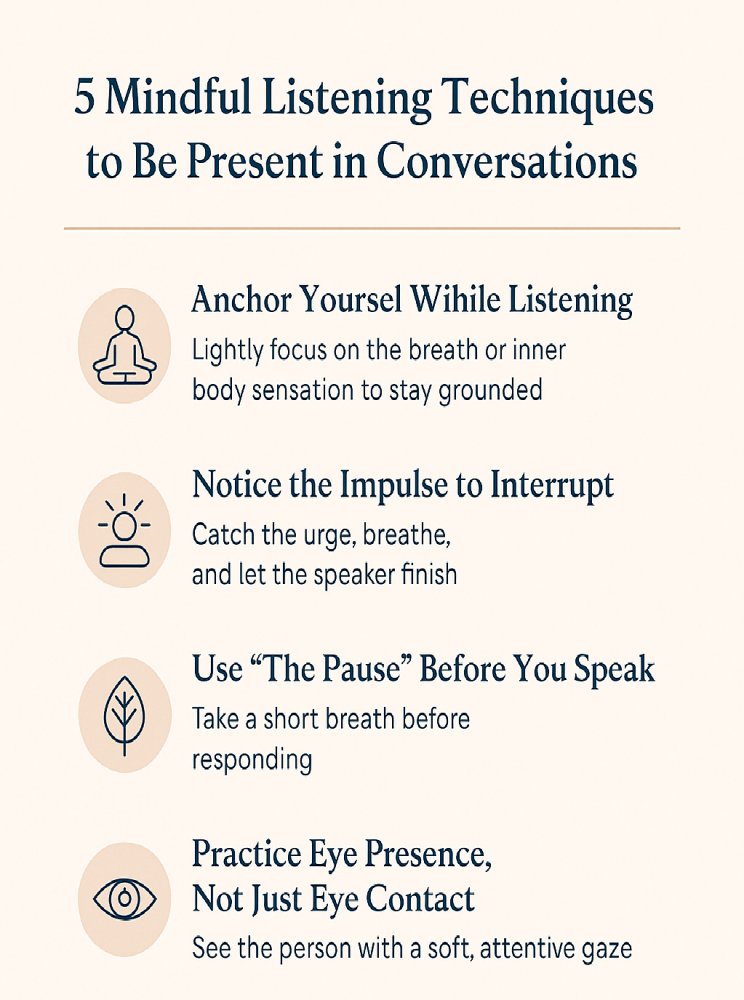
Over time, I’ve gathered some favorite habits for cutting through distraction and showing up for people. You can use these in everyday life, whether chatting with a loved one, talking to your boss, or stopping by a store. Here’s how you can make mindful listening your default mode:
- Anchor Yourself While Listening
As the other person speaks, try putting some of your attention on your breath or sensations in your body. I like to notice my chest rise and fall or feel my feet on the floor. This subtle sense of grounding helps keep my mind from wandering. - Notice the Impulse to Interrupt
Pretty much everyone feels the urge to jump in—to share advice, offer a story, or fix something. Recognize it when it appears. I sometimes mentally label it (“Ah, there’s my urge to jump in!”) and let it pass. Pausing adds space for the other person and deepens your listening. - Use “The Pause” Before You Speak
When they finish, give it a breath. I’ll often take a slow inhale before I start. This simple pause keeps me from being reactive and helps me check in with myself: Am I replying from a sense of presence, or just trying to fix or one-up? - Practice Eye Presence, Not Just Eye Contact
Eye contact can feel forced or awkward, but I switch to “eye presence” instead. It’s not about a piercing gaze. I just soften my look, actually see the person in front of me, and let it feel like a meeting of real people—beings with their own stories—instead of just filling roles. The conversation takes on a gentler, kinder vibe. - Drop the Need to Fix or Impress
Maybe you grew up thinking your job was to have the answers or keep things light and entertaining. I sure did. But I found you don’t need to sound wise or solve problems on the spot. You just need to be present. Conversations are lighter and more honest when we drop the pressure to fix or impress others.
I once thought presence meant being clever or pretending to care. But real presence is quieter, simpler, and actually more powerful. Try these habits and notice how your conversations change—maybe subtly, maybe in big ways.
How Presence Heals and Deepens Relationships

I’ve seen mindful presence quietly work wonders in my relationships. When I listen to a friend or partner with my full attention, their whole posture softens. Defensiveness fades away, and people open up. Fights become less frequent and misunderstandings drop off.
This kind of listening says, “I care about you right now, just as you are. I’m not trying to change or rush you.” That sense—of being really seen, heard, and accepted—is rare, but it’s exactly what makes relationships last.
- With romantic partners, small conflicts clear up sooner, and there’s more room for honesty from both people.
- With kids, slowing down and really listening shows them they matter and teaches them the art of listening in return.
- At work, mindful presence makes hard talks less tense. You’ll find less talking past each other and more joint problem solving.
- With friends, conversations get deeper and more meaningful. Sometimes just a few minutes of true attention grows a friendship much more than years of surface chit-chat.
It’s pretty amazing how simply being with someone and actually hearing them can have a calming effect—especially during tough moments. Steady attention helps tension melt away. This skill is a glue for families, friendships, and even work teams.
What to Do When You Zone Out or Get Distracted
My focus still slips sometimes. Maybe my mind jumps to what I’ll have for dinner, what I forgot to do, or instantly starts piecing together a response. If that sounds familiar—don’t be hard on yourself. Distraction is part of being human, not something wrong with you personally.
- Gently return. When you notice you’ve checked out, just steer your attention back to your breath or the person talking. Treat it as a gentle nudge—not a reason for frustration.
- Own it if you want. Sometimes I’ll just say, “Sorry, my mind wandered. Can you say that again?” Honesty about your attention can help everyone relax.
- Presence is always available. No need for a reset button. Every breath is a new chance to show up. Just keep steering yourself back, as many times as it takes.
Making this a habit takes ongoing effort. Some days are easier than others, but what counts is returning, gently but persistently, whenever you wander.
Real-World Roadblocks (and Ways Around Them)
Anyone who’s tried mindful listening knows it’s easier to describe than to practice, especially in a noisy, fast-paced world. Here are some obstacles I face (and some workarounds that help):
- Background Noise: Cafes, offices, and even our homes can be distracting. I’ll try to mentally “turn down” extra sounds, or if it’s too loud, suggest moving somewhere quieter.
- Multiple Devices: If my phone is out, chances are I’ll peek at it. So I put it out of sight during important conversations. Just that quick step can change the whole dynamic.
- Emotional Baggage: Sometimes earlier feelings try to creep into the now. Taking a few deep breaths before talking helps shift my mind and clear emotional leftovers.
- Busy Schedules: Jumping from one thing to another makes presence harder. Even a one-minute breathing break between meetings helps reset my headspace.
These things aren’t deal-breakers. Small, intentional moves can make mindful listening possible, even in tough settings.
When It Gets Emotionally Sticky
In heated or emotional talks, presence can feel tougher—yet it’s also when it matters most. I remind myself to let them talk, listen more than I speak, and take extra-long pauses. Sometimes a quiet “I hear you” is more powerful than any advice, opinion, or explanation could ever be.
Going Beyond: Presence as a Daily Spiritual Practice
For many folks, genuine presence in conversation feels almost spiritual. It lets you connect with a deeper part of yourself—and those around you. Mindful listening snaps you out of autopilot and into this moment. Over time, it transforms daily interactions into chances to grow patience, empathy, and understanding.
Presence is rooted in both ancient wisdom and modern psychology. It’s a theme in classics like Eckhart Tolle’s “The Power of Now” and appears in teachings from across different cultures. Some call it “spiritual presence.” Others just say it’s being real. No matter the name, the results are similar: more peace, less stress, and a genuine feeling that you’re really living, not just making it through another day.
If you want to know how presence connects with mindfulness in other parts of life, my guide on Presence vs. Mindfulness – What’s the Real Difference? lays it out in everyday language. The quick takeaway: mindful listening helps you stop zoning out so you can show up for real life, right now.
Frequently Asked Questions
Here are some things people often ask when starting mindful listening and day-to-day presence:
Question: Does being present mean never thinking about my own needs in a conversation?
Answer: No. You can still set boundaries, express your needs, or even disagree. The point is to listen intently and reply thoughtfully, instead of falling back on old patterns.
Question: How can I hold presence during tough or triggering conversations?
Answer: Focus on your breath or physical sensations to stay grounded. Let tricky emotions exist instead of fighting them. If necessary, ask for a quick break or name what you’re feeling (“I feel overwhelmed and need a minute”).
Question: What if the other person won’t listen back?
Answer: It’s natural to want them to return the favor, but your biggest influence is in how you show up. Over time, your presence often encourages others to pay closer attention, too. Either way, model the listening you’d like to receive.
Question: Can mindful listening help with anxiety or overthinking?
Answer: Absolutely. Mindful presence draws your mind out of overthinking loops and into the here and now. For more, check out How to Stop Overthinking – The Power of Now in Action. Being able to calm yourself while engaging with someone else is a direct antidote to anxious, spinning thoughts.
Key Takeaways & Next Steps
You don’t need hours of free time or the perfect setting to get started with mindful listening. Try one of these five habits in your next conversation—whether it’s with family, friends, or a colleague—and see how the mood shifts, even a little bit. Each small moment of presence makes a difference over time.
Mindful listening isn’t just a communication trick; it’s a way to bring more meaning and a sense of grounded presence into your ordinary routine. Every day gives you a fresh shot at showing up for the people around you, starting now.
If this sparked your curiosity to live with more presence, check out these related guides:
- How to Stop Overthinking – The Power of Now in Action
- Presence vs. Mindfulness – What’s the Real Difference?
- Habit 5: Seek First to Understand, Then to Be Understood
- Watch on YouTube:
🎥 Mindfulness vs Presence – What’s the Real Difference?
🎥 How I Stopped Overthinking and Found Inner Peace - Want to go deeper into the science behind mindfulness and presence?
This peer-reviewed study explores how mindful attention contributes to emotional well-being and authentic connection:
👉 Brown & Ryan (2003) – The Benefits of Being Present (PDF)
If you found this helpful, please share the article or comment below about your experience. The next time you talk with someone could be your opportunity to bring a bit more presence into the world.

Chris is the voice behind Daily Self Wisdom—a site dedicated to practical spirituality and inner clarity. Drawing from teachings like Eckhart Tolle, Ramana Maharshi, and timeless mindfulness traditions, he shares tools to help others live more consciously, one moment at a time.Learn more about Chris →
Leave a Reply