Sitting down for self-inquiry, something unexpected can happen. There’s initial curiosity. Then, almost before you realize it, a subtle tightness creeps in. The forehead contracts. Breathing grows shallow. A slight pressure forms in the chest. Attention begins gripping the moment, as if holding something fragile that cannot be released. Instead of feeling open or spacious, everything narrows. An underlying push to “get it right” takes over, as though consistent inner effort is what keeps the practice alive.
This is the point where self-inquiry crosses into self-inquiry mental effort. It’s a recognizable pattern for many practitioners. Noticing when it happens can soften the process and restore the natural quality of inquiry.
Self-inquiry isn’t concentration. It doesn’t require force. True inquiry isn’t about holding attention in a fixed way or chasing down an answer with effort. It’s about natural noticing. When effort creeps in, it reduces the effectiveness of practice and can leave you feeling tired and uncertain rather than clear.
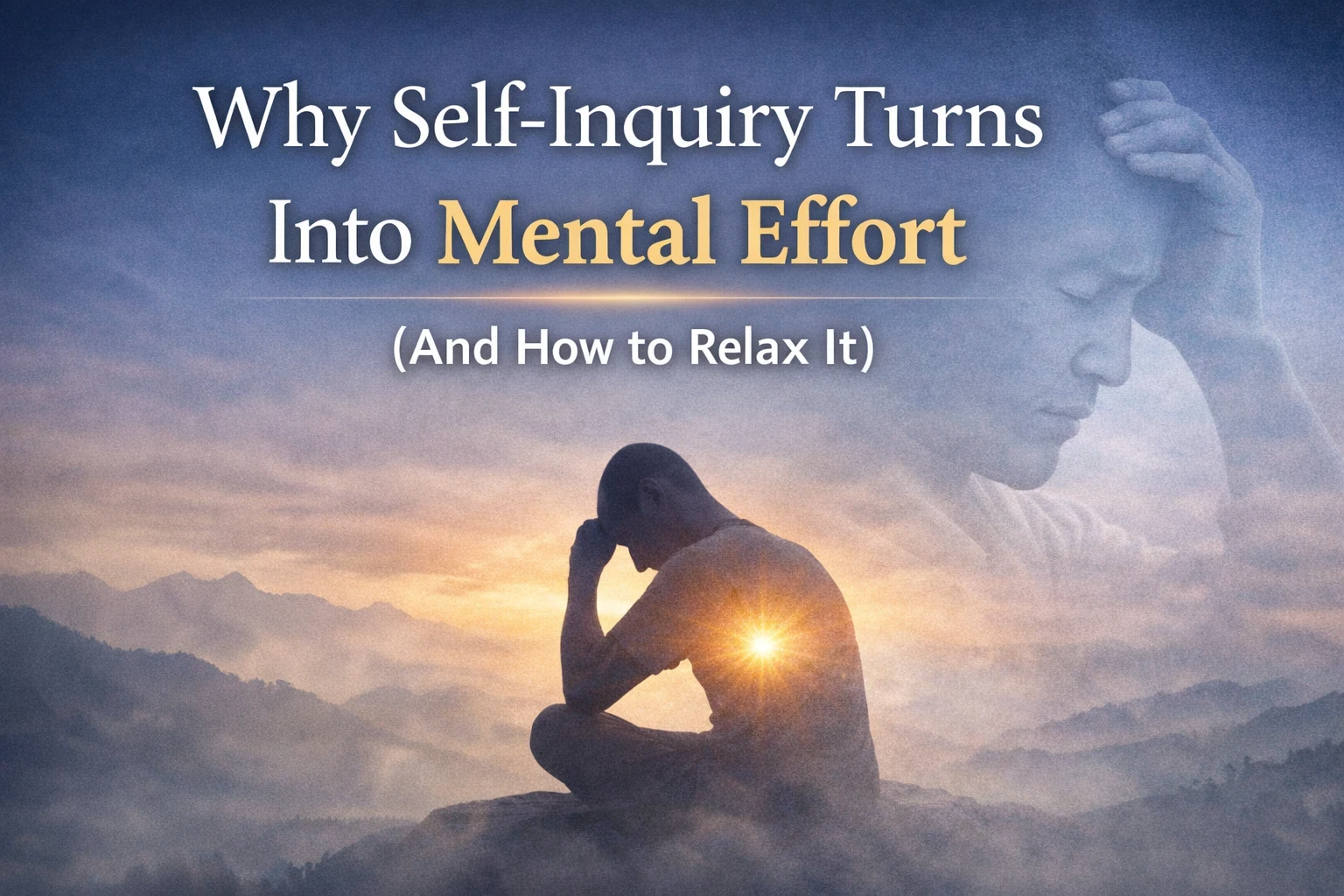
What Mental Effort in Self-Inquiry Feels Like
Over time, it becomes possible to recognize subtle signs that mental effort is building during inquiry or immediately afterward. These aren’t always dramatic, but with attention, they stand out clearly:
• Subtle tightening behind or around the eyes
• Trying to “pin down” the I-sense repeatedly
• Holding the question with internal tension, as if it could slip away
• A faint sense of squeezing in the mind or forehead
• Noticeable fatigue after sessions that should feel refreshing
• Occasional headaches, agitation, or mental restlessness
• Irritability after extended practice with no felt clarity
• An undercurrent of frustration when attention drifts or thoughts arise
Effort often feels responsible. There’s a familiar pull to make sure you’re not slacking off. But beneath that feeling, it’s still an old form of egoic control. It isn’t true attentiveness. It’s a subtler way of gripping the wheel and managing awareness according to internal standards. Inquiry does not require any of that.
Why Effort Creeps In
Looking at what causes this shift reveals a few consistent patterns:
Goal orientation. A strong desire for a breakthrough, for clear results, or for spiritual confirmation creates internal pressure. The practice becomes outcome-driven rather than receptive.
Fear of losing attention. The belief that awareness could drift away if the grip loosens leads to holding attention tightly. But awareness doesn’t need to be held. It’s already here.
Confusing inquiry with concentration. Looking gets conflated with holding. Watching turns into gripping. This is one of the most consistent misunderstandings in practice.
Trying to keep awareness continuous. The idea takes hold that mind wandering must be prevented at all costs, so effort ramps up to maintain unbroken focus. This is exactly when the nervous system begins to strain.
The trap is straightforward: when attention is held with even subtle tension, the nervous system tenses along with it. The natural quality of inquiry disappears, replaced by strain. Self-inquiry at its clearest is noticing what is already present. It’s gentle seeing, not gripping an object or sustaining an experience by force.
The Difference Between Attention and Concentration
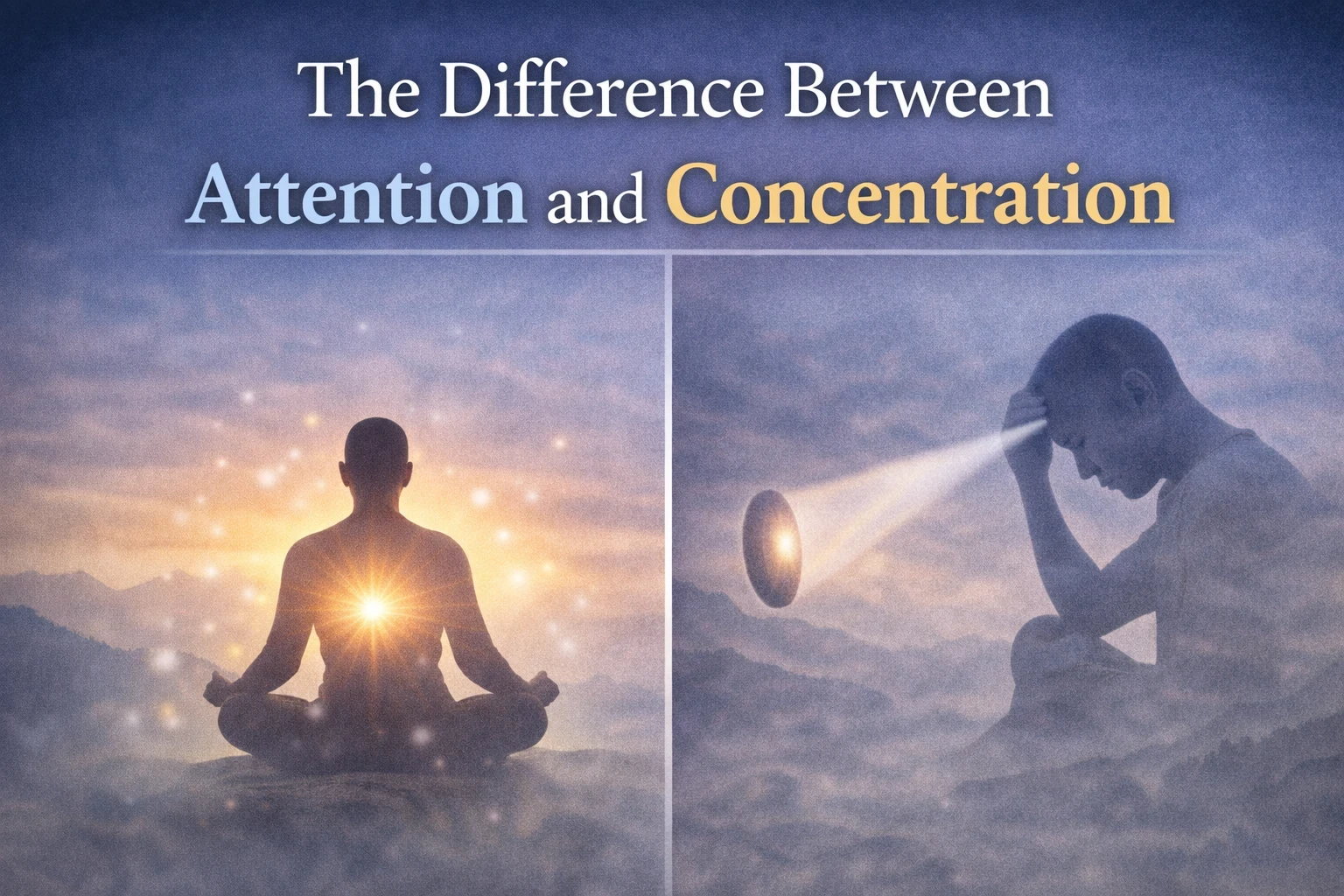
This distinction matters practically, not just conceptually.
Concentration involves narrowing in, blocking out everything else, and holding one object forcefully. Distractions are excluded by effort. The process is inherently tiring.
Inquiry attention is different in quality. It’s open, soft, and receptive. It doesn’t exclude what arises. The noticing is gentle and inclusive. Nothing is being held.
When practice starts to feel tense and narrow, it usually signals a quiet drift into concentration without any deliberate choice. The two can look similar from the outside but feel entirely different from within. Inquiry becomes tight only when concentration has taken its place. When that tightness appears, the response isn’t more effort. It’s to pause and return to an open, unforced way of attending.
A Practical Diagnostic: Is There Tension?
To check for self-inquiry mental effort, a simple body scan often reveals what thinking alone misses:
Forehead. Is there any tightening or furrowing? Softening here immediately creates more internal space.
Jaw and mouth. Are the teeth touching? Is the jaw set? Letting the mouth part slightly invites relaxation through the whole face.
Breath. Is it flowing smoothly? Shallow or restricted breathing is a reliable indicator of effort. Allow it to deepen naturally, without forcing.
Chest and heart area. Is there compression or pressure? Let the chest relax by releasing whatever is being guarded there.
Underlying urgency. Is there a felt sense of “I have to get this”? That feeling is effort. Recognizing it is enough to begin releasing it.
Usually, noticing these points is itself sufficient. The nervous system tends to respond to honest attention by letting go. Presence returns when you soften and allow, rather than push.
How To Relax Mental Effort in Self-Inquiry
When effort has taken hold, several body-based approaches consistently bring relief:
• Release the question temporarily. Let the inquiry drop for a minute or two. This pause often brings clarity or a genuinely fresh start.
• Allow attention to widen. Rather than narrowing in, sense the space around the body, or the room as a whole. This opens things quickly.
• Let thoughts move freely. If the mind is working to suppress thoughts, allow them to come and go without interference. Suppression is another form of effort.
• Feel into the body directly. Noticing sensations and breath grounds awareness immediately and without strain.
• Let the I-sense be present rather than pursued. Rather than chasing the experience of “I,” allow it to show itself. It will. Trying to force that revealing only delays it.
• Shorten sessions when needed. If strain persists, brief and relaxed practice is more valuable than extended effort. A quiet five minutes builds more than a tense half hour.
• Return without pressure. When attention wanders, notice it and return gently. No inner correction is needed. No standard of continuity has to be maintained.
The overall quality of inquiry matters more than its duration. Relaxed sessions allow clarity to emerge. Effortful ones tend to close things down.
Why Simplicity Feels Threatening
Letting effort relax can feel uncomfortable at first. There’s often an internal protest. Effort and productivity feel familiar. Softening can seem like losing ground or giving up on the practice altogether.
But inquiry isn’t about control. It’s about direct, unfiltered seeing. The shift into simplicity can feel disorienting, especially for practitioners who have equated discipline with straining. Yet that simplicity is not passivity. It’s a more precise form of attention, one that doesn’t distort what it’s looking at by pressing against it.
Practical Notes for Ongoing Inquiry
A few adjustments that support relaxed practice over time:
Begin with curiosity rather than intention. Starting each session with openness rather than a goal changes the entire quality of what follows.
Use the body as a reference point throughout. Regular micro-checks on the forehead, jaw, and breath during sessions help catch effort before it builds.
Keep sessions consistent but not rigid. Regularity matters. But length and intensity should remain flexible. Gentle regularity serves the process better than forced regularity.
Frequently Asked Questions
Is effort always wrong in self-inquiry?
Some initial intention is useful. It’s what brings you to sit down at all. But sustained tension isn’t helpful. When effort is noticed, soften it. Awareness doesn’t need pressure to be present.
Should I try to hold the I-sense in attention?
No. Grasping or maintaining the I-sense by force isn’t necessary. Allow it to arise and reveal itself. Natural noticing works better than holding.
Why do I get headaches when practicing?
Headaches usually indicate muscular or nervous system tension from trying too hard. Pause, relax, and simplify the practice. Check posture and eye strain as well.
Is discipline needed for self-inquiry?
Discipline supports regularity, but the quality of practice matters more than its quantity. Being present each day without forcing outcomes is the kind of discipline that actually serves inquiry.
Can shorter sessions be more effective than long ones?
Often, yes. When inquiry feels strained, brief and relaxed sessions go deeper. Short, natural intervals let the nervous system remain settled rather than building toward exhaustion.
Wrapping Up
Self-inquiry doesn’t depend on strain. When mental effort takes hold, it distorts the practice and taxes the nervous system. What the practice actually requires is noticing when tension is present and returning to a more open, unforced way of looking.
Tension is a reliable signal. It tells you that effort has replaced inquiry. When that happens, no amount of additional pressure will deepen the seeing. Only releasing the grip will.
The practice becomes clearer when the quality of attention is soft and honest. That clarity isn’t a reward for effort. It’s what remains when effort is no longer in the way.
For related reading, see Thinking Is Not Self-Inquiry and Mental Looping in Self-Inquiry.
If you’d like to see how this shift from effort to ease actually unfolds in real time, watch the video below. I walk through the difference between gripping attention and relaxed inquiry so you can recognize the turning point immediately in your own practice.

Chris is the voice behind Daily Self Wisdom—a site dedicated to practical spirituality and inner clarity. Drawing from teachings like Eckhart Tolle, Ramana Maharshi, and timeless mindfulness traditions, he shares tools to help others live more consciously, one moment at a time.Learn more about Chris →
Leave a Reply