When life throws curveballs, like losing a loved one, facing a health scare, or waking up to another day of heavy news, staying present can feel almost impossible. In those moments, my mind loves to replay old worries or keeps trying to solve things I can’t control. It’s like presence becomes this far-off idea that only makes sense when everything is calm. But the reality is, those tough times are exactly when being present matters most. That’s where the real spiritual practice kicks in: not on a meditation cushion but in the raw chaos of real life.
I’ve learned some of these techniques the hard way, stumbling through grief and anxiety when my usual mindfulness tricks just didn’t cut it. Mixed in are lessons from teachers like Eckhart Tolle and Ramana Maharshi—people who know about pain and what it’s like to bring awareness right into the middle of it. My goal here is to show how presence isn’t just possible during rough patches, but how it can actually help you move through them with a little more sanity and heart.

Why Presence Is Hard When You’re Suffering
Everyone says “Just be present” when life falls apart, but most forget to mention how tough that really is in practice. When something hard hits, like intense grief, panic, or a wave of fear, the whole body goes into fight or flight. My thoughts rush to every problem at once, and suddenly I’m nowhere near the now. That anxious voice in my head tries to juggle yesterday’s regret and tomorrow’s uncertainty all at once.
Eckhart Tolle frames this problem in a helpful way: “The pain is not the problem. The resistance to it is.” The suffering gets heavier when I try to push away or deny what hurts. The harder I brace against what’s happening, the more trapped I feel inside my own thoughts. But I’ve noticed that if I can drop the inner struggle, even for a moment, there’s a surprising amount of space, even if the pain is still there.
Over time, I’ve discovered that mindfulness in crisis is less about forcing calm and more about meeting whatever’s happening with open eyes. It doesn’t mean I suddenly enjoy pain or turn into some spiritual superhero. But there’s a fresh kind of presence available, one that shows up when I stop fighting reality and instead turn toward my exact experience. That’s when difficult times can actually deepen my ability to stay present, turning suffering into a teacher instead of an enemy.
7 Ways to Stay Present When Life Gets Hard
1. Feel the Inner Body, Not the Mental Story
The mind loves to build stories about what’s wrong and what might go wrong next, especially when I’m hurting. But I’ve found that if I bring attention to the feeling in my actual body, everything starts to switch up. Tolle calls this “inner body awareness.” Instead of getting lost in thought loops (“This shouldn’t be happening,” “Will I ever feel okay again?”), I pause and check: Where do I feel this in my body? Is it a tightness in the chest, a knot in the stomach, buzzing in the arms?
This switch from mental spiraling to physical sensation is simple but super effective. Even if the emotion is huge, sensing how it feels in the body creates an anchor, a way to stay here and grounded, rather than being swept away by thoughts. I usually notice my breath gets a bit deeper and the mental noise softens, even if just for a few seconds. That’s presence, right in the middle of chaos.
Here’s a real-life example of this practice in action:
Sarah sat in the hospital waiting room, her phone still warm in her hand from the call. Her mother’s test results were worse than expected. Her mind immediately launched into overdrive: treatment options, survival rates, how to tell her siblings, whether she should move back home. The thoughts came faster and faster, each one pulling her deeper into panic.
Then she remembered something from her mindfulness practice. Instead of following the mental spiral, she shifted attention to her body. Where was this showing up physically? She noticed her shoulders pulled up tight near her ears. A burning sensation spread across her chest. Her stomach felt like a clenched fist.
She didn’t try to fix any of it. She just felt it—the tightness, the heat, the clenching. Her hand moved to her chest, feeling the rapid heartbeat underneath. This was grief. This was fear. Not in her thoughts, but right here in her body, raw and real.
The mental chatter didn’t stop completely, but it softened to background noise. She was still scared, still heartbroken, but she was here—feeling the wooden chair beneath her, hearing the hum of fluorescent lights, sensing her feet on the cold tile floor. Present with the pain instead of lost in stories about it. It didn’t make everything okay, but it made it bearable. She could breathe. She could think clearly about the next step.
2. Gently Name the Emotion
It’s easy to get overwhelmed by emotion, thinking “I’m drowning” or “I can’t handle this.” But another trick I’ve picked up is simply labeling what I feel: “This is sadness.” “This is fear.” “This is anger.” I got this technique from mindfulness experts who find that gently naming the emotion, instead of judging it, creates a little bit of inner space.
Instead of “I’m broken” or “I am depressed,” the focus turns into a softer “This is grief I’m feeling right now.” That doesn’t make the emotion vanish, but it can help break the identification. I’m not the emotion—I’m the one noticing it. With that tiny bit of distance, the emotion tends to switch up, or at the very least, lose its hold on me.
3. Accept Without Collapsing
Acceptance gets a bad rap. Some people hear “accept” and imagine giving up or becoming passive. But conscious acceptance is actually super active. Ramana Maharshi talks about allowing what’s happening fully, but without collapsing into defeat. It’s like saying, “I may not like this, but I’m letting it be true right now.”
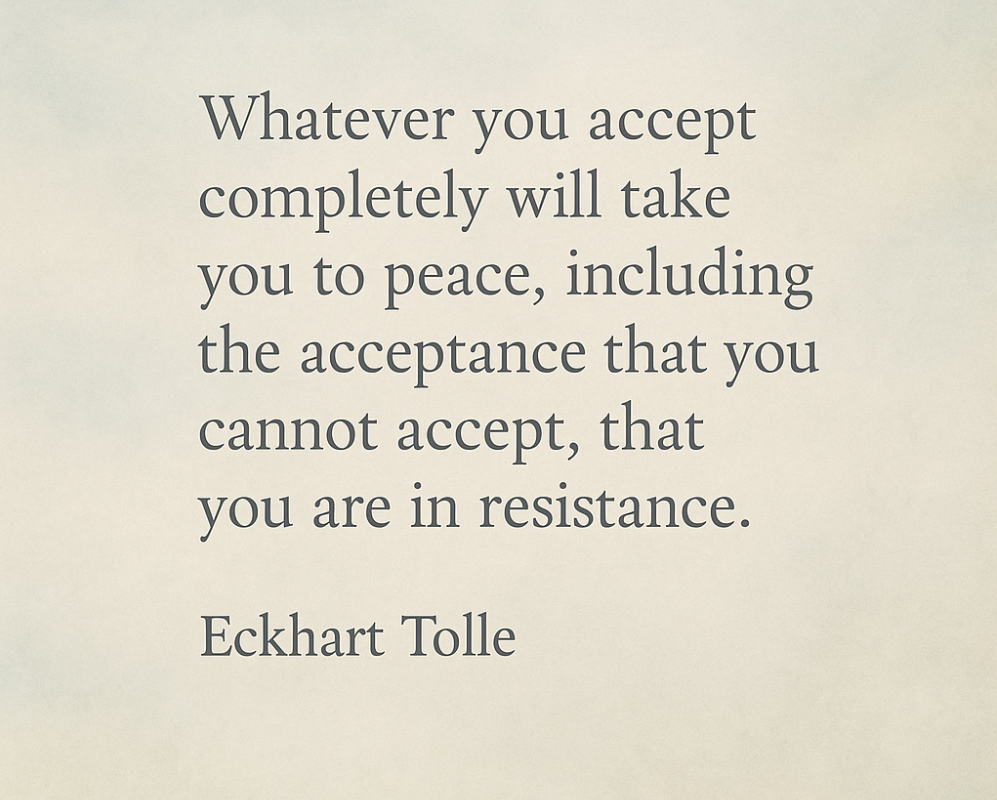
The difference is subtle but powerful. Instead of fighting or wallowing, I turn toward the pain with openness. This takes some practice—some days, my instinct is to resist every little thing. But I remind myself: accepting doesn’t mean I want things to stay this way forever; it just means I’m fully here for what’s present, without trying to fix or escape it. This attitude brings more strength and clarity than I ever found in resistance.
4. Drop Into One Breath
When my mind starts racing, even five minutes of deep breathing can seem out of reach. What’s worked better for me is anchoring to just one breath. Not the whole future or the endless past, just this inhale, just this exhale. I’ll often place a hand on my chest or belly to really tune in. The world doesn’t quiet down, but I get a small “reset” moment. My nervous system gets the message that it’s safe enough to pause, even briefly. This single-breath practice interrupts the cycle of panic and makes space for a little more presence.
5. Say Yes to the Now, Even If It Hurts
I used to hear, “Say yes to the present” and think it meant approving of pain. But what I’ve learned is that saying yes is just about dropping the “No!”—that automatic pushback my mind gives to discomfort. Tolle suggests this simple inner movement, sometimes wordless, of agreement with what is. I try to mentally or physically nod to whatever’s showing up, without conditions.
This is surprisingly powerful. I still feel the pain, but the suffering eases when I stop adding mental resistance. Even a quiet “okay, this is here” creates a crack where some peace can sneak in. Presence under pressure starts to feel possible, even if it’s messy and incomplete.
6. Witness Instead of Fixing the Feeling
My go-to move is to immediately search for solutions when I feel bad: How can I make this feeling go away? But Ramana Maharshi talks a lot about the power of simple witnessing. Instead of fixing or changing the feeling, I practice observing it, like watching weather pass across the sky. The trick is noticing the part of me that is aware of upset, not drowned in it.
This makes a big difference. Instead of shrinking down to the size of my worst emotion, I sense a bigger awareness holding whatever’s happening. There’s relief in realizing I’m not the problem; I’m just the witness. The feeling can rise and fall, but something quiet and steady, awareness, is always here.
Some traditions go even further with this idea of witnessing—not just noticing the feeling, but turning toward the one who is aware of it. This is where Ramana Maharshi’s approach comes in.
When Emotions Overwhelm, Ask: Who Is Feeling This?
When I first discovered Ramana Maharshi’s teachings, I was skeptical about how a simple question could help with real emotional pain. Ramana, a Indian sage who spent most of his life in silence on the holy mountain Arunachala in South India, taught just one core practice: self-inquiry through the question “Who am I?” But I’ve found his approach surprisingly powerful when emotions threaten to overwhelm.
Here’s how it works: When grief, anxiety, or fear feels unbearable, instead of getting lost in the story of why you’re hurting, pause and ask: “Who is feeling this?” or “To whom does this emotion come?” The point isn’t to find some clever intellectual answer. It’s to shift your attention from the emotion itself to the awareness that notices the emotion.
It’s like stepping back from a movie screen to remember you’re the one watching. The grief is still there, the anxiety hasn’t vanished, but suddenly you’re aware of being aware. You’re the witness, not the emotion. This creates breathing room, a little space where you’re not completely identified with the pain.
Where Eckhart Tolle often guides us to feel the aliveness of the inner body or accept the now, Ramana points us directly to the source—the “I” that experiences everything but remains untouched by it. Both approaches lead to the same recognition: you are the awareness, not the temporary waves of emotion passing through.
“The question ‘Who am I?’ is not really meant to get an answer. The question ‘Who am I?’ is meant to dissolve the questioner.” — Ramana Maharshi
7. Make the Present Moment Your Refuge
When things get rough, it’s so tempting to escape—to the future, to distraction, to old habits. But I’ve learned to treat the present moment as my home base. Even if the now is uncomfortable, it’s the only place where I have any real power or peace. Eckhart Tolle calls this “making the now your friend.”
I remind myself: staying isn’t about liking what’s happening. It’s about opening up to life as it is, knowing the present has everything I need to take the next step. Over time, this builds a spiritual resilience I would never have found by running away. Presence becomes less of a chore and more of a quiet anchor during the storm.
The Importance of Self-Compassion in Staying Present
Another critical aspect I’ve found in staying present through pain is the role of kindness to myself. The temptation to blame myself for not “doing mindfulness right” or to think I’m failing at spiritual practice only adds extra pain. Instead, I’ve learned that every time I notice my mind has wandered—and gently bring myself back—I’m actually practicing the heart of presence. Self-compassion isn’t just a bonus; it’s the glue that keeps me coming back to the now, no matter how rough things feel.
This can be as simple as placing a hand over my heart and taking one soft breath, or gently saying to myself, “It’s okay to struggle. This moment is tough, but I’m here for myself.” These tiny gestures remind me that presence is always available, even in small doses. Self-compassion turns presence from a performance into a real lifeline.
What to Do When You Can’t Stay Present
Here’s something real: nobody, no matter how much mindfulness they practice, stays present all the time when life is hard. I still get lost in fear, rumination, or overwhelm, especially on tough days. The key is not to beat myself up about it. Whenever I notice I’ve drifted into another thought spiral, I try to pause and gently return, even if I have to do this a hundred times a day.
Ramana Maharshi has a really simple reset for this: “To whom does this come?” If I’m caught in anxiety, I ask, “Who is feeling anxious right now?” This isn’t about solving anything; it’s about shifting my attention from the problem to the one witnessing the problem. It’s a shortcut back to presence, returning to the awareness underneath all the drama. If this is tough, I go back to the body, breath, or gentle labeling. Small steps count; self-kindness is super important.
Pain Can Lead to Presence
I’ve learned over and over that awareness itself is healing. Presence doesn’t make pain disappear, but it totally transforms how I relate to it. Instead of fighting reality or spiraling into helplessness, turning toward what’s happening gives me access to a deeper peace, one that doesn’t depend on things getting better fast.
If you’re struggling right now, know that you aren’t failing at presence—you’re waking up, over and over. That willingness to show up for what’s real is the heart of every true spiritual practice. You don’t have to get it perfect; you just have to keep coming back.
FAQ: Staying Present During Stress, Anxiety, or Emotional Pain
Q: What if staying present makes me feel worse?
A: That’s more common than people think. When we stop distracting ourselves, buried emotions can rise up. The key isn’t to push those feelings away, but to gently witness them without judgment. If it feels too intense, go back to a simple anchor like breath or sensation — and always include self-compassion in your practice.
Q: How is presence different from suppressing emotion?
A: Presence is the opposite of suppression. Suppression pushes emotions down; presence allows them to arise fully — but with awareness instead of reactivity. You’re not ignoring what you feel; you’re meeting it with space and curiosity.
Q: Can I be present and still take action to change my situation?
A: Absolutely. Presence isn’t about passivity — it’s about responding consciously instead of reacting unconsciously. When you act from presence, your decisions tend to be clearer, calmer, and more aligned with your true needs.
Q: Is it okay if I keep losing presence throughout the day?
A: Completely normal. Presence is a practice, not a performance. Each time you return to the now — even after a hundred thought spirals — you’re strengthening the very muscles of awareness. That is the work.
For more on this topic, you might like my YouTube video on the pain-body
and stopping overthinking. If you want to go deeper into these teachings, check out Eckhart Tolle’s books or explore my related articles on living with presence and emotional healing. There’s plenty here to support you whenever the going gets rough.

Chris is the voice behind Daily Self Wisdom—a site dedicated to practical spirituality and inner clarity. Drawing from teachings like Eckhart Tolle, Ramana Maharshi, and timeless mindfulness traditions, he shares tools to help others live more consciously, one moment at a time.Learn more about Chris →
Leave a Reply