If I’m being real, most days it feels like my body and I are just one thing. A stubbed toe, a sore back, seeing myself in the mirror—these moments hit home where “I” seems to end at my skin. The world trains us from birth to say, “This is me.” So every ache, craving, or rush of self-consciousness feels personal. The flip side? A lot of anxiety, comparison, and worry starts right there. This grip on bodily identity keeps many of us spinning, especially when things don’t go how we want.

There’s a game changing lesson tucked inside the Bhagavad Gita, echoed by spiritual teachers across the world: you are not the body. That phrase sounds lofty, maybe even out of reach. But this post isn’t about arguing philosophy or quoting scriptures for the sake of it. I’m here to offer a practical way to approach this. There are simple exercises and mindset shifts that turn “you are not the body” from a phrase into real relief and real freedom, day by day.
Why the Bhagavad Gita Teaches You Are Not the Body
The setting of the Bhagavad Gita is a big, messy battlefield. Basically, it’s the last place you’d expect to hear about the nature of the Self. Arjuna, the hero, is overwhelmed with fear and grief, paralyzed by dread over the loss and pain waiting on the field. Krishna, his friend and charioteer, begins with the radical: “You grieve for those who should not be grieved for. The wise mourn neither the living nor the dead. You are not this body.”
The Gita boils it down: the Self, or Atman, is eternal and untouched by birth and death. The body is just a temporary outfit. Like switching clothes, bodies change, but the real you isn’t affected in the slightest. This isn’t meant to be an idea to memorize, but a pointer to a deeper truth waiting right here, underneath the surface of normal life. The Gita’s teaching isn’t for monks alone. It’s for regular folks wrestling with daily stress and heartbreak.
The moment our happiness, safety, or prestige seems to depend on the condition of our body, suffering starts. In the Gita, understanding this isn’t a matter of faith; it’s an invitation to question experience directly, right now, in this life, as you are.
You Are Not the Body Explained in Simple Language
When people hear, “you are not the body,” some get nervous, wondering if they’re expected to pretend their body isn’t real or somehow detach from it like it doesn’t matter. That’s not the idea at all. Simply put, the concept of “you are not the body” means that while you have a body, the real “you” is the one aware of the body, not the body itself.
Think of your body as the car you drive. You can feel sensations, move around, experience pleasure and pain, but at the end of the day, you’re not the car. You’re the driver. In more practical terms, you’re the awareness that sees and feels what happens to the body. This awareness is like invisible sunlight shining on everything. The only reason you can even notice your feet or your breath right now is because you’re the knower. The body is an object that can be noticed, while you are the one doing the noticing.
Try this right now: close your eyes for a second, notice your right hand. Notice sensations or tingling there. Then, notice the fact that you’re aware of the hand. That simple noticing—a kind of soft turning back to the knower—points to how you aren’t fused to the body. You’re the witness.
Here’s another tiny practice: say quietly in your mind, “This is the body.” Then notice the one who says it. There’s a small but real separation between the words and the silent awareness behind them. That gap is the point.
Understanding You Are Not the Body in Everyday Life
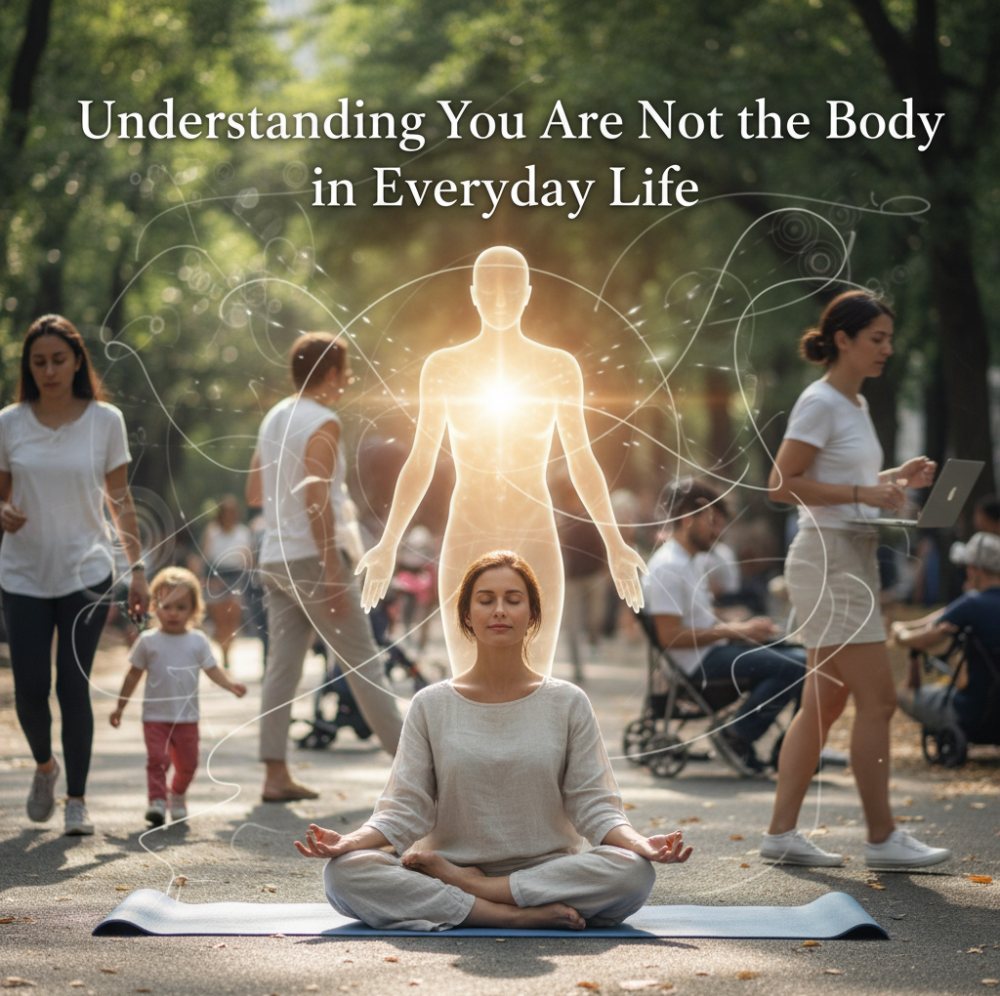
So, why would any of this matter in busy, modern life? Because most of the emotional storms we deal with are fueled by clutching to bodily identification without even realizing it.
If I’ve had a long, exhausting day and my body is wiped out, it’s easy to spin a narrative: “I’m a wreck, I can’t keep up.” Identity glues to fatigue. Or, if someone is dealing with chronic pain, it’s tempting to sink into “My whole world is pain, this is who I am now.” When I catch a glimpse of myself in the mirror and don’t like what I see, old scripts of self-worth may kick in. The fear of aging, changing, looking different—these are all rooted in believing I am this body and nothing more.
This doesn’t mean denying experiences. Instead, recognizing the difference between experiencing the body and being only the body is a chance to loosen tight stories. When I become aware, “Oh, here is fatigue,” or “Pain is arising in the body,” or “Here are thoughts about my appearance,” there’s a subtle but powerful switch up. I’m no longer collapsed into the story. I can notice what’s going on, but I’m not reduced to it. The grip loosens. With practice, that gap gets bigger, and I find some real peace and breathing room right in the middle of whatever’s happening.
Besides, the mind is always looking for certainty or control over the body. It compares, worries, and plans endlessly. But you can short circuit this by grounding yourself in the awareness that’s always present–the real you–which is unaffected by those ups and downs. This awareness is silent and open, connecting every moment, regardless of what the body feels or looks like.
How to Practice You Are Not the Body
Putting this teaching into practice doesn’t take hours of meditation or fancy techniques. Here’s a basic exercise I return to all the time:
Pick a simple body sensation. It could be the feeling of your feet against the floor, your hand resting on your knee, or the gentle rise and fall of your breath.
Notice the sensation fully. Really feel it as it is.
Now, become aware that you are aware of the sensation. There’s a little space between the feeling and your ability to notice it.
This doesn’t involve trying to get rid of sensations. Just witness. In that witnessing, the spell of identification starts to unravel. You’re already switching from “I am tired,” to “Tiredness is arising in the body, and I am the awareness noticing it.”
For a quick routine, I use a 20 second mini-practice, inspired by the Gita and Ramana Maharshi:
Pause whatever you’re doing.
Scan your body from head to toe.
For each area that calls your attention, think, “I notice sensation here.”
Then quietly ask, “Who is aware of this?”
Rest there for a breath, feeling just the fact of being aware.
If you want to go deeper, instead of focusing only on sensations, notice the sense of open space or stillness in which all sensations appear. You might find, surprisingly, that you feel lighter and less stuck to the body than you thought.
If you like visuals, picture a clear sky with clouds passing by. Your sensations and thoughts are the clouds, but the sky is untouched and always there. The more you practice this, the easier it becomes to stay in touch with that open awareness even in tough times.
Steps to Understand You Are Not the Body
Feel the body fully. Set aside a minute to be present with whatever sensations arise. Don’t avoid or analyze; just notice. If there’s tension, warmth, tingling, or even numbness, become aware of it as clearly as possible.
Notice the gap between awareness and sensation. After a moment, recognize that you aren’t the sensation; you’re the one who knows it. There’s a split second of spaciousness here—the witness and the witnessed.
Notice thoughts about the body and separate from them. Your mind might throw up stories: “I’m so tight today,” “I wish I looked different.” Instead of buying in, notice these as passing thoughts. You’re the one observing.
Rest as the silent witness for a moment. Even a few seconds of just staying with this direct awareness is enough. It’s a break from being consumed by every sensation or story.
Apply this while living your day. You don’t need long meditation sessions. Try these steps while standing in line, driving, or during a difficult phone call. The ordinary moments are perfect for bringing the lesson alive.
In everyday settings, you can bring this practice with you anywhere. At work at your desk, during walks, while eating, or during conversations, notice the constant presence behind your thoughts and sensations. This presence is who you really are. As you get into these steps, old habits of identifying with every ache or story about your body begin to fade, replaced by a natural steadiness.
Ramana Maharshi’s Self Inquiry and the Body
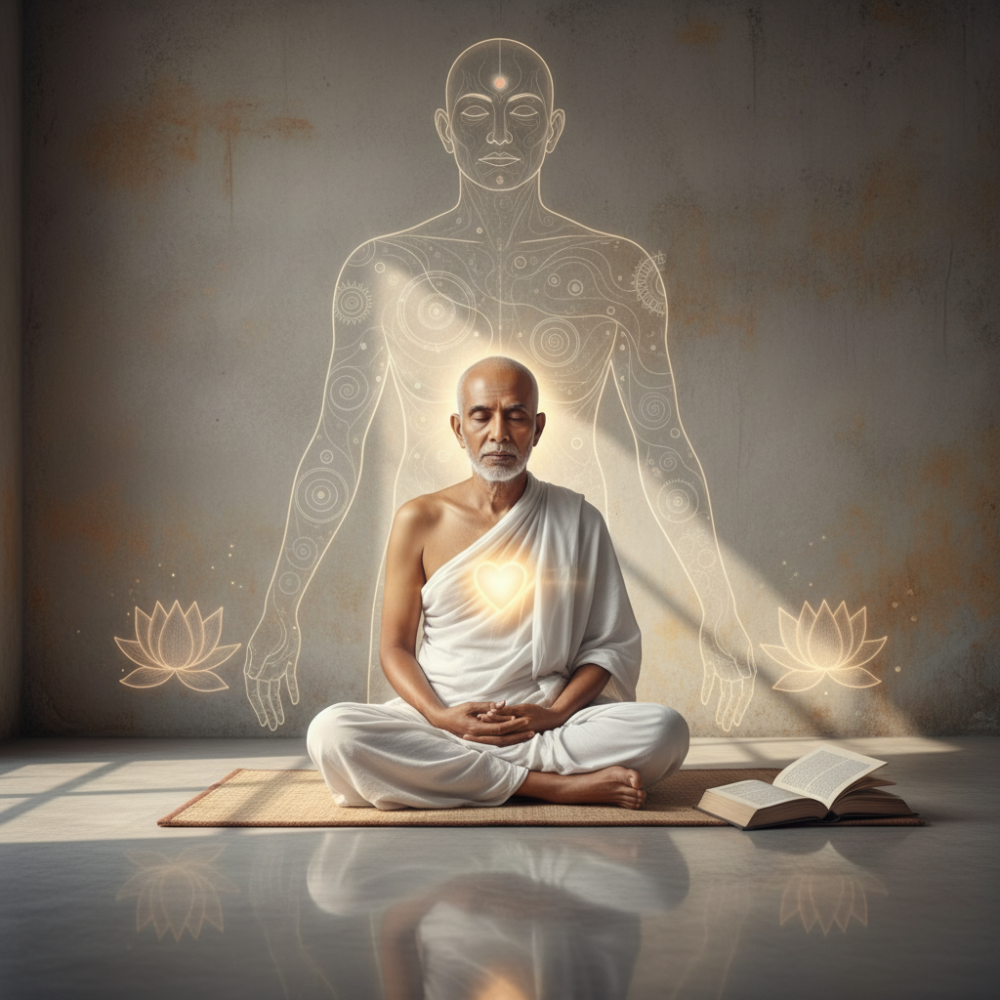
Ramana Maharshi, a master at boiling down spiritual practices to everyday simplicity, didn’t teach people to ignore or hate their bodies. Instead, he offered a powerful question: “To whom does this sensation arise?”
If your body aches, or you find yourself obsessing over appearance, gently ask, “To whom does this sensation or thought arise?” The honest answer is, “To me.” Then ask deeper: “Who am I?” This turns attention from being within the drama to the pure awareness watching it all. That’s the shortcut to realizing you’re not locked in your body’s stories. You can track down a more detailed breakdown of how to use this approach in my post on Ramana Maharshi Self Inquiry.
Ramana’s method works because the body and mind are always changing, but the awareness noticing them remains steady. When you pose these simple questions, you get a sense of how you’re not fused with your story or physical state. Even if your sensations seem overwhelming or persistent, stepping back to ask “who is experiencing this?” can let you rest as open awareness instead of collapsing into every bodily drama.
Eckhart Tolle’s Presence Teaching and Body Awareness
Eckhart Tolle talks a lot about staying present in the body, but his method isn’t about getting lost in sensation. Instead, he points out that by paying gentle attention to the body (what he calls the “inner body”), you learn to rest as awareness without identifying as the body. In other words, you sense the aliveness in your hands or feet, but even this is something you can witness. The practice is to stay rooted as presence, not get caught up in the content of what’s being experienced. The inner body, like the breath or heartbeat, is a gateway back to noticing “I am the witness.”
This message matches what the Gita and other sages talk about. The recognition is that the more you stabilize as presence, the less you’re swung around by every physical sensation or emotion. You’re free to care for the body, but you’re not trapped by it.
One of Eckhart’s popular exercises is to close your eyes, put attention on your hands, and sense the energy within. If your mind drifts to thoughts about your body or worries, just notice you can witness those too from that still, aware presence. Little by little, this practice makes it easy to live in touch with awareness, no matter what’s happening with the body.
Integration. Making This Real in Your Daily Life

Making the concept of “you are not the body” real doesn’t require big changes. It’s a bunch of small, ordinary moments:
Walking. As you feel your feet touch the ground, notice each step and realize you’re the one noticing. Even if there’s pain or tiredness, let that be held in awareness.
Cooking. Feel the sensations of chopping or stirring. If stress or impatience shows up, become aware of those sensations and thoughts popping up in the body. Identify more with the witnessing than with whatever is happening.
Working. When deadlines stress you out and your chest tightens, take a breath, feel the tightness, and then see if you can rest as the one who knows the feeling instead of getting lost in the tension.
Showering. Notice the warm water on your skin, and see if you can sense the space of awareness in which all these sensations come and go. Let this be a reminder that life is always happening to the body, but you are something deeper.
Driving. The next time you’re stopped at a red light, instead of stressing, bring attention to your breath or to the sensation of your hands wrapped around the steering wheel. Realize you can notice traffic and sounds, yet you’re always the one doing the noticing. Practicing being the witness can turn a stressful commute into a mini-retreat.
Conversations. When chatting with friends or facing difficult talks, notice nervousness or excitement in your body. Play with observing the feelings, letting yourself experience them fully while staying rooted in awareness. This can help you respond with more clarity and kindness because you’re not reacting from a knee-jerk place.
These little practices add up. Each one is a brick in the new habit of living less attached and more present, without needing to meditate for hours at a stretch. Over time, you may realize that living as awareness brings more ease into relationships, work, and health. By gently reminding yourself, “I am not just the body,” you create room for more joy and less stress.
Common Questions and Misunderstandings
Does this mean the body doesn’t matter?
The body matters. It’s your vehicle, like a well-loved car or bike. You take care of it, feed it, let it rest. But you don’t confuse yourself with the car. This practice is about remembering you’re more than the body; not about ignoring or mistreating it.
Is this detachment or denial?
Healthy distance isn’t the same as running away. You still feel sensations, emotions, and everything that comes with living in a body, but you develop enough space to not drown in them. It’s about having room to breathe and respond wisely.
What if I have pain or health conditions?
This teaching is super useful for people dealing with tough conditions. It’s not about pretending pain isn’t there. It’s about recognizing that pain is something you experience, not what you are. It can bring real relief and even some peace within pain, even when the body’s circumstances don’t immediately change.
How long does it take to really get this?
This is a lifelong practice for most people. The key is to keep exploring it, a little at a time. Even a glimmer of this awareness brings relief and clarity, and each reminder builds on the last.
Can you live from this place all the time?
While it’s rare for anyone to be rooted in pure awareness every moment, the answer is that you can live from this place much more often than you might expect. The point is not perfection; it’s familiarity. The more you return to the witness throughout the day, the more natural it becomes. Eventually, it starts to feel like a quiet background presence that doesn’t leave, even when life is hectic.
Conclusion. Bringing the Teaching to Life
You don’t need to force anything or pretend to be beyond the body. This whole path is about seeing clearly. The more you notice the difference between the body and the awareness that knows the body, the lighter you feel. The Gita points to it. Ramana points to it. Tolle points to it. And you can test it directly in your own experience.
Even a few seconds of awareness here and there change how you move through the world. You’re no longer trapped inside every sensation or story. You begin to live with more space, more calm, and more presence.
If you want to go deeper into the self inquiry aspect of this teaching, you can read my detailed post on Ramana Maharshi’s Self Inquiry Practice. It’s the natural next step after this article.
And if you prefer learning through video, you can watch my YouTube lesson “Bhagavad Gita Lesson: You Are Not the Body” where I guide you through this in a short, practical way. You can also watch it below.
This journey is simple, direct, and available to you right now. The body is something you experience. The awareness that knows it is who you truly are.

Chris is the voice behind Daily Self Wisdom—a site dedicated to practical spirituality and inner clarity. Drawing from teachings like Eckhart Tolle, Ramana Maharshi, and timeless mindfulness traditions, he shares tools to help others live more consciously, one moment at a time.Learn more about Chris →
Leave a Reply