If you search for mindfulness online, you’ll find plenty of sleek apps, weekend workshops, and bite-sized meditation lessons promising fast results. But when you look past the trendy branding, there’s a completely different world of old-school wisdom: daily mindfulness traditions that have been practiced, tested, and refined for centuries. While retreats and formal monastic life come to mind with traditions like Vipassana, Zen, and the Thai Forest approach, these practices can slot right into regular routines, even for people who’ve never set foot in a temple. That’s what I’ll be unpacking here: the living, breathing skills from history you can use every day for real change.
Quick Preview:
- Vipassana = Insight through observing change
- Zen = Radical presence in the ordinary
- Thai Forest = Clarity through simplicity Each offers unique tools for modern stress, anxiety, and disconnection.

How Ancient Mindfulness Traditions Stand Apart from Modern Mindfulness Trends
Why this matters now: In an age of optimization and quick fixes, these traditions offer depth and sustainability that apps can’t match.
Modern mindfulness is great if you want guided sessions and soothing background music. But the roots of these traditions go way deeper than “hacks” to chill out after work. For centuries, mindfulness meant living every part of your day from making breakfast to talking with family fully present, awake, and aware. Monks and laypeople didn’t separate practice from daily life. It was all connected.
This integrated approach delivers substance over quick wins: you’re not just numbing stress, but actually meeting life head-on. These ancient forms have survived because they help people weather real challenges from anxiety and restlessness to grief and loss.
Consider Sarah, a project manager who started with app-based meditation but found herself still anxious despite logging hundreds of “mindful minutes.” When she discovered Vipassana’s body-scanning technique, she finally understood why her anxiety felt like a knot in her chest, literally. By learning to observe these physical manifestations without judgment, she could catch stress building before it exploded into panic. That’s the difference between surface-level relaxation and transformative awareness.
Vipassana Mindfulness: The Insight Path
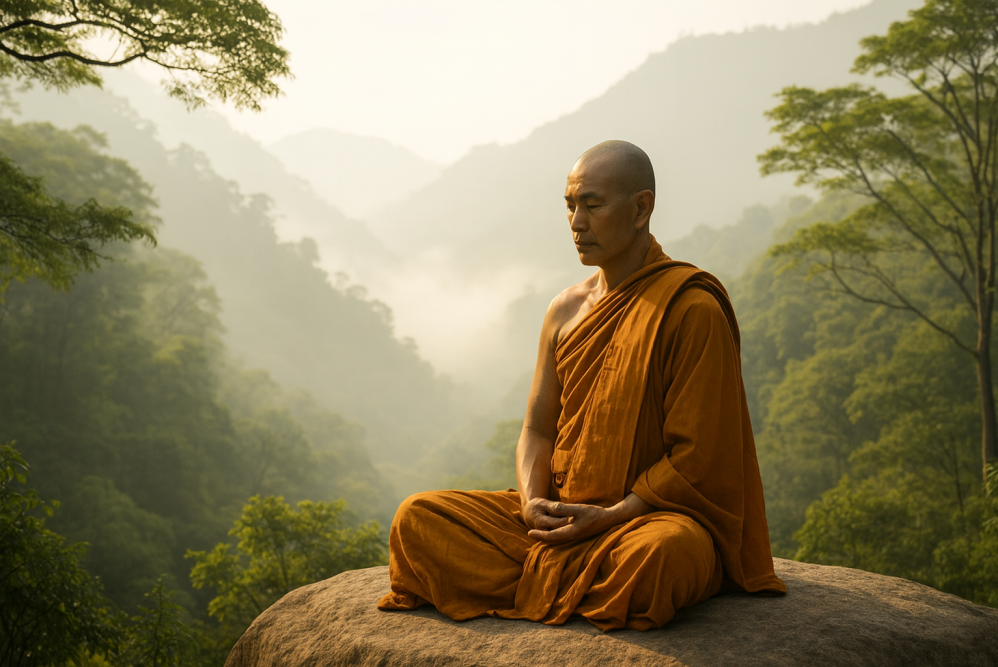
Why this matters now: Vipassana teaches you to read your body’s stress signals before they overwhelm you, crucial for navigating modern pressure.
Vipassana practice, which roughly means “clear seeing” or “insight,” traces back to the earliest teachings of the Buddha in ancient India. It’s built on the promise that anyone can learn to observe the inner world (emotions, thoughts, sensations) without chasing or rejecting what shows up.
Try This Now (30 seconds): Close your eyes and notice three physical sensations in your body right now. Don’t change them, just notice. That’s the beginning of Vipassana.
Foundational Teachings
Central to Vipassana is discovering through direct experience that everything is changing (impermanence), that suffering often arises from clinging or aversion, and that the sense of “I” is more fluid than we usually think. These aren’t philosophical concepts but directly observable phenomena.
How Vipassana Works in Practice
At its base, you sit, close your eyes, and notice your breath. Simple, yet within minutes you’ll see how the mind races after memories, worries, or plans.
Vipassana teaches you to keep returning to body sensations from air at the nostrils to subtle tingling without trying to make things pleasant or push anything away.
The signature technique is the body scan: systematically moving attention through your body like an explorer. Every sensation (warmth, heaviness, tension, vibration) becomes a laboratory for observing impermanence.
The Body-Emotion Connection: A Deeper Dive
Beginner Practice: Notice where you hold stress (shoulders? jaw?)
Intermediate: Map specific emotions to body sensations
Advanced: Catch emotional buildup before it peaks
What makes Vipassana particularly powerful for modern stress is recognizing that emotions literally live in the body. Neuroscience now confirms what meditators have known for centuries.
By developing “body literacy,” you learn to read these signals before emotions overwhelm you.
Tom, a lawyer who practices Vipassana, discovered his jaw would tighten hours before difficult negotiations. By catching this early warning sign and spending five minutes scanning his face and neck, he could release tension and enter meetings with clarity rather than reactive aggression.
Navigating Grief and Loss Through Vipassana
Unlike approaches that bypass painful emotions, Vipassana teaches you to sit with difficulty while maintaining equanimity.
Maria, who lost her mother last year, found that body scanning helped her navigate waves of grief: “I’d feel it rising, pressure in my chest, and instead of running or collapsing, I’d observe: ‘tightness, heat, pulsing.’ Witnessing it with curiosity rather than resistance let it move through me rather than getting stuck.”
Reflection question: Have you noticed how stress, joy, or sadness shows up in your body? Where do you typically hold tension, and what might it be telling you?
Zen Practice: Bringing Presence to Every Moment
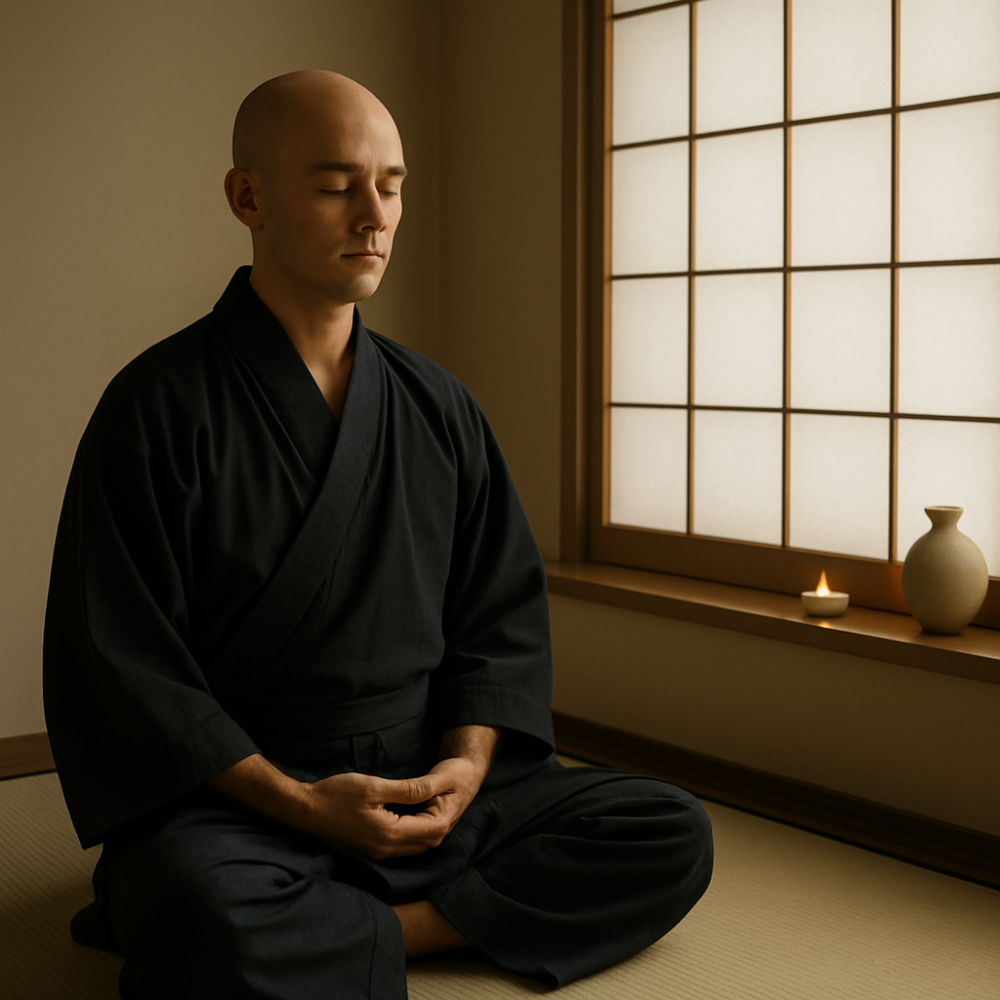
Why this matters now: Zen cuts through information overload by teaching complete focus on one thing at a time, the antidote to chronic multitasking.
While Vipassana develops insight through observation, Zen flips toward pure, unfiltered presence. Where Vipassana asks “What’s happening and how is it changing?”, Zen simply says “Just this moment, completely.”
Try This Now (30 seconds): Look at one object near you. See it as if for the first time: color, texture, shadows. No analysis, just seeing. That’s Zen presence.
What Makes Zen Tick?
Zen, which evolved from Chan Buddhism in China before taking root in Japan, emphasizes direct experience over explanation. The saying “Don’t seek the truth; just drop your opinions” captures its essence. Whether meditating, drinking tea, or chopping carrots, Zen means being fully there, no mental commentary required.
This approach particularly helps overthinkers. Where other traditions might encourage investigating thoughts, Zen says: stop analyzing and just be. Not suppressing thoughts, but letting them pass like clouds while you remain rooted in immediate experience.
Daily Zen Practice
Beginner: One task daily with complete attention
Intermediate: Multiple “presence moments” throughout the day
Advanced: Maintaining presence during emotional challenges
Pick any simple task and give it full attention. Washing dishes becomes feeling water temperature, hearing the rinse, tracking each movement. When your mind drifts, gently return. The Japanese tea ceremony exemplifies this: every gesture attended to with complete care, turning the ordinary sacred through presence alone.
Zen and Creative Flow States
By training yourself to be fully present with one task, you naturally enter flow states more easily. Jake, a graphic designer, explains: “I used to multitask constantly, anxious about deadlines. Now I approach each design element with total attention: the curve of a line, the weight of a color. Paradoxically, by slowing down and being present, I work faster with better creative decisions.”
Working with Difficult Emotions: The Zen Way
Unlike Vipassana’s investigation, Zen handles difficult emotions through radical acceptance. When anxiety arises, instead of analyzing, Zen practitioners sit with the raw experience without adding stories.
David, dealing with social anxiety, shares: “I stopped trying to figure out why or fix it. I just let anxiety be there while staying present with whoever I was talking to. It didn’t disappear, but stopped controlling me.”
Reflection question: What’s one daily task you could turn into a mini Zen ritual today? How might complete attention change the experience?
Thai Forest Tradition: Simplicity and Embodied Mindfulness
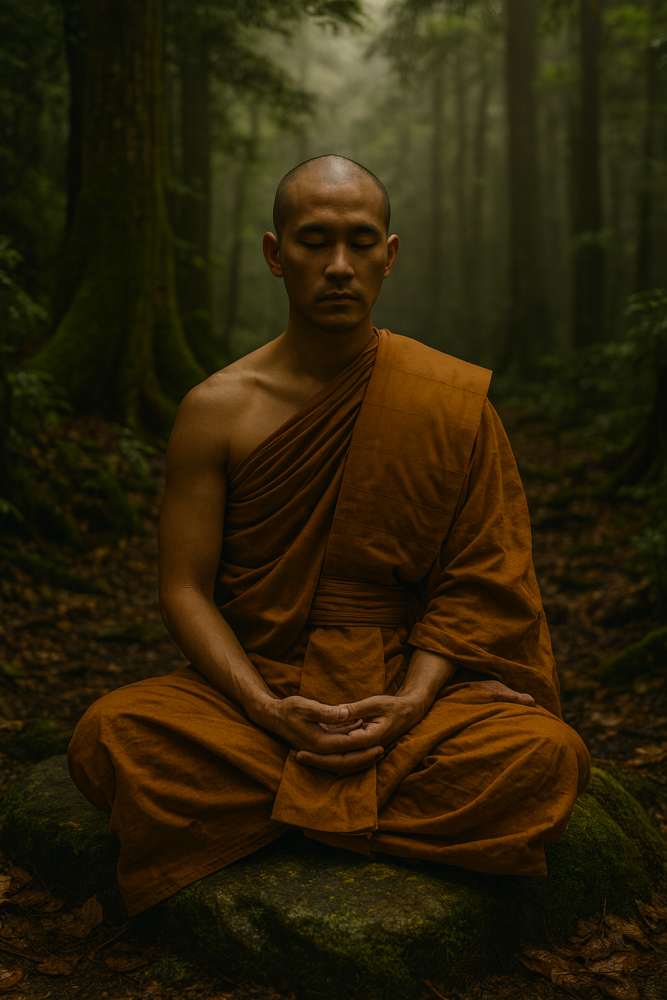
Why this matters now: In our complex, choice-overloaded world, Thai Forest wisdom strips everything down to essentials: body, breath, and nature.
Where Vipassana emphasizes insight and Zen cultivates presence, the Thai Forest Tradition finds clarity through radical simplicity and embodied awareness.
Try This Now (30 seconds): Feel your feet on the ground. Notice the weight, temperature, pressure. This simple grounding is Thai Forest practice in action.
Roots and Philosophy
This tradition, revived by teachers like Ajahn Mun and Ajahn Chah, holds that returning to basics (literally living in forests) strips away distractions to reveal clarity. Forest monks practice extreme simplicity: minimal possessions, structured schedules, extensive meditation, solitary time.
The core insight: remove excess and you’re thrown back on immediate experience: body, breath, sensations, sounds. You don’t need robes to benefit; body mindfulness grounds anyone prone to overthinking.
Embodied Practices for Daily Life
Beginner: Notice body sensations during routine activities
Intermediate: Regular nature connection, even brief
Advanced: Working peacefully with physical discomfort
Notice every micro-movement when standing from a chair. While walking, tune into the weight shift, air on skin. Even observing birds or leaves anchors you in the present.
Ajahn Chah taught: “If you let go a little, you’ll have a little peace. If you let go a lot, you’ll have a lot of peace.” Simple body awareness starts this letting go.
The Power of Simplicity in a Complex World
Rachel, a marketing executive, found this tradition after burning out from over-optimizing everything, including meditation: “I had apps, timers, special cushions, different techniques. Thai Forest taught me to just sit, breathe, notice. No apps, no goals. The simplicity was revolutionary.”
The tradition’s emphasis on simplicity proved transformative for Marcus, a tech entrepreneur who came to a Thai monastery after his third startup failed. “I arrived with my productivity mindset, wanting to ‘achieve’ enlightenment efficiently,” he recalls. “The monks had me sweep leaves for hours. Just sweeping. At first I was frustrated; leaves kept falling as I swept. Then I got it: the point wasn’t to finish, but to be present with the sweeping. That shift changed everything. Now back in Silicon Valley, I run my company with that same spirit, focused on the process, not just outcomes.”
Nature as Teacher and Healer
Even brief nature exposure reduces cortisol and improves mood, but Thai Forest goes deeper, using nature as mindfulness teacher.
Try keeping a “nature diary” noting one observation daily: moon phase, rain sound, wind feeling. This simple practice tunes you to natural rhythms, providing perspective on your own changes.
Jennifer, a Wall Street analyst, discovered this during lockdown: “I started with just watching a single tree from my window during coffee breaks. Same tree, every day. I noticed its changes: budding, leafing, colors shifting. Somehow watching its slow, inevitable cycles made my work crises feel less catastrophic. That tree became my teacher in impermanence.”
Working with Physical Discomfort
Rather than escaping discomfort through distraction, forest monks learn peaceful coexistence with it.
Mark, living with chronic back pain, found this transformative: “Instead of tensing against pain, which worsened it, I learned to soften around it. Breathing into the area, not to fix but to be present. Sometimes pain decreased, sometimes not, but my suffering definitely lessened.”
The Thai Forest approach to discomfort extends beyond physical pain. Sandra, a nurse working night shifts, used these principles to work with the discomfort of disrupted sleep cycles: “I stopped fighting my body’s confusion about day and night. Instead, I’d do simple body awareness during my breaks: feeling my feet, noticing my breath. It didn’t make night shifts easy, but it made them workable. The resistance was causing more suffering than the schedule itself.”
Reflection question: Where in your life can nature remind you to slow down? Is there a tree, sky patch, or houseplant that could become your mindfulness anchor?
Creating Your Personal Practice: Blending Ancient Wisdom
Why this matters now: You don’t need to choose one tradition; modern life benefits from combining their strengths.
Quick Reference Guide:
- Feeling anxious? → Vipassana body scan to locate and observe sensations
- Mind racing? → Zen focus on one simple task
- Feeling disconnected? → Thai Forest grounding in body and nature
- Need insight? → Vipassana investigation
- Overthinking? → Zen’s “just this”
- Overwhelmed? → Thai Forest simplicity
Building Your Hybrid Practice
These traditions complement each other beautifully. Here’s how different people blend them:
- Morning person: 5-minute Vipassana body scan in bed → Zen-style mindful breakfast → Brief Thai Forest nature walk
- Commuter: Vipassana sensation awareness during travel → Zen presence walking through stations → Thai Forest sky observation
- Parent: Zen presence during childcare → Vipassana insight for emotional reactions → Thai Forest nature exploration with kids
- Office worker: Thai Forest grounding before meetings → Zen focus on single tasks → Vipassana check-ins for stress signals
Your Personal Implementation Plan
Week 1: Exploration
- Try one technique from each tradition (2 minutes each)
- Notice which feels most natural
- No commitment pressure, just explore
Week 2: Focus
- Choose the most resonant tradition
- Practice one technique 5 minutes daily
- Add one “mindful moment” to existing routine
Week 3: Integration
- Expand to 2-3 mindful moments daily
- Try combining traditions
- Track changes in stress and reactions
Week 4: Customization
- Create your personal practice mix
- Set sustainable daily minimums (even 1 minute counts)
- Plan momentum maintenance
The Modern Struggle: Why Ancient Wisdom Still Resonates
Why this matters now: These practices weren’t designed for monks in caves; they were created for humans dealing with universal challenges that technology has only amplified.
Digital Age Challenges → Ancient Solutions
Information Overload → Zen Simplicity When your brain feels fried from endless input, Zen’s “just this” offers relief. Instead of processing everything, focus completely on one thing.
Chronic Multitasking → Thai Forest Embodiment Constant split attention leaves us scattered. Thai Forest practices anchor you in your body, providing stability in the task storm.
Emotional Reactivity → Vipassana Insight Social media triggers instant reactions. Vipassana’s sensation observation creates crucial pause between trigger and response.
Real Transformation Stories
Lisa, social media manager: “I was getting stress hives from constant connectivity. Five minutes of morning Vipassana before checking my phone; within a month, hives gone, and I could handle difficult comments without my heart racing.”
James, ER doctor: “During the pandemic, I practiced ‘micro-Zen’: fully present while washing hands, focused walking between rooms. These tiny calm islands prevented burnout when everything was overwhelming.”
Amanda, single mom: “No time for long meditations, but I can feel my feet while making lunch, really hear birds during school pickup. It’s not fancy, but it keeps me sane.”
Resources for Your Journey
Essential Reading by Tradition
Vipassana Path:
- Mindfulness in Plain English – Bhante Gunaratana (Beginner)
- The Heart of Buddhist Meditation – Nyanaponika Thera (Intermediate)
- The Mind Illuminated – Culadasa (Advanced)
Zen Path:
- The Miracle of Mindfulness – Thich Nhat Hanh (Beginner)
- Zen Mind, Beginner’s Mind – Shunryu Suzuki (Intermediate)
- The Three Pillars of Zen – Philip Kapleau (Advanced)
Thai Forest Path:
- Food for the Heart – Ajahn Chah (All levels)
- A Still Forest Pool – Kornfield & Breiter (Beginner)
- Being Dharma – Ajahn Chah (Advanced)
Digital Resources
Free Tools:
- Dharma Seed (dharmaseed.org) – Thousands of free talks
- Access to Insight (accesstoinsight.org) – Comprehensive texts
- Plum Village App – Free guided meditations
Community Building:
- Search “[your city] + tradition name + meditation group”
- Join online sitting groups via Zoom
- Start a weekly practice buddy check-in
- Create 30-day challenges with friends
Your Journey Starts Now
These ancient practices haven’t survived centuries by accident. They work because they address something fundamental: the human need to be present, aware, and at peace with reality as it is.
The Personal Invitation
You don’t need perfect conditions, special equipment, or hours of free time. Every master started with a single moment of awareness. Your transformation doesn’t require perfection, just beginning.
Try one small thing this week. One mindful breath before checking your phone. Three seconds of feeling your feet on the ground. A single task done with complete attention. Watch what shifts.
Remember what these traditions teach: everything changes, including your capacity for peace and presence. The question isn’t whether you have time for mindfulness—it’s whether you’re ready to discover that every moment already contains everything you need.
Your Next Steps
Your Next Steps
Ready to go deeper?
- Explore more articles here on Daily Self Wisdom, from overthinking to presence in everyday life
- Watch our YouTube channel for guided reflections and mindfulness stories
- Watch our video on ancient mindfulness traditions (embedded below) to see these practices brought to life
The Closing Wisdom
As Ajahn Chah beautifully said: “Try to be mindful, and let things take their natural course. Then your mind will become still in any surroundings, like a clear forest pool. All kinds of wonderful, rare animals will come to drink at the pool, and you will clearly see the nature of all things. You will see many strange and wonderful things come and go, but you will be still.”
This is the gift of ancient mindfulness: not escaping life, but finding stillness within it. Not perfecting yourself, but understanding your true nature. Not adding more to your plate, but discovering the feast already before you.
What will you notice today?
If you’d like to keep exploring, you might enjoy our guide on How to Stay Present in Everyday Life. It continues the same thread—bringing presence into daily routines in simple, practical ways.

Chris is the voice behind Daily Self Wisdom—a site dedicated to practical spirituality and inner clarity. Drawing from teachings like Eckhart Tolle, Ramana Maharshi, and timeless mindfulness traditions, he shares tools to help others live more consciously, one moment at a time.Learn more about Chris →
Leave a Reply