Digital minimalism sounds appealing in theory. People talk about it everywhere; leave your phone in another room, set app limits, unfollow everyone, or even buy a phone that barely does anything at all. But after all those changes, a lot of folks feel just as scattered and restless as before.
I’ve deleted apps, moved icons, and even tried a few digital detox weekends. But the real issue doesn’t disappear just by wrestling with settings or ditching devices. The real challenge with technology isn’t always about what’s on our screens. It’s about how easy it is to lose our attention while we’re using them.
What finally helped wasn’t stricter rules or better settings, but learning to notice what happens to my attention while I’m actually using technology.
Understanding What Zen Minimalism Actually Means
Zen and minimalism are often mixed up as styles—clean desks, empty inboxes, calm homes. But that’s not the heart of Zen minimalism. In Zen, minimalism means cutting down on the noise in the mind rather than just getting rid of things. It’s not about strict rules or always looking tidy, but more about letting go of whatever keeps the mind running in circles, even when nothing much is happening on the outside.
This is where digital minimalism touches Zen. There’s nothing wrong with having a smartphone or hundreds of apps. The trouble comes when I forget I’m even holding my phone or lose myself chasing notifications. Zen minimalism isn’t simply closing tabs; it’s noticing what happens inside when I feel the urge to check, scroll, or jump from app to app. When I look through that lens, it’s less about what I own or use, and more about how I use it.
Modern minimalism sometimes ends up just being another layer of control, a race to have the least stuff or the cleanest homescreen. But Zen minimalism softens the grip, focusing on the movement of thoughts and the feeling of being pulled around by technology. It’s a kind of “inner tidying up.”
Cutting Down Screen Time Doesn’t Solve Everything

Maybe you’ve tried deleting social media, setting thirty-minute timers, or going cold turkey on your favorite apps. A break feels good, sure, but the urge to check or escape usually sneaks back in. At some point, I realized it’s easy to use technology, or even avoidance of technology, as a way to run from discomfort, boredom, or that sense of unease that just hangs around sometimes.
It’s possible to put every digital tool on pause and still find myself reaching for something, anything, to avoid sitting with an uncomfortable feeling or just plain restlessness. That’s why focusing only on cutting down tech time usually doesn’t bring ease for long. Without noticing the patterns inside, minimalism can quietly become another habit of control. The core agitation just settles somewhere else, maybe in endless podcast listening, or fiddling with “real world” organizing.
Instead of chasing a perfect zero-distraction lifestyle, it helps to see how our habits around tech are often gentle (or not-so-gentle) ways to dodge feelings, thoughts, or even the sensation of boredom. Technology gets the blame, but it’s really about how we relate to moments of discomfort or stillness.
Zen Digital Minimalism: Attention Over Abstinence
This is where I find Zen digital minimalism so refreshing. Rather than holding technology at arm’s length or setting up walls, Zen teaches me to notice the movement of attention as it actually is, without pretending it can’t get lost.
Sometimes I catch myself reading the news online with total presence: noticing the words, the body’s sensations, even my emotional reaction. Other times, I’ll realize I’ve jumped from app to app, article to article, and barely remember what I just read. Presence isn’t about exactly what you do, but about how you show up for it.
Zen practice, including something as simple as pausing to notice a breath before clicking open another tab, lets technology become a mirror. Every swipe or urge-to-check can show me something about attention, distraction, and how easily the mind scrambles for novelty or escape.
The cool part is, I don’t have to be offline to practice this. I can scroll, work, text, or listen; what matters most is the simple awareness of what I’m doing, and the choice to stop when attention fades away or when I notice the feeling of compulsion setting in. In those moments, technology isn’t the enemy or a friend, it’s just part of the daily landscape.
The video below explores mindfulness as a lived practice rather than a technique, which ties directly into Zen digital minimalism.
How to Practice Zen Digital Minimalism Every Day
Practicing Zen digital minimalism isn’t about laying down a set of rigid rules or going on an endless hunt for perfect focus. It’s about gently tuning into awareness before, during, and after using technology. Here’s how I bring this to life in the flow of a regular day, without quitting the digital world.
Pausing Before Picking Up a Device
Most of my digital distraction comes from habit. When I pause just for a second before touching my phone or keyboard, I get this small window to ask, what’s drawing me to this? Am I bored, stressed, or simply looking for a quick shot of something new? Sometimes the answer is simple: “I just want to check for messages.” But pausing lets me decide if that’s actually what I want, instead of playing out a mindless loop.
Using One Screen for One Thing at a Time
It’s tempting to multitask: emails, music, social media, news, all running together in the background. But every time I focus on just one task, writing an email without peeking at texts, or scrolling a feed without also watching TV, I usually notice a calmer, more collected energy. This isn’t about perfection, just an experiment: seeing how it feels to give full attention to a single digital task. Presence builds slowly from these kinds of choices.
Sensing the Body While Engaging With Technology
Most of my digital use happens from the neck up, lost in thought, not noticing the body at all. Turning my attention to the physical sensation of holding a phone, the movement of my breath, or the way I’m sitting brings a grounded sense, even during screen time. This body awareness is one of the clearest ways to bring mind and technology into the same moment.
Stopping Screens When Awareness Fades
Timelines and alarms are common for managing device use. But I’ve noticed a kind of natural stopping point: that moment when I realize I’ve lost track of what I’m doing, or my attention feels scattered and hazy. Instead of waiting for a timer, pausing right there lets me gently step away. Even closing a laptop for a minute to notice the room around me counts as a reset.
These aren’t big, dramatic steps to achieve digital minimalism. They’re tiny touchstones, chances to return to here-and-now awareness inside the flow of tech use, no checklist required. More detailed guidance on presence in daily life can be found in How to Stay Present in Everyday Life.
The One Zen Principle That Can Switch Up Your Digital Life
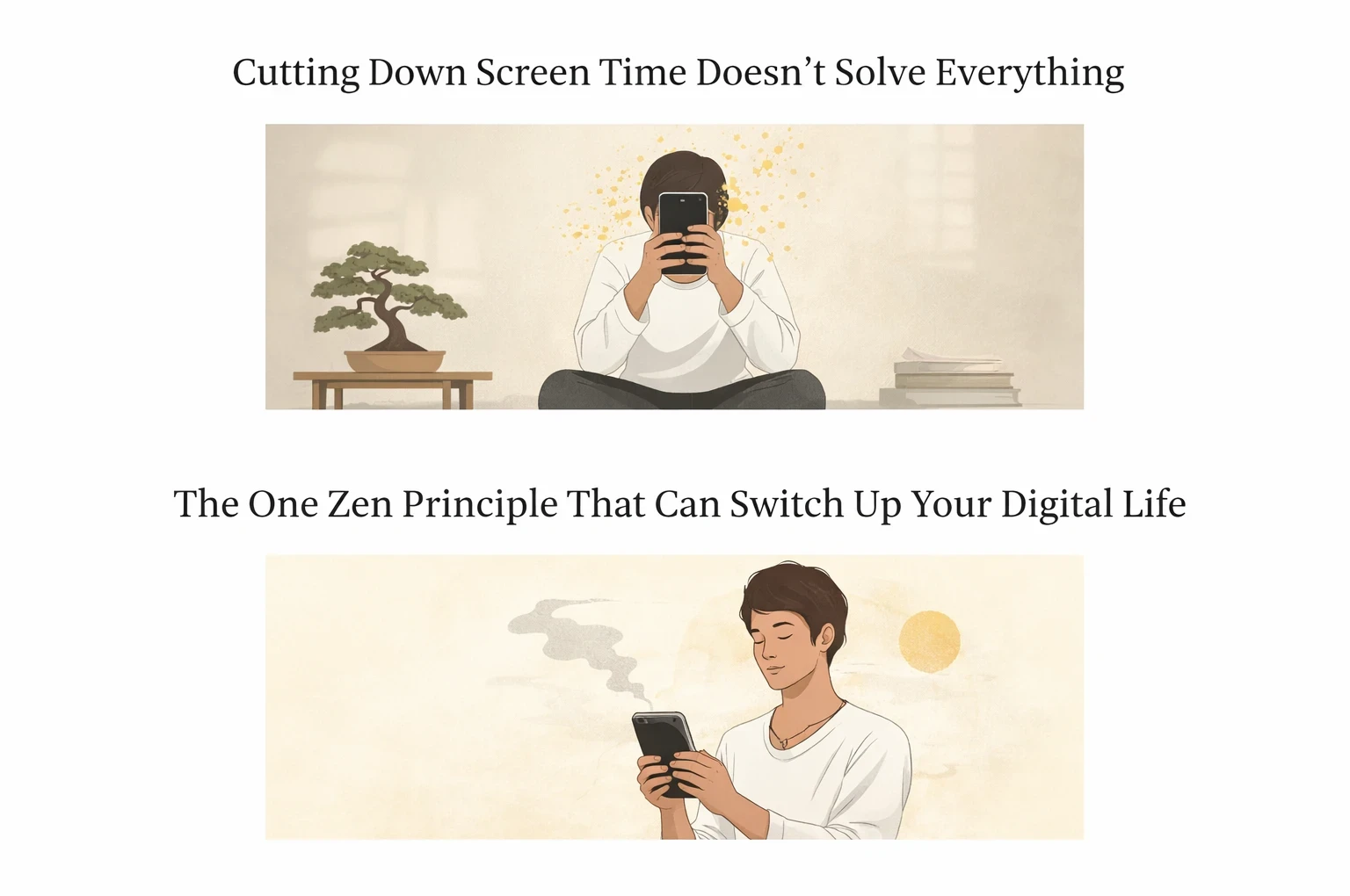
There’s one simple phrase that keeps coming back to me: don’t use technology to run away from a feeling. It sounds obvious, but I find it quietly transformative. For example, when I notice a wave of boredom, irritation, or sadness, reaching for my phone is almost automatic. But pausing to feel what’s there (even for five seconds) changes everything.
This doesn’t mean I never scroll or distract myself. Sometimes that’s just how a day goes. But when I notice I’m about to use a device to dodge discomfort, and I pause—even briefly—there’s a small bit of freedom right in that space. Maybe I decide to scroll anyway, but there’s a new sense of choice, not just habit.
For instance, if I’m waiting in line and reach for news, I’ll tune in for a second: Am I curious, or just trying to escape the awkwardness of standing still? If it’s the latter, maybe I just stand, breathe, let whatever is present be present. This isn’t about self-denial, but about letting myself meet my actual lived experience, so I don’t spend the entire day running away from my own feelings.
That single principle helps me break the cycle of digital distraction in a gentle, grounded way. Not perfectly, not every time, but enough that I can feel the difference.
For a deeper exploration of how presence differs from mindfulness techniques and why that distinction matters, you might like Presence vs. Mindfulness.
Everyday Life as a Zen Digital Minimalist
The idea of being a “Zen digital minimalist” doesn’t mean sitting on a cushion in a cabin, unplugged from the world. I use YouTube, message family, answer emails, and scroll social feeds. But I also catch myself, sometimes, before the urge to check takes over. If I feel that twitchy restlessness, I’ll pause, take a slow breath, and sense what’s asking for my attention inside.
Some days go better than others. There are times I get stuck in online rabbit holes. My homescreen is far from empty. But compared to the past, my use of technology feels lighter and less driven. I genuinely enjoy a funny video or a group chat and then move on, instead of compulsively searching for something else to hold my attention.
It’s not about tracing every data point or mastering myself. It’s about gently tuning in, using digital life as a place to practice real, moment-to-moment awareness.
Digital Minimalism as a Flowing, Ongoing Practice
The Zen minimalism lifestyle isn’t a one-time fix or a weeklong challenge. Presence and technology are always mixing things up. I’ll have days of flow and clarity, followed by evenings of mindless checking. It’s a living practice, changing as life changes. What matters is the willingness to return—again and again—to noticing what’s happening, right now, both inside and out.
This goes deeper than just technique or willpower. It’s related to the core of presence, a gentle, open kind of attention that doesn’t turn away from discomfort, distraction, or confusion. I often draw on moments of quiet to bring more of that presence into my digital routines, knowing it won’t ever be perfect.
For more thoughts on why overthinking keeps pulling us out of presence and how to meet it, have a look at How to Stop Overthinking with Presence.
Technology and the Art of Not Losing Yourself

Practicing Zen digital minimalism is mostly about returning to awareness, again and again, not with force or judgment, but with a kind of curiosity about what’s here. The real value isn’t in getting rid of every distraction or controlling every urge, but in letting technology become just another part of daily life without letting it claim all your attention.
I’m still learning, pausing, and forgetting every single day. But the invitation stands: use technology with presence, let yourself notice when you drift or disconnect, and experiment gently. Visual minimalism and app limits have their place, but the real freedom comes from practicing awareness, one moment, one tap, one breath at a time.
The practice isn’t to win against distraction, but to notice when you’ve wandered and come back.
If you want to ground this approach more deeply, it helps to understand what Zen mindfulness actually points to beyond techniques or stress reduction. I’ve written a complete guide on how to practice Zen mindfulness daily, which explores attention, presence, and everyday awareness in more depth.
The next time you reach for your phone today, pause for just one breath.
Notice the urge. Notice the body. Notice the mind.
That moment of noticing is Zen digital minimalism in practice.
If you’d like to explore this kind of everyday presence more deeply, you’ll find related reflections on Daily Self Wisdom, including practical guides on presence, mindfulness, and working with overthinking.

Chris is the voice behind Daily Self Wisdom—a site dedicated to practical spirituality and inner clarity. Drawing from teachings like Eckhart Tolle, Ramana Maharshi, and timeless mindfulness traditions, he shares tools to help others live more consciously, one moment at a time.Learn more about Chris →
Leave a Reply