Karma Yoga has always struck me as one of the most down to earth teachings in the Bhagavad Gita. I hear from a lot of people frustrated by the intense pressure to produce, achieve, and keep up with endless demands, at work, with family, even in moments that are supposed to feel relaxing.
What makes things harder is that it’s not just the work itself; it’s the grinding anxiety about how things will turn out that causes most of the inner strain. Krishna’s advice to Arjuna is directly about this kind of suffering. It’s about feeling trapped by responsibilities, outcomes, fear of failure, or the sense that no matter what you do, you’re never really “done.”
If you want a grounded teaching for how to move through the real stuff of everyday life without being wrecked by pressure and self-doubt, Karma Yoga is worth checking out.
What Karma Yoga really means in simple terms
Karma Yoga is often translated as “the path of selfless action,” but I think it comes across clearer as the art of acting without getting mentally tangled in results. In Sanskrit, karma means action or deed, and yoga here refers to a skillful attitude or approach, not twisting your body into shapes, but finding a steady mind while you do what you need to do.
I’ve seen a lot of confusion around the idea that “action is unavoidable, suffering is optional.” We all have to take care of things, provide for our families, handle projects, make choices. But there’s a world of difference between doing your best and, on the other hand, worrying at every step if it’s “good enough.” Karma Yoga is about acting fully in the world, with full effort, and letting go of the emotional baggage we attach to what might happen next.
So, it’s not about running away from life’s demands. Yoga is your inner stance as you face everything, not a vacation from your duties. Whatever comes up, Karma Yoga is practical guidance for doing what matters without getting stuck in mental loops over results.
Why Krishna teaches Karma Yoga in the Gita
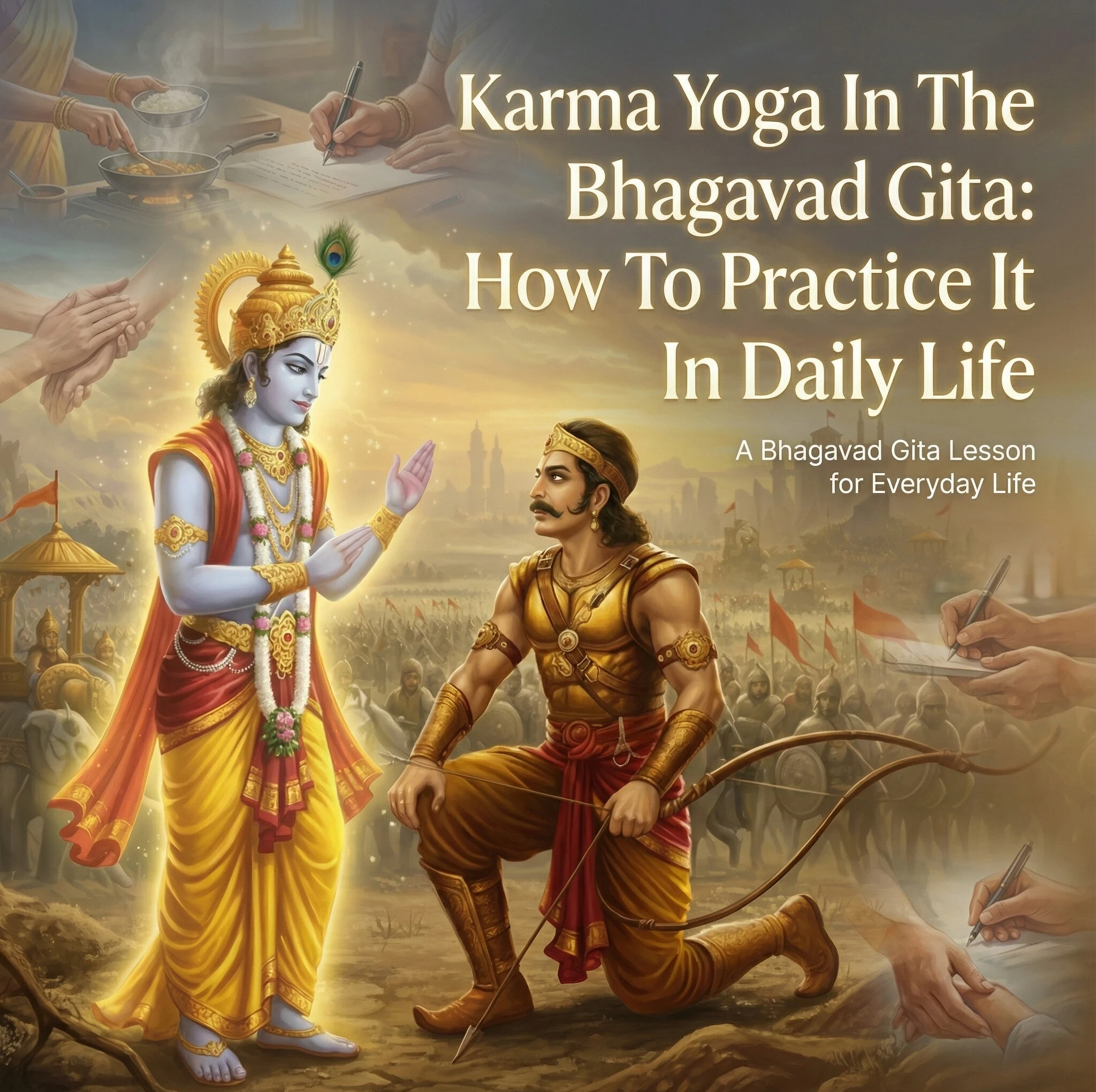
The Bhagavad Gita opens with Arjuna in a moment of meltdown. He’s supposed to fight in a battle, but the weight of expectations, family ties, and fear leave him paralyzed. Krishna, acting as his mentor and charioteer, doesn’t tell Arjuna to walk away or numb himself. Instead, Krishna encourages full engagement with life, knowing that inner conflict won’t be solved by quitting or turning numb.
Krishna’s teaching sticks with me because it’s all about doing what needs to be done, but without the fear, guilt, or toxic pride that so often follow. He says, do your duty, focus on the effort, and let the results unfold naturally.
This teaching calls out the trap a lot of us get caught in: tying our self-worth or peace of mind to achievement, approval, or keeping everything under control. Acting without being attached to how every detail turns out is the heart of Karma Yoga, and honestly, it brings a lot more freedom and clarity to everyday situations.
Karma Yoga in one minute
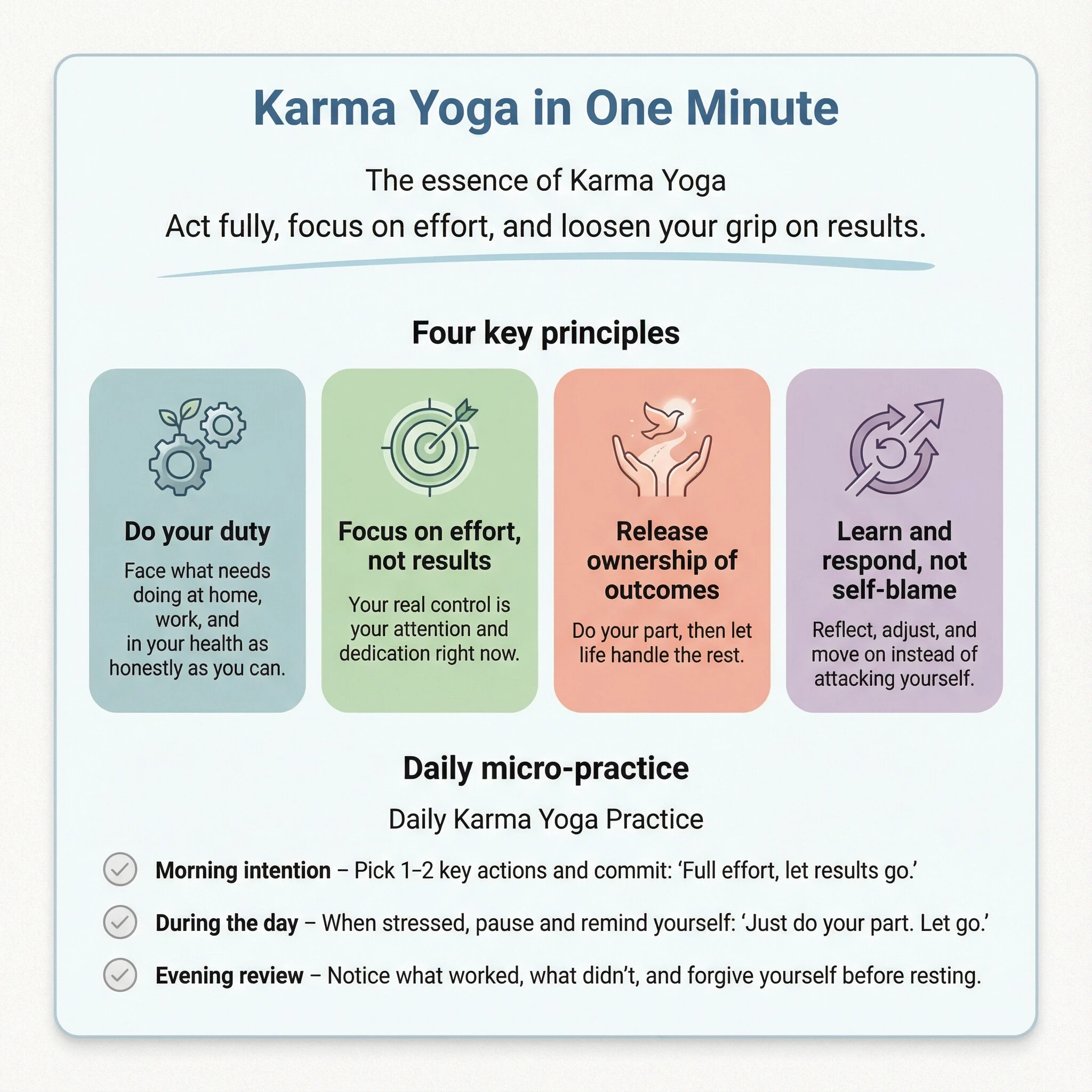
- Do your duty. Whatever needs doing, whether it’s at home, work, or for your health, face it as honestly and completely as you can.
- Focus on effort, not results. All you really control is your attention and dedication right now.
- Release ownership of outcomes. What happens after your effort is bigger than you; all you can do is your part.
- Learn and respond, without self-blame. If the result isn’t great, reflect, adjust, and move on. Beating yourself up doesn’t help you or anyone else.
This approach skips the fake positivity and gets you right into a practical, steady rhythm for any life challenge.
For a spoken walkthrough of how Karma Yoga applies to daily work, pressure, and responsibility, you can watch the video below or on YouTube.
What Karma Yoga is not
Karma Yoga gets watered down or misunderstood pretty often, so I want to clear a few things up. Practicing Karma Yoga is not:
- Not passivity or quitting. Krishna doesn’t say “stop caring” or “walk away from the challenge.” Far from it. He encourages showing up and being present.
- Not suppressing desire. Wanting to do well or help others is totally natural. Suppressing what you want or pretending you don’t have any feelings is not Karma Yoga.
- Not pretending not to care. Acting with detachment isn’t about being a robot. It’s about acting without torturing yourself over what might go wrong.
- Not only charity or good deeds. Helping others is great, but Karma Yoga is about your attitude in action, at your job, in your family, even in doing laundry or driving to work.
Karma Yoga is an inner approach to how you act, not just a certain kind of act.
The core practice of Karma Yoga
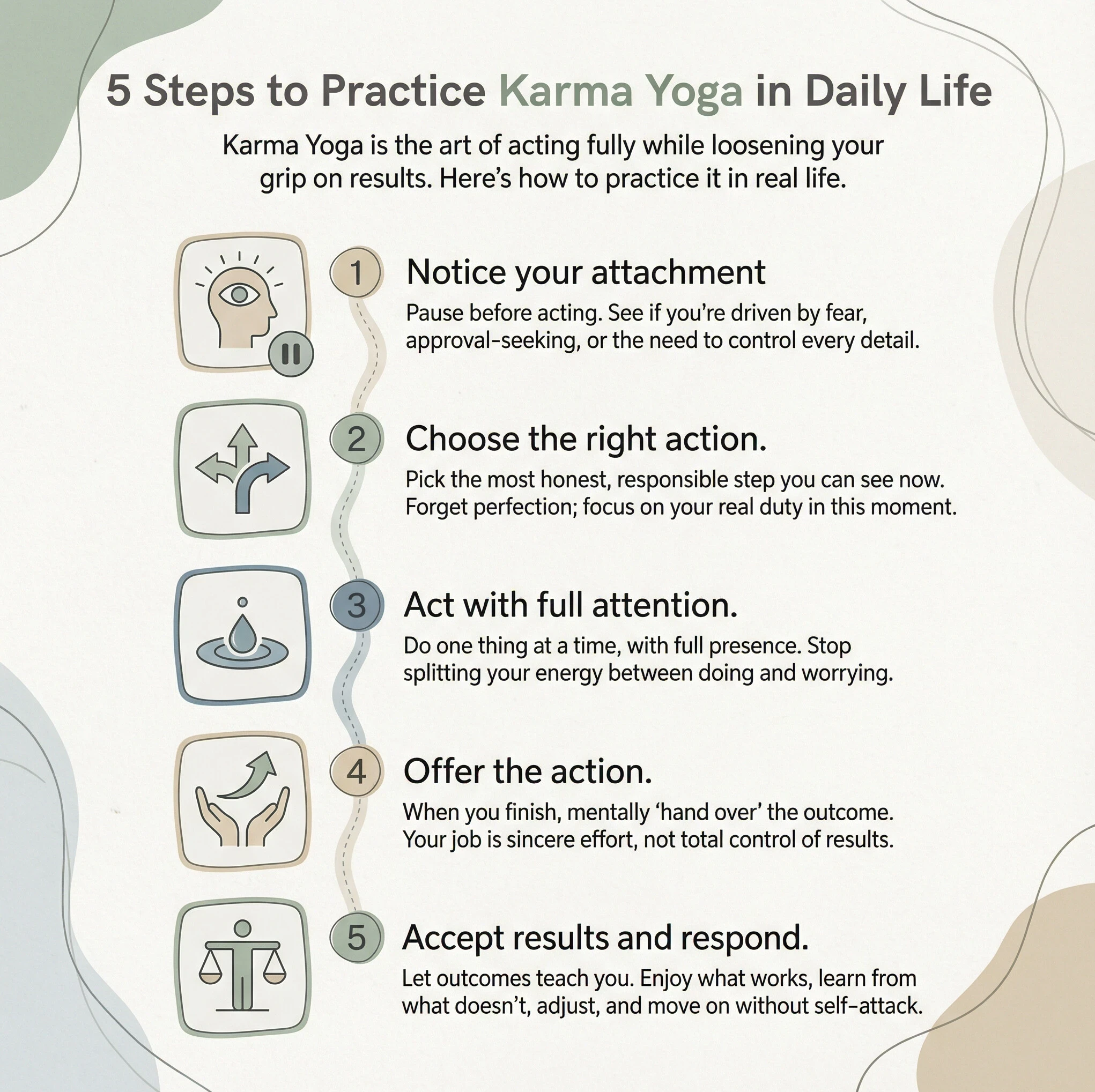
Step 1: Notice your attachment before acting
The first thing I find really important is just to check what’s driving the action. Are you really worried about getting someone’s approval? Is it about fear of failure, wanting to control every detail, or needing to protect your identity as “the good employee” or “the perfect parent”? Even a couple seconds of noticing clears a little space before the usual pattern runs wild.
Step 2: Choose the right action, not the perfect one
In the Gita, Krishna calls this action svadharma, your genuine, honest best response to what needs to be done. In modern life, that can mean speaking up at work, taking care of your health, or supporting your family. You don’t need to have all the answers; just pick the most responsible step you can see right now. Perfection isn’t required.
Step 3: Act with full attention
Karma Yoga means not sleepwalking through your tasks or splitting your energy twelve ways. It’s showing up, doing what you’re doing with full focus, and not imagining disasters or rewards. This makes even everyday work feel lighter, and it often improves quality because you’re actually there for it.
Step 4: Offer the action
This is a point where people sometimes get tripped up thinking it’s about a religious ritual. The Gita talks about offering each action, but you don’t have to make this something stiff or formal. For me, it means finishing a task, sending the email, prepping the meal, and letting go of my private hopes about getting praise or avoiding every problem. It’s about releasing “ownership” and knowing life will unfold however it needs to.
Step 5: Accept results and respond intelligently
When things go well or badly, Karma Yoga isn’t about numbness. Enjoy your wins, learn from mistakes, update your plans, and keep moving. Being stuck in regret, resentment, or constant second-guessing piles on extra misery. Respond with clarity, then take on the next step you can see. That’s more than enough.
Applying Karma Yoga in everyday life

At work and business
Workplaces are a hotbed for anxiety about results, deadlines, performance reviews, job security, and reputation. Karma Yoga here means putting energy into doing solid work but releasing the endless mind games about how everyone else will judge you. I aim to do my part, file the report, or deliver the project with steadiness, then step back rather than rewinding the scene all night in my head. The job is to act, not guarantee every outcome.
With money and stability
Managing money, paying bills, making choices about big or small purchases, all of these are real-life places to use Karma Yoga. Careful planning is great, but catastrophizing about every possible scenario or believing that net worth equals self-worth leads to panic. I try to set budgets or save with care, but I know I can’t control markets, accidents, or what someone else may do. The security is in showing up responsibly and stepping back from obsessive worry.
In relationships
Karma Yoga really shows up in family and friendship drama. I’ve found that being honest and kind is worth more than trying to manage what everyone else thinks or how they react. I’ll say my true opinion, support family, or reach out when I can, but I’m learning to let go of the urge to force outcomes or win every argument. All I control is my input, not the whole relationship.
With health and self-improvement
Exercise, sleep, learning a new skill, all of these go better for me when I stop obsessing about results. With health, if I act on what I know supports my body, like walking, eating well, or meditating, that’s the real win. Fixating on scale numbers, appearance, or constant self-judgment just makes things harder. The process itself is what counts, not endless comparison or perfection.
In creative work
I’ve wrestled with sharing art, writing, or launching a project only when I thought it would get lots of validation. Karma Yoga flips this thinking: you show up and make something, pour your heart in, and press publish. Whether one person loves it or nobody notices isn’t the ultimate point. Producing and sharing from a grounded place adds more freedom and joy than chasing praise.
Karma Yoga vs mindfulness
Karma Yoga and mindfulness sometimes get mixed up, but they aren’t identical. Mindfulness is about raw awareness, being fully present to what’s happening right now, noticing thoughts, feelings, and sensations. Karma Yoga takes this a step deeper into action. Do what needs to be done with presence, but don’t let yourself get trapped by internal cravings or fears about results. Mindfulness awareness can help you spot when you’re getting attached or stressed. From there, the Karma Yoga part is about wading back in and doing your duty, whether you “feel” spiritual or not.
When Karma Yoga feels hard
No joke, Karma Yoga can feel impossible some days. I notice resentment when my hard work doesn’t get noticed or the urge to give up when I’m burnt out. Doubt shows up: “What’s the point if nothing changes?” Here’s what helps me:
- Shrink the task. When I’m overwhelmed, I just pick the next clear action. No need to win or finish everything now, just start.
- Return to duty, not mood. If my mind is a mess, I remember that feelings don’t always have the final say. Showing up for what’s needed, no matter how I feel, is what matters here.
Trying to be perfect at Karma Yoga just becomes another mental trap. I mess up, get attached, and fall into old patterns, then try again for the next task. That’s real practice.
Karma Yoga and the deeper Gita teachings
Karma Yoga gets even more depth when you dig into the Gita’s other teachings about identity. Krishna points out that much of our bondage is because we forget who we really are. If you’re curious, I’d suggest reading these breakdowns:
The less I tie my entire identity to what my body does or what happens in my mind, the less trapped I feel by what goes well or what falls apart. Karma Yoga is really about loosening this tight identification with action and results. Less identification brings less stress, more breathing space, and a lighter approach to life’s work.
A simple daily Karma Yoga practice
Here’s a quick, real world way I use Karma Yoga through the day:
- Morning intention: While sipping coffee, I pick one or two things for the day and set the attitude: “I’ll give full effort and let results go.” Nothing fancy.
- During action reminder: When I catch myself stressing or rushing for approval, I pause and quietly remind myself: “Just do your part. Let go.”
- After action review: At night, I look at what worked and what didn’t. I learn from it, tweak my approach, and practice forgiving myself no matter what happened.
The point isn’t perfection, but building real freedom into how you approach work, family, health, and creativity.
Common Questions About Karma Yoga
Is Karma Yoga the same as not caring about results?
No. Karma Yoga does not mean indifference or lack of effort. It means you care about the action itself without tying your peace of mind or self-worth to the outcome. You still plan, prepare, and respond intelligently. You just stop mentally suffering over what you cannot fully control.
Does Karma Yoga mean I should stop wanting success?
No. Wanting success is natural. The problem is when success becomes the condition for feeling okay about yourself. Karma Yoga helps you act wholeheartedly while loosening the inner demand that things must turn out a certain way for you to be at peace.
Can I practice Karma Yoga without being religious?
Yes. Karma Yoga is an inner approach to action. While it comes from Krishna’s teaching in the Bhagavad Gita, you can apply it regardless of belief. You do not need rituals, beliefs, or labels. You only need honesty about where attachment and stress creep into your actions.
What if the results really matter for my life?
They often do. Karma Yoga does not deny consequences. It helps you deal with them more clearly. You still take responsibility, adjust your actions, and make changes when needed. The difference is that you respond with clarity instead of panic, resentment, or self-attack.
Is Karma Yoga the same as mindfulness?
No. Mindfulness is about awareness. Karma Yoga is about action. Mindfulness helps you notice stress, attachment, or fear. Karma Yoga guides how you act once you notice them. They work well together, but they are not the same practice.
What if I keep failing at Karma Yoga?
That is normal. Karma Yoga is not a perfection practice. You will notice attachment, get stressed, react emotionally, and fall back into old habits. The practice is simply to notice, reset, and take the next right action. Each moment is a new entry point.
Is Karma Yoga about doing what others expect of me?
No. Karma Yoga is about acting from integrity, not people-pleasing. Duty in the Gita is not blind obedience. It is responding honestly to what life places in front of you, without acting from fear, guilt, or the need for approval.
Karma Yoga as freedom in real life

I keep coming back to Karma Yoga not because it’s abstract philosophy, but because it frees me from the rollercoaster ride of chasing results, approval, and control. Krishna’s teaching in the Gita is one of the clearest paths I’ve found for living with responsibility and purpose, minus the heaviness.
Applying Karma Yoga even a little bit really does lighten up the pressure cooker of daily life and keeps you grounded, no matter what outcomes roll in.
Looking to dig even deeper? Try journaling for a week about where you notice attachment to results, and where you’re able to act from a lighter place. Repeat some of the reflections or meditations offered in the Gita, and see how your approach to daily work begins to loosen up.
Karma Yoga isn’t a “one size fits all” prescription—it shows up differently for each person and every phase of life. Try approaching housework, challenging conversations, or creative projects as mini opportunities to put these teachings into action. With time, you may spot a new kind of freedom and steadiness, right in your regular routines.
Wrapping up, the teachings of Karma Yoga can help you find peace not by running away from responsibility, but by getting into the flow of action itself. You aren’t meant to be weighed down by outcomes or outside opinions.
Give your best in the moment, learn from whatever comes, and let the world shape itself. Freedom is possible, even in busy, modern life, when you bring this ancient, grounded wisdom into your daily actions.

Chris is the voice behind Daily Self Wisdom—a site dedicated to practical spirituality and inner clarity. Drawing from teachings like Eckhart Tolle, Ramana Maharshi, and timeless mindfulness traditions, he shares tools to help others live more consciously, one moment at a time.Learn more about Chris →
Leave a Reply