Modern life moves quickly. It’s full of schedules, buzzing notifications, and the pressure to keep up. A lot of us feel a steady undercurrent of stress, like we’re supposed to always be doing more, knowing more, and becoming more.
Research consistently shows that burnout, overwhelm, and disconnection have become widespread challenges in contemporary culture.
That’s why I find the idea of turning to ancient wisdom so refreshing. These time-tested teachings offer an anchor when everything feels overwhelming. Blending ancient tradition with simple, everyday actions, I’ve stumbled upon practical ways to make life a little calmer, more joyful, and sometimes even lighter.
What makes these philosophies remarkable isn’t just their age, but their adaptability. They’ve survived millennia because they address something fundamental about human experience.

Effortless Living with the Tao of Flow
Key Terms
- Tao (道): The Way, the natural order or flow of the universe
- Wu Wei (无为): Effortless action, non-forcing, acting in harmony with circumstances
- De (德): Virtue or power that comes from aligning with the Tao
- Ziran (自然): Naturalness, spontaneity, being authentically yourself
- Pu (朴): The uncarved block, original simplicity before conditioning
Origins and Historical Context
Taoism emerged in ancient China around the 4th century BCE, crystallizing in Lao Tzu’s foundational text, the Tao Te Ching. This slim volume of 81 verses is among the most translated books in human history.
Taoism arose during the Warring States period, a time of chaos and conflict, which makes its message of yielding and flowing even more powerful. The philosophy wasn’t developed in ivory towers but in response to real suffering and turmoil.
The core concept, the Tao (literally “the way”), represents the natural order of the universe. It’s the current beneath all existence, the pattern that governs seasons, rivers, and even human affairs.
Early Taoists observed nature closely, watching water flow around obstacles, noticing how trees bend in wind rather than break, seeing how animals move with instinct rather than overthinking.
Core Teachings in Plain Language
The Tao Te Ching describes action without strain, acting in accord with the situation rather than against it. As translator Stephen Mitchell renders verse 8: “The supreme good is like water, which nourishes all things without trying to.” This captures wu wei perfectly, effective action that doesn’t feel forced.
The heart of Taoist practice is wu wei, often translated as “effortless action” or “non-doing.” This doesn’t mean laziness or passivity. Instead, it’s about acting in harmony with circumstances rather than against them.
Imagine a skilled surfer, they don’t fight the wave, they read it and move with its energy. That’s wu wei.
Another key teaching is ziran, naturalness or spontaneity. It’s the idea that our most authentic actions come when we’re not forcing or performing. Think of a child laughing, totally genuine, not calculated.
Taoism invites us back to that spontaneity while maintaining adult wisdom.
The Common Misconception
Many people think Taoism means being passive or just “going with the flow” in a way that avoids all effort or decision-making. That’s not quite right.
Wu wei is about intelligent action, not inaction. It’s choosing the path of least resistance when it serves your goals, not abandoning goals altogether.
A Taoist might work incredibly hard, but they’d do so without strain, finding the natural rhythm of their task rather than muscling through with pure willpower.
Modern Pitfall: Confusing Wu Wei with Apathy
The biggest trap is using wu wei as an excuse for inaction when action is needed. “I’m just going with the flow” can become avoidance of difficult conversations, necessary planning, or taking responsibility.
True wu wei requires discernment, knowing when to act and when to wait, when to speak and when to listen. It’s high-awareness responsiveness, not low-energy passivity.
Modern Applications
Stress creeps in when life feels forced or overly planned. The Taoist idea of wu wei totally flips that. Instead of pushing through resistance, wu wei means working with the natural flow of things. Think less rigid control, more adapting to what’s already unfolding.
In the workplace, wu wei transforms how we handle projects. During a product launch I worked on last year, everything seemed to hit roadblocks simultaneously. The old me would have powered through, working late nights and forcing solutions.
Instead, I asked, “What wants to happen here?” Some features got pushed to version two, some team members naturally stepped into different roles, and the launch actually went smoother because we stopped forcing our original rigid plan.
In relationships, Taoist flow means catching cues, listening more, and letting moments unfold instead of forcing outcomes. During a difficult conversation with my partner about household responsibilities, I noticed myself wanting to “win” the argument.
Pausing, I asked how we could make this easier for both of us. We found a rhythm that neither of us had planned but that worked better than any imposed system would have.
Practical Step-by-Step Practice: The Wu Wei Pause
- Notice when something feels like you’re pushing a boulder uphill (physical tension in shoulders, mental resistance, frustration).
- Stop for 30 seconds. Literally pause what you’re doing.
- Ask yourself: “How could this be easier? What am I forcing?”
- Look for the natural opening, the path water would take around an obstacle.
- Adjust your approach or timing based on what you discover.
- Move forward with this new direction, staying alert for more signals.
Case Study: From Burnout to Flow
Sarah, a marketing director, was working 70-hour weeks trying to force a campaign strategy that kept hitting resistance from stakeholders. After learning about wu wei, she paused to reassess. Instead of pushing her vision harder, she asked, “What wants to emerge here?”
She facilitated open discussions where team members shared concerns she hadn’t heard. A different, more collaborative approach surfaced naturally.
The final campaign incorporated ideas from across the team, launched three weeks earlier than the forced timeline, and performed 40% better than projected. Sarah reported feeling energized rather than depleted, and her team felt ownership rather than resentment.
Connecting with Daily Rhythms
One of the best real life uses I’ve found is during work project overload. Instead of muscling through every block, I’ll take a breath and ask: “How can I make this easier on myself?” Sometimes, that means taking a break, moving to a new spot, or dropping a to do that just isn’t serving the overall goal.
I’ve learned to recognize the difference between productive effort and stubborn forcing.
Modern neuroscience research on flow states, extensively studied by Mihaly Csikszentmihalyi and others, actually backs this up. Our brains work better when we alternate between focus and diffusion.
The “aha” moments often come when we stop forcing and let our unconscious mind process. That’s wu wei in action.
Key Takeaways
- Wu wei isn’t about doing nothing, it’s about intelligent, harmonious action aligned with natural circumstances
- When you feel stuck, pause and look for the natural opening rather than forcing through resistance
- If you’re curious about going deeper, my post on finding flow through Taoist practice might help with practical tips for building more ease

Finding Joy in Others’ Wins: Mudita
Key Terms
- Mudita (मुदिता): Sympathetic joy, taking delight in others’ happiness and success
- Brahmaviharas: The Four Immeasurables (loving-kindness, compassion, sympathetic joy, equanimity)
- Metta: Loving-kindness, wishing wellbeing for all beings
- Karuna: Compassion, the wish for others to be free from suffering
- Upekkha: Equanimity, balanced mind in all circumstances
Origins and Historical Context
Mudita is one of the Four Immeasurables (Brahmaviharas) in Buddhist philosophy, first articulated in the Pali Canon around the 3rd century BCE. These teachings come from the Buddha’s discourses in ancient India, where he taught that our happiness doesn’t have to depend on our own circumstances alone.
The other three immeasurables are metta (loving-kindness), karuna (compassion), and upekkha (equanimity).
The Buddha recognized something profound about human psychology: we often create our own suffering through comparison and envy. In ancient India, just as today, people struggled with wanting what others had.
The concept of mudita emerged as an antidote, a way to actually increase your own joy by celebrating others’ good fortune.
Core Teachings in Plain Language
The Dhammapada, an early Buddhist text, teaches that “hatred never ceases by hatred, but by love alone is healed.” Mudita extends this principle: joy multiplies when shared, envy only contracts our capacity for happiness.
When we genuinely celebrate others’ fortune, we train the mind toward abundance rather than scarcity.
Mudita, often translated as sympathetic joy or appreciative joy, is the practice of delighting in others’ happiness and success. It’s the opposite of schadenfreude (taking pleasure in others’ misfortune) and the antidote to envy.
When your colleague gets promoted, your friend buys a house, or even a stranger has good luck, mudita means feeling genuinely happy for them.
Buddhism teaches that this practice actually expands your own capacity for joy. Instead of one small slice of happiness pie, you get to taste everyone’s pie. Your friend’s joy becomes your joy.
Their success doesn’t diminish you, it adds to the total happiness in your life.
The Common Misconception
People often think mudita means forcing yourself to feel happy when you’re actually envious, essentially spiritual bypassing of legitimate feelings. That’s not it.
Mudita starts with acknowledging envy when it arises, then consciously choosing to shift perspective. It’s honest, not performative. You don’t pretend jealousy doesn’t exist, you work with it skillfully.
Modern Pitfall: Performative Positivity
The danger is using mudita to suppress or deny genuine feelings of envy, loss, or disappointment. “I should be happy for them” becomes another stick to beat yourself with.
True mudita includes self-compassion. You can acknowledge “I feel envious and I wish I had that” while also choosing to practice “I’m glad they have this good thing.” Both can be true.
Toxic positivity that demands constant celebration without space for authentic feelings actually blocks genuine mudita from developing.
Modern Applications
Social media makes comparison feel unavoidable. When it seems like everyone else is thriving (even though we rationally know it’s curated content), envy sneaks in. Buddhism offers a simple but powerful counter move: mudita, or finding happiness in others’ good fortune.
I started practicing mudita by trying gratitude first thing every morning. But whenever that little twinge of envy sneaks up, like scrolling and seeing a friend’s new job, vacation photos, or creative project, I’ll pause, notice the feeling without judgment, and turn it around: “I’m glad that’s happening for them. That kind of good thing is possible for me too.”
That last part is key. Mudita works better when you recognize that someone else’s abundance doesn’t limit your own possibilities.
At work, mudita has transformed team dynamics. When a coworker gets recognition I wanted, my first instinct used to be deflation. Now I practice mudita by genuinely congratulating them and looking for what I can learn from their approach.
Surprisingly, this has led to stronger professional relationships and more collaboration. People sense when you’re truly happy for them, and they reciprocate.
Practical Step-by-Step Practice: The Mudita Flip
- Notice when envy or comparison arises (tight feeling in chest, defensive thoughts, scrolling faster).
- Pause and name it silently: “This is envy” or “I’m comparing myself.”
- Take three breaths to create space between feeling and reaction.
- Deliberately think or say: “I’m glad they have this. May they enjoy it fully.”
- Add: “This kind of good is possible in my life too” to open your own sense of possibility.
- If genuine, reach out with a brief congratulations or kind word.
Case Study: From Jealousy to Connection
Marcus, a freelance designer, found himself increasingly bitter watching peers land bigger clients and post about their success. Each announcement felt like evidence of his own inadequacy.
After learning mudita, he started small, forcing nothing, just noticing envy and pausing. Over three months, he practiced the mudita flip with one post per day. Something unexpected happened.
He started actually reaching out to congratulate people, which led to conversations, which led to referrals and collaboration. Six months in, two major projects came directly from designers he’d once envied.
More importantly, his baseline mood shifted from scarcity and competition to abundance and possibility. He reported feeling lighter and more connected to his creative community.
The Ripple Effect
Honestly, it takes practice! Some days, it’s just about noticing jealousy and pausing judgment. I’m not always successful, especially on days when I’m already feeling low. But over months, I’ve noticed something shift.
There’s more space in my chest, more genuine warmth toward people. The world feels less like a competition and more like a community where good things happen and keep happening.
Research in positive psychology by Barbara Fredrickson and colleagues demonstrates that positive emotions like joy and gratitude actually broaden our thinking and build psychological resources. When you practice mudita, you’re not just being nice, you’re literally rewiring your brain toward more expansive, less scarcity-based thinking.
Studies show that cultivating positive emotions toward others correlates with increased wellbeing, better relationships, and even improved physical health.
Key Takeaways
- Mudita means genuinely celebrating others’ joy, which paradoxically increases your own capacity for happiness
- Start by acknowledging envy honestly, then consciously choose to shift toward appreciation without suppressing feelings
- More on this mindset switch is in my guide to using mudita for more supportive friendships and less comparison fueled stress

Loving Your Fate: Embracing Amor Fati
Key Terms
- Amor Fati: Love of fate, embracing everything that happens as necessary and good
- Premeditatio Malorum: Premeditation of evils, imagining worst outcomes to reduce fear
- Dichotomy of Control: Distinguishing what you can control (responses) from what you can’t (externals)
- Apatheia: Freedom from destructive emotions, inner tranquility
- Sympatheia: The interconnectedness of all things in a rational universe
Origins and Historical Context
Amor fati, Latin for “love of fate,” comes from Stoic philosophy, which flourished in ancient Greece and Rome from around 300 BCE to 200 CE. While earlier Stoics like Zeno of Citium and Chrysippus developed the core ideas, it was later Stoics who really embodied this concept.
Marcus Aurelius, a Roman Emperor, wrote in his Meditations about accepting whatever happens as necessary and good. Epictetus, who was born a slave before becoming a renowned philosopher, taught that we can’t control external events, only our responses.
The Stoics lived through plagues, wars, political upheaval, and personal tragedies. These weren’t armchair philosophers, they were people testing their ideas against brutal reality.
Seneca faced exile and eventually forced suicide. Marcus Aurelius dealt with endless military campaigns and a plague that killed millions. Their teachings on amor fati weren’t theoretical, they were survival tools that happened to work for thriving, not just surviving.
Core Teachings in Plain Language
Marcus Aurelius writes in Meditations: “Accept the things to which fate binds you, and love the people with whom fate brings you together, but do so with all your heart.” This is amor fati, not passive resignation but active embrace.
The Stoics believed everything is interconnected in a rational universe, so whatever happens is part of the larger pattern.
Amor fati goes beyond mere acceptance. It’s about actually loving what happens, seeing every event, good or apparently bad, as necessary and ultimately for the best. This doesn’t mean being passive or not trying to improve things.
It means fully accepting reality as it is right now, then acting from that place of acceptance rather than from resistance. As Marcus Aurelius wrote, “A blazing fire makes flame and brightness out of everything that is thrown into it.”
That’s amor fati: using everything, even setbacks, as fuel.
The Common Misconception
Many people confuse amor fati with fatalism or giving up. “Whatever happens, happens, so why try?” But Stoicism is actually incredibly action-oriented.
Amor fati means accepting what’s already happened or what you can’t control, while still taking vigorous action on what you can influence. You love your fate while simultaneously doing everything in your power to make good choices.
Modern Pitfall: Resignation Disguised as Acceptance
The trap is using amor fati to avoid taking action when action is needed. Someone in a toxic job or relationship might say “I’m practicing amor fati” when they actually need boundaries or change.
True Stoic practice includes the dichotomy of control: fully accept what you cannot change, vigorously work on what you can. Amor fati applies to things genuinely outside your control or already past, not to situations where you have agency but are afraid to use it.
Modern Applications
Uncertainty is everywhere, especially when plans fall through or life veers off course. Traffic jams, cancelled meetings, unexpected criticism, pandemic lockdowns. Modern life is full of variables we can’t control, which is why Stoic philosophy has seen a massive resurgence lately, with contemporary teachers like Ryan Holiday and Massimo Pigliucci making it accessible.
I use a simple “yes” mantra when facing something tough or unpredictable. Traffic jam? “Yes.” Plans cancelled? “Yes.” Unexpected bill? “Yes.”
This doesn’t mean I’m happy about it or that I won’t work to prevent it next time. It means I’m accepting reality as it is, right now, rather than wasting energy on “this shouldn’t be happening.” That acceptance creates space for effective action.
I also do quick journaling when a challenge pops up: jot what happened, how I feel, and how I might see it as a new opportunity. When a freelance client suddenly cancelled a big project, I felt panic and frustration.
Writing it out, I asked: “What if this is actually clearing space for something better?” Within two weeks, I had landed a different project that paid more and aligned better with my skills. Did the cancellation cause the new opportunity?
Maybe not directly, but my openness to possibility certainly helped me recognize and pursue it.
Practical Step-by-Step Practice: The “Yes” Response
- When something unwanted happens, feel your initial resistance (don’t skip this, it’s real).
- Take a breath and say “Yes” out loud or internally.
- Remind yourself: “This is reality right now. Fighting it changes nothing about this moment.”
- Ask: “Given that this happened, what’s my best next move?”
- Look for any hidden opportunity or lesson, even tiny ones.
- Take one small action from this place of acceptance.
Case Study: Job Loss as Catalyst
Jennifer was devastated when laid off from her corporate marketing role after 12 years. For two weeks, she cycled through anger, self-blame, and anxiety. Then she remembered amor fati from a podcast. She started journaling: “Yes, this happened. What might this make possible?”
She acknowledged her grief while exploring options. The severance gave her runway to finally launch the consulting practice she’d dreamed about. Within four months, she had three retainer clients.
A year later, she was earning more than her old salary, working from home, and choosing projects she cared about. She now calls the layoff “the best worst thing that ever happened.”
The practice didn’t make the loss painless, but it shifted her relationship with it from victim to agent.
The Long View
One time, I was let go from a job I liked. At first, I panicked. I felt rejected, worried about money, questioned my abilities. But by leaning into amor fati, actively looking for how this could serve me, I spotted new directions I’d been too comfortable to explore.
That job loss led me to freelancing, which led to better work-life balance, which led to more creative projects. In time, I realized the switch up opened better doors than staying in that comfortable position ever would have.
The Stoics would say that event was always going to happen, it was part of my fate, and the only question was whether I’d fight it (creating suffering) or embrace it (finding opportunity). Modern neuroscience even supports this: research on cognitive reappraisal shows that people who practice reframing negative events recover from setbacks faster and experience less anxiety.
Key Takeaways
- Amor fati means loving what happens, not just tolerating it, which reduces suffering and opens possibilities
- Practice saying “yes” to reality as it is, then act wisely from that place of acceptance on what you can control
- More on making Stoic acceptance work when life’s uncertain in my Amor Fati post.

Yoga: More Than Stretching – Union Through Self-Inquiry
The classical path described in Patanjali’s Yoga Sutras consists of eight interconnected limbs: Yama (ethical disciplines), Niyama (self-observances), Asana (postures), Pranayama (breath control), Pratyahara (sense withdrawal), Dharana (concentration), Dhyana (meditation), and Samadhi (absorption/unity). In this article, we focus on the five limbs most relevant to modern practice: Yoga, Asana, Pranayama, Dharana, and Samadhi.
Key Terms
- Yoga: Union or yoking, joining body, mind, and breath
- Asana: Physical postures, the third limb of yoga
- Pranayama: Breath control or life force regulation
- Dharana: Concentration, single-pointed focus
- Samadhi: Absorption, union with the object of meditation
Origins and Historical Context
Yoga’s roots stretch back over 5,000 years to the Indus Valley civilization. The word “yoga” comes from the Sanskrit yuj, meaning to yoke or unite. The practice we know today synthesizes various traditions, but the most influential text is Patanjali’s Yoga Sutras, written around 400 CE.
This text outlines the eight limbs of yoga, of which asana (physical postures) is just one.
Ancient yogis weren’t primarily interested in flexibility or fitness. They were spiritual seekers using the body as a laboratory for understanding consciousness.
They discovered that by working with breath, posture, and attention, they could access profound states of clarity and peace. The physical practice was preparation for meditation, a way to make the body comfortable enough to sit still and the mind clear enough to observe itself.
Core Teachings in Plain Language
The Yoga Sutras begin with “Yogas chitta vritti nirodha,” often translated as “Yoga is the stilling of the fluctuations of the mind.” BKS Iyengar, one of modern yoga’s most influential teachers, interprets this: yoga isn’t about twisting into pretzel shapes but about quieting mental chatter to see clearly.
For modern practitioners, the most accessible entry points are asana and pranayama. But even these aren’t just exercise, they’re tools for self-inquiry.
When you hold a challenging pose, you’re not just building strength, you’re watching your mind react to discomfort, learning about your patterns of resistance or pushing.
The Common Misconception
Western culture has largely reduced yoga to a fitness class, Instagram-worthy poses, and expensive athleisure wear. While physical practice has value, thinking yoga is only about flexibility or burning calories misses the deeper point.
Yoga is a complete philosophy for living, with physical practice as one component. You can practice yoga lying still, sitting in meditation, or making ethical choices in daily life.
Modern Pitfall: Reducing Yoga to Fitness Metrics
When yoga becomes just another workout tracked by calories burned, poses achieved, or flexibility goals met, it loses its essential nature. The ego co-opts the practice, turning self-inquiry into self-judgment.
You might achieve impressive poses while missing the whole point: observing your relationship with effort, limitation, and presence. True yoga happens in the quality of your attention, not the perfection of your form.
Modern Applications
Modern yoga is everywhere, but there’s so much more to it than exercise. The true philosophy is about uniting body, mind, and breath, using movement and stillness for deep self inquiry. For me, that starts with simply noticing how I feel and choosing gentle movement or stillness accordingly.
Some mornings, I’ll take three deep breaths, stand tall, and do a short stretch, maybe cat-cow or a forward fold. Other times, it’s a 15 minute flow or just lying on the mat to listen inward.
The key is that I’m not just moving, I’m paying attention to sensation, breath, and the quality of my awareness. That’s what makes it yoga rather than just exercise.
Breathwork, like box breathing (inhale 4 counts, hold 4, exhale 4, hold 4) or extended exhales, calms frazzled nerves on tough days. Before a stressful meeting or after getting triggering news, I’ll do five rounds of conscious breathing.
Research on polyvagal theory by Stephen Porges shows that conscious breathing directly signals safety to the nervous system, shifting from fight-or-flight to rest-and-digest mode.
I also meditate 20 minutes twice a day. This daily meditation touches on the deeper limbs described by Patanjali—pratyahara (withdrawing the senses), dharana (concentration), dhyana (meditation), and samadhi (absorptive union)—as outlined by Yogani and other teachers.
For me, this practice is the heart of yoga: an inner exploration that brings together all the physical and breathwork techniques into focused self-awareness and peace. While movement and breath are helpful, it is meditation that truly embodies yoga’s promise of deep union and self-inquiry.
Practical Step-by-Step Practice: Morning Yoga Check-In
- Before getting out of bed, take three slow, deep breaths.
- Notice how your body feels: tense, tired, energized, achy?
- Ask: “What kind of movement would serve me right now?”
- Choose based on your answer: gentle stretching, energizing flow, or stillness.
- Do 5-15 minutes of movement with full attention on breath and sensation.
- End by setting a simple intention for the day.
Case Study: From Pushing to Presence
Alex, a software developer with chronic back pain, started yoga hoping to “fix” his body. He approached it like debugging code: analyze the problem, apply the solution, measure results. His practice was intense, pushing into poses, frustrated when he couldn’t match the instructor.
After six months, he was stronger but still in pain and now also frustrated. A new teacher introduced him to yoga philosophy, the idea of “sthira sukha” (steady and comfortable).
Alex began practicing with less force and more curiosity. “What is my back telling me right now?” Instead of forcing deeper, he’d breathe into sensation and back off when needed.
Within three months, his pain decreased not from harder stretching but from actually listening. He now says yoga taught him how to inhabit his body rather than treat it like a machine to optimize.
Integration Into Modern Life
Yoga’s deeper side meets modern needs for grounding: re centering in a busy day, noticing what’s present, and responding kindly to my own inner stuff. I’ve started using “yoga moments” throughout the day, not just on the mat.
Stuck in a long meeting? Subtle spinal rolls and shoulder releases. Waiting for a video call to start? A minute of conscious breathing. Walking between appointments? Noticing each footfall, each breath, bringing yoga’s awareness to movement.
The Bhagavad Gita, another foundational yogic text, talks about karma yoga, the yoga of action. It’s about doing your work with full presence and without attachment to outcomes.
I apply this in my creative projects: show up, do the work with care, release the need to control how it’s received. That’s yoga too.
Key Takeaways
- Yoga is a complete system for uniting body, mind, and awareness, not just a physical workout
- Start with simple breath awareness and body sensing before worrying about complex poses
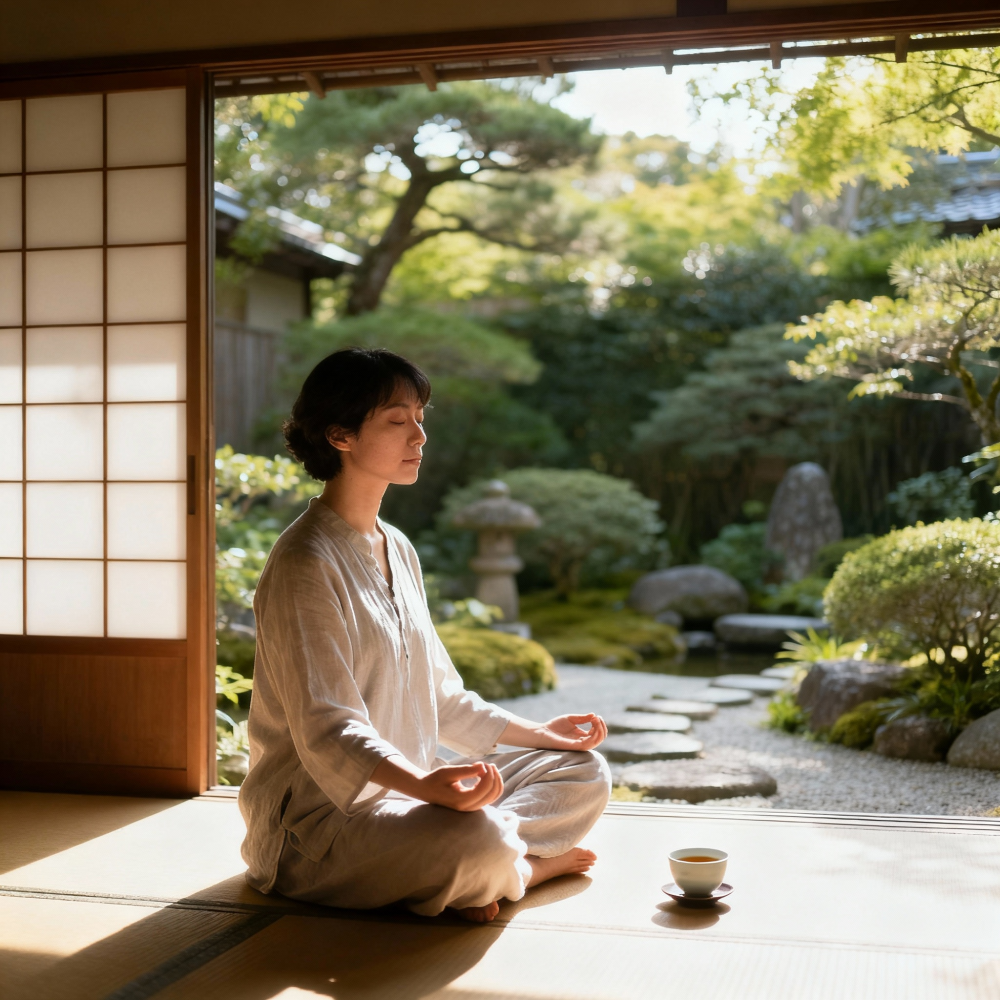
Zen Presence: Beyond Mindfulness
Key Terms
- Zazen: Sitting meditation, the core Zen practice
- Shoshin: Beginner’s mind, approaching each moment fresh without preconceptions
- Satori: Sudden awakening or insight into one’s true nature
- Koan: A paradoxical question used to break conceptual thinking
- Wabi-Sabi: Beauty in imperfection, impermanence, and simplicity
Origins and Historical Context
Zen Buddhism developed in China (as Chan Buddhism) around the 6th century CE when Bodhidharma brought meditation practices from India, blending them with Chinese Taoism. It later flourished in Japan as Zen, where it profoundly influenced culture, from tea ceremonies to martial arts to garden design.
Key figures like Dogen Zenji (13th century) and Hakuin Ekaku (18th century) shaped Zen’s development and spread.
Zen emerged as a response to Buddhism becoming overly scholarly and ritualistic. Early Zen masters emphasized direct experience over intellectual study.
The famous phrase “a special transmission outside the scriptures, not dependent on words and letters” captures this essence. Zen pointed directly to the nature of mind through meditation, koans (paradoxical questions), and everyday activities done with full attention.
Core Teachings in Plain Language
Shunryu Suzuki, who brought Zen to America, wrote in Zen Mind, Beginner’s Mind: “In the beginner’s mind there are many possibilities, but in the expert’s there are few.” This captures Zen’s approach, each moment is fresh, unfiltered by past experience or future expectation.
Zen is about direct experience of reality as it is, without the filter of concepts, judgments, or stories. The primary practice is zazen, sitting meditation, where you simply sit and observe whatever arises, mind, body, breath, without trying to change anything.
It sounds simple, and it is, but simple doesn’t mean easy.
Another key aspect is “beginner’s mind” (shoshin), approaching each moment fresh, without preconceptions. When you wash dishes with beginner’s mind, you’re not thinking about the dishes you washed yesterday or planning tomorrow’s dishes, you’re fully present with this dish, this water, this moment.
That’s where Zen lives, in the vivid, immediate now.
The Common Misconception
People talk a lot about “mindfulness,” but Zen presence is a little different. While modern mindfulness often has goals (reduce stress, improve focus, increase productivity), Zen drops all goals. You’re not sitting to get somewhere or become someone, you’re simply being with what is.
The practice is also the goal. Many people also think Zen is about clearing the mind of all thoughts, but it’s actually about changing your relationship with thoughts, watching them arise and pass without grasping or pushing away.
Modern Pitfall: Chasing a Thoughtless State
The trap is treating “no thoughts” as the goal and then judging yourself when thoughts arise, which is all the time. Zen isn’t about stopping thoughts but about not being swept away by them.
Thoughts come and go like clouds in the sky, the practice is being the sky, not the clouds. Fighting thoughts or seeking some perfect blank state just creates more striving and self-judgment, exactly what Zen aims to dissolve.
Modern Applications
Zen invites us into this one moment, letting go of overthinking, dropping the idea of improvement, and just being with what is. In our productivity-obsessed culture, this is genuinely radical. We’re so conditioned to optimize, track, measure, that simply being feels almost forbidden.
Decluttering helps a ton here, both mentally and physically. I’ll clear off my desk, turn off my phone, and sit quietly for even two minutes. Sometimes I practice “just this” meditation: paying attention only to the feeling of my feet on the ground or the sound in the room.
When my mind runs off (and it will, constantly), I gently bring it back, no fixing, no judging, just noticing and returning.
Simpler living, fewer distractions, and more quiet moments have all made my days smoother. I’ve reduced my commitments, saying no to more things so I can say yes to presence.
My living space has less clutter, which surprisingly creates mental spaciousness too. The Zen aesthetic of wabi-sabi (beauty in imperfection and simplicity) guides my choices: keep what’s essential and beautiful, release the rest.
Practical Step-by-Step Practice: “Just This” Meditation
- Find a quiet spot and sit comfortably (chair or floor, doesn’t matter).
- Set a timer for 2-5 minutes to start.
- Choose one sensory experience: breath, sounds, body sensation, or visual point.
- Put all your attention there. Just this breath. Just this sound.
- When your mind wanders (it will), notice without judgment.
- Gently return to “just this.”
- Repeat the return over and over. That returning is the practice.
Case Study: From Anxiety to Awareness
Rachel, a journalist, experienced constant anxiety about deadlines, competition, and whether her work mattered. Her mind was always three steps ahead, planning, worrying, rehearsing conversations.
She tried mindfulness apps but found goal-oriented practices (“meditate to reduce anxiety”) paradoxically increased her pressure to perform. A friend introduced her to Zen: no goal, just sit.
For weeks, she felt like she was “doing it wrong” because her mind still raced. Then a shift: she stopped trying to quiet her mind and just watched thoughts arise and dissolve.
The anxiety didn’t disappear, but her relationship with it changed. She could write while anxious, make decisions while uncertain, live while uncomfortable.
Six months in, she describes it as “spaciousness around everything.” Problems still arise, but there’s room to breathe with them now.
Everyday Zen
Practicing presence doesn’t need a special ritual; a walk, a cup of tea, or even doing dishes can be a chance to be right where you are. Thich Nhat Hanh, a Vietnamese Zen master, taught “washing dishes to wash dishes,” not to get them clean so you can do something else.
The washing itself becomes meditation.
I’ve found “Zen moments” in surprising places: waiting in line (feeling my feet, watching breath), brushing teeth (noticing sensation, taste, movement), even sending emails (one message at a time, full attention, then the next).
Over time, these pauses add up and reshape your whole day. You start to notice the texture of life rather than rushing through it in a blur toward some imagined future that never quite arrives.
Research on mindfulness meditation, much of which draws from Zen, shows measurable changes in brain structure. Studies using fMRI show increased gray matter density in regions associated with learning, memory, and emotional regulation.
Sara Lazar’s research at Harvard found that even eight weeks of meditation practice produced these changes.
Key Takeaways
- Zen is about direct experience of this moment, without goals or concepts getting in the way
- Start with 2-5 minutes of “just this” practice, returning attention when it wanders
- If you want to get into Zen, the “just this” exercise and minimalist living tips might fit into your routine
Epicurean Simplicity: Savoring Small Pleasures
Key Terms
- Ataraxia: Tranquility, freedom from anxiety and mental disturbance
- Hedone: Pleasure, particularly the absence of pain and presence of simple satisfaction
- Aponia: Freedom from physical pain
- Phronesis: Practical wisdom about what brings lasting satisfaction
- Autarkeia: Self-sufficiency, not depending on external things for contentment
Origins and Historical Context
Epicurus founded his school in Athens around 307 BCE in a garden (hence “The Garden” as his school was known), which was radical because it welcomed women and slaves, unlike other philosophical schools. His teachings have been widely misunderstood throughout history.
The word “epicurean” today often suggests gluttony or hedonism, but Epicurus actually advocated for simple pleasures and moderation.
Most of Epicurus’s 300+ works were lost, but his core teachings survived in letters and in Lucretius’s poem “On the Nature of Things.” Epicurus lived during tumultuous times, after Alexander the Great’s empire collapsed, when traditional Greek city-states were declining.
People felt unmoored and anxious. His philosophy offered peace through understanding pleasure correctly, distinguishing between necessary and unnecessary desires.
Core Teachings in Plain Language
Epicurus wrote in his Letter to Menoeceus: “Do not spoil what you have by desiring what you have not; remember that what you now have was once among the things you only hoped for.” This captures his teaching: satisfaction comes from appreciating what’s present, not chasing what’s absent.
Epicurus taught that the goal of life is ataraxia (tranquility) and the absence of pain, both physical and mental. But his route to pleasure was surprisingly simple: satisfy necessary desires (food, shelter, friendship), cultivate simple joys, and avoid the anxiety that comes from wanting what you don’t need.
He identified three types of desires: natural and necessary (food, water, shelter), natural but unnecessary (fancy food, luxury), and unnatural and unnecessary (fame, power, excessive wealth). Happiness comes from satisfying the first category and carefully moderating the second, while mostly ignoring the third.
The key insight: more isn’t better. A simple meal when you’re hungry brings more pleasure than a feast when you’re stuffed.
The Common Misconception
It’s easy to overdraft your joy account by chasing constant excitement. Popular culture has flipped Epicurus’s message entirely, using his name to justify excess.
Real Epicureanism is almost ascetic in its simplicity. Epicurus himself lived on bread, olives, and water most days, considering cheese a treat. He wasn’t denying himself, he was maximizing genuine pleasure by keeping his needs simple and his capacity for enjoyment high.
Modern Pitfall: Equating Simple with Self-Denial
Some people swing too far, treating Epicureanism as justification for joyless austerity or moral superiority about simple living. But Epicurus celebrated pleasure!
The point isn’t to suffer or prove you need nothing. It’s to enjoy more by wanting less. If a fancy meal genuinely brings you pleasure and doesn’t create anxiety about cost or expectation, enjoy it.
The practice is about discernment, not deprivation.
Modern Applications
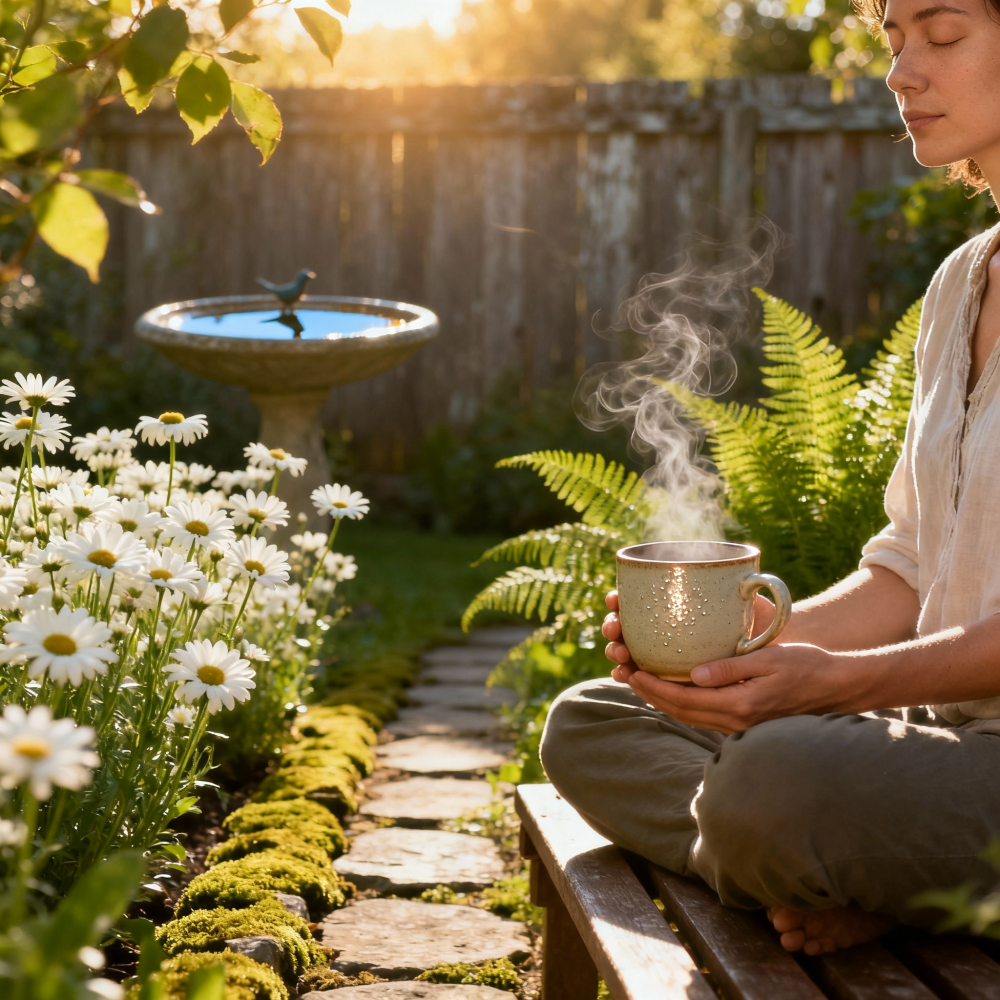
Next time you crave a treat, a fancy coffee or a quick break, slow it down. Notice the taste, the warmth in your hands, or the scents around you. I’ve started really savoring my morning coffee, not scrolling through my phone while gulping it down.
I sit, smell it, feel the warmth, taste each sip. Paradoxically, slowing down and paying attention makes the pleasure last longer and feel more satisfying than rushing through three cups in a distracted haze.
Epicurean moderation means enjoying pleasures without overdoing it, so you actually get more satisfaction out of less. This applies beyond food. I used to binge-watch shows, now I watch one episode mindfully and enjoy it more.
I used to buy books constantly, now I fully read and absorb one before getting another, savoring the experience.
Practical Step-by-Step Practice: The Pleasure Inventory
- List 10 simple, affordable pleasures you genuinely enjoy (warm bath, good song, sunset, call with friend, etc.).
- Notice which ones you rush through or take for granted.
- Choose one for today.
- Set aside dedicated time for it (no multitasking).
- Engage all your senses: what do you see, hear, smell, feel, taste?
- Linger 20% longer than you normally would.
- Notice how satisfaction differs when you’re fully present.
Case Study: From Consumption to Contentment
David, a tech worker earning six figures, constantly shopped for the next thing: new gadgets, restaurant experiences, weekend trips. Despite spending heavily, satisfaction remained elusive. Each purchase brought a brief high followed by restlessness.
After reading about Epicureanism, he started a 30-day experiment: no new purchases, focus on pleasures he already had. He made coffee at home with full attention. He revisited favorite books. He walked in his neighborhood, really noticing architecture and trees.
The first week felt like deprivation. By week three, something shifted. He felt fuller, not emptier. The constant background hum of “what’s next” quieted.
Six months later, he’d cut his spending by 60% while reporting higher life satisfaction. The abundance was always there, he’d just been too distracted by pursuing more to notice.
Modern Relevance
Try making a mini list of your favorite affordable, everyday joys and block off time to enjoy one today. In our consumer culture, we’re constantly pushed toward more: more stuff, more experiences, more stimulation. Epicureanism offers a radical counter-message: you probably already have enough for contentment, you might just be missing it by rushing past.
Research on hedonic adaptation (the hedonic treadmill) backs this up. We quickly adapt to new pleasures, so the excitement of a new car or phone fades fast. But simple pleasures, a good conversation, a walk in nature, a delicious simple meal, can provide consistent satisfaction without requiring escalation.
Epicurus knew this 2,300 years ago without neuroscience.
Savoring doesn’t just help with food; it can be music, a breeze, or that first stretch in bed. Let those moments settle in before chasing the next thing.
When I’m eating lunch, I put my phone away. When I’m walking, I actually look around instead of planning my next task. These small shifts compound into a much richer daily experience.
Key Takeaways
- True Epicureanism is about savoring simple pleasures fully, not indulging in excess or denying yourself
- Create a pleasure inventory and practice full presence with one simple joy daily
- For further reading on why happiness fades and how to create more lasting joy, check out my practical guide: Why Happiness Fades and How to Make Joy Last Longer.

Confucian Harmony: Weaving Stronger Connections
Key Terms
- Ren (仁): Benevolence, humaneness, genuine care for others
- Li (禮): Propriety, proper conduct, expressing care through appropriate action
- Junzi (君子): The superior person, one who cultivates virtue and serves others
- Xiao (孝): Filial piety, honoring and caring for family and ancestors
- Zhong (忠): Loyalty, faithfulness to relationships and commitments
Origins and Historical Context
Confucius (Kong Fuzi) lived in China around 551-479 BCE during a period of war and social breakdown. His teachings, compiled by students in the Analects, aimed to restore social harmony through ethical conduct and proper relationships.
Confucianism became the philosophical backbone of Chinese civilization for over two millennia, shaping government, education, and family life.
Unlike some philosophies that emphasize individual enlightenment, Confucianism focuses on relationships and social harmony. Confucius identified five key relationships: ruler and subject, parent and child, husband and wife, older and younger sibling, friend and friend.
Each relationship has reciprocal duties and respect.
Core Teachings in Plain Language
The Analects record Confucius saying: “Do not impose on others what you yourself do not desire.” This early formulation of the Golden Rule (over 500 years before Jesus) captures the reciprocity at Confucianism’s heart.
Treat others as you wish to be treated, with care and respect.
The heart of Confucian thought is ren (benevolence or humaneness) and li (propriety or ritual). Ren is about genuine care for others, while li is about expressing that care through appropriate actions. These aren’t just abstract ideals but practical guides for daily interactions.
Confucius emphasized self-cultivation: becoming a better person not for personal gain but to serve others and society. The “superior person” (junzi) continuously works on character, especially virtues like loyalty, reciprocity, sincerity, and righteousness.
Education wasn’t about accumulating knowledge but developing moral character and wisdom to benefit the community.
The Common Misconception
At work and home, conflict, misunderstandings, or just feeling disconnected can really wear us down. Some see Confucian emphasis on hierarchy and duty as rigid or oppressive, especially from a modern Western perspective valuing individual freedom.
But Confucian relationships are reciprocal, not one-sided. A parent has duties to a child just as a child has duties to a parent. A leader must care for followers who then follow willingly.
The system breaks down when one party fails their reciprocal obligations.
Modern Pitfall: Hierarchy Without Reciprocity
The danger is using Confucian language to justify one-way authority or obligation. “Respect your elders” becomes a tool for control without the elder fulfilling their duty to care for and guide the younger generation.
“Be loyal to your company” without the company showing loyalty to employees. True Confucian practice requires both sides of every relationship to honor their responsibilities.
Otherwise, it’s just exploitation dressed in philosophy.
Modern Applications
Confucian philosophy spotlights harmony in relationships, valuing kindness, listening, and mutual respect. In our fragmented, individualistic culture, this offers something essential: the reminder that we exist in relationship, that our wellbeing is tied to others’ wellbeing.
I use a quick check in habit with family: “How’s your day going? Anything on your mind?” This simple ritual, done consistently, builds connection and trust. People feel seen and valued.
At work, I keep an eye out for ways to support teammates, helping without expecting immediate return, or openly appreciating their effort. This creates a culture of reciprocity where people naturally want to help each other.
Actions that build unity aren’t complicated. They’re small, everyday gestures, like saying thanks after a tough group project or being the one who helps resolve a hang up.
When a colleague was struggling with a deadline, I offered an hour of my time to help brainstorm solutions. Later, when I needed feedback on a proposal, they went out of their way to give thoughtful input.
That’s Confucian reciprocity in action.
Practical Step-by-Step Practice: The Gratitude Gesture
- Think of someone in your life (family, work, community).
- Identify something specific they did that helped or mattered to you.
- Express appreciation, either in person, via message, or written note.
- Be specific: “I appreciated when you…” rather than generic “thanks for everything.”
- Don’t expect anything in return, the practice is in the gesture itself.
- Make this a weekly habit, rotating through different people in your life.
Case Study: Team Transformation Through Reciprocity
A marketing team I consulted with had terrible dynamics: blame culture, siloed work, high turnover. The manager tried team building exercises, which helped briefly but didn’t last.
I introduced Confucian principles: focus on reciprocal care and specific appreciation. Each team member committed to one small act of support per week and one specific expression of gratitude.
Week one felt forced and awkward. By week four, the pattern started becoming natural. Someone would struggle and another would offer help unprompted. Small acknowledgments in meetings became normal.
Three months in, the team reported increased trust, collaboration, and job satisfaction. Turnover stopped. The manager later said: “We stopped trying to fix problems and started building relationships. Everything else followed from that.”
Ripple Effects
Little, consistent gestures send a big message over time, people notice when you care and respond in kind. I’ve seen this transform work environments. One team I was on had high tension and low trust.
A few of us started deliberately practicing Confucian principles: showing up reliably, genuinely listening in meetings, acknowledging others’ contributions, resolving conflicts directly but respectfully. Within a few months, the whole team dynamic shifted.
Other members naturally started reciprocating these behaviors.
In families, Confucian practice might look like family dinners with full attention (phones away), regular check-ins with aging parents, or teaching children responsibility while also respecting their growing autonomy. It’s not about forcing traditional roles but about recognizing our interdependence and acting from that understanding.
Research on prosocial behavior by psychologists like Adam Grant shows that workplaces built on genuine reciprocity and appreciation significantly outperform those based purely on individual incentives.
Confucius understood this 2,500 years ago: collective thriving creates individual thriving, not the other way around.
Key Takeaways
- Confucian wisdom centers on reciprocal relationships where care and respect flow both ways
- Practice regular, specific expressions of gratitude to strengthen connections and build trust
- There’s more practical advice in my Confucian relationships post for building lasting harmony

Seeing Yourself Clearly: Vedanta & the Upanishads
Key Terms
- Atman: The true self, pure consciousness beyond personality and body
- Brahman: Ultimate reality, the unified consciousness underlying all existence
- Maya: Illusion, the appearance of separate, independent things
- Tat Tvam Asi: “Thou art That,” the recognition that self and ultimate reality are one
- Neti Neti: “Not this, not this,” the practice of discerning what you’re not to discover what you are
Origins and Historical Context
India’s ancient wisdom traditions offer countless practical insights for modern life. One of the most influential is Vedanta, a philosophical system rooted in the Upanishads, which explores questions about the nature of reality and how to live purposefully.
The Upanishads are ancient Indian texts, the oldest dating to around 800 BCE, forming the philosophical foundation of Hinduism. The word “Upanishad” means “sitting down near,” referring to students sitting near a teacher to receive wisdom.
These texts explore the nature of reality, consciousness, and the self.
The most influential teachers in Vedanta were Shankaracharya (representing non-dualism or Advaita), Ramanujacharya (qualified non-dualism or Vishishtadvaita), and Madhvacharya (dualism or Dvaita). Each of them offered a unique interpretation of Vedantic philosophy, contributing to the rich diversity within Indian spiritual thought.
Vedanta is a rich philosophical tradition offering insights for living a more conscious and purposeful life. While there are many different interpretations and schools of thought within Vedanta, this article will not engage in philosophical debates. Instead, the focus will be on practical teachings that can be applied in modern life.
Core Teachings in Plain Language
The Chandogya Upanishad teaches through a father instructing his son about the nature of reality, concluding each teaching with “Tat Tvam Asi” (Thou art That). This points to the insight that your deepest self is not separate from ultimate reality.
You are not a drop in the ocean; you are the ocean in a drop.
The central question of the Upanishads is “Who am I?” But this isn’t asking about your personality or roles, it’s inquiring into the nature of consciousness itself. The famous phrase “Tat Tvam Asi” (Thou art That) points to the insight that your deepest self is not separate from ultimate reality.
Vedanta distinguishes between the “I” you think you are (your personality, body, thoughts, experiences) and the “I” that’s aware of all those things. It’s like how a movie screen is distinct from the images projected on it.
The screen remains unchanged regardless of what appears. Your true self, Vedanta says, is like that screen: the unchanging awareness in which all experience appears.
The Common Misconception
When I’m stuck in old patterns or negative self talk, ancient Indian texts like the Upanishads and Vedanta remind me to step back and gently question, “Who am I, really?” This tradition of self inquiry pulls me out of autopilot and into curiosity.
Some people think Vedanta is about transcending or escaping the world, becoming detached and cold. But real Vedantic inquiry actually makes you more engaged with life because you’re no longer defensive or grasping.
When you’re not protecting a fragile ego-construct, you can meet people and situations more openly.
Modern Pitfall: Using Non-Duality to Bypass Feelings
The trap is using Vedantic concepts to avoid emotional work: “It’s all illusion anyway, so my anger doesn’t matter” or “There’s no separate self, so I don’t need to address this hurt.”
True Vedantic practice includes acknowledging all experiences, including difficult emotions, while recognizing they’re not your ultimate identity. You honor feelings without being completely defined by them.
Non-duality shouldn’t mean emotional numbness.
Modern Applications
I’ll do a mini check by sitting quietly for a minute and asking myself: “What am I not?” Not my current mood (it changes), not others’ expectations (they vary), not just my job title (it’s temporary). It’s renewing to remember you’re much more than today’s struggles or even this week’s wins.
This inquiry has practical effects. When I receive criticism, instead of my whole identity feeling threatened, I can observe: “There’s a thought that I’m not good enough. Where is the ‘I’ that’s aware of this thought?”
This creates space. The criticism might contain useful feedback, but it doesn’t define my core self.
When I’m anxious about the future, Vedantic inquiry helps: “Who is worrying? Can I find this ‘I’ that’s anxious?” When I look directly, I find thoughts about the future, sensations in the body, but no solid, separate self carrying the burden.
The anxiety is there, but it’s not happening to a fixed “me.” This isn’t suppressing feelings, it’s seeing them more clearly.
Practical Step-by-Step Practice: “Neti Neti” Inquiry
- Sit quietly for 5-10 minutes.
- Ask: “Who am I?”
- Notice what arises (thoughts, images, roles, descriptions).
- For each one, say “neti neti” (not this, not this).
- “I am not my thoughts” (thoughts come and go, but I remain).
- “I am not my emotions” (feelings change, but awareness persists).
- “I am not my body” (the body changes, but the sense of being remains).
- “I am not my roles” (parent, employee, etc., are temporary identities).
- Rest in the awareness that remains when everything else is seen as not-self.
- Don’t expect a final answer, the inquiry itself is the practice.
Case Study: From Identity Crisis to Spacious Awareness
Maya, a physician, went through a divorce and identity crisis simultaneously. Everything she’d defined herself by (successful marriage, respected career, good daughter) felt shaky. “Who am I if I’m a divorced doctor who disappointed her parents?” felt like an existential threat.
A friend introduced her to Vedantic inquiry. At first, “Who am I?” just surfaced more anxiety. But she kept sitting with it. Slowly, she started distinguishing between temporary identities and the awareness noticing them.
“I’m not the divorce (it’s an event that happened). I’m not even ‘the physician’ (it’s a role I play). I’m the awareness witnessing all of this.”
This didn’t solve her practical challenges, but it created enormous space around them. She could grieve the divorce without her entire existence crumbling. She could question her career without losing her sense of being.
A year later, she describes feeling simultaneously more grounded and more free, less attached to outcomes but more engaged in the present.
Long-Term Effects
Questions like “Who am I?” aren’t about finding a final answer, but about creating space for new insights. Over the months, reflection like this peels away layers and helps you become more at ease in your own skin.
I’ve noticed I take things less personally now. When someone is rude, I don’t immediately assume it’s about me. When a project fails, I don’t collapse my entire worth into that outcome.
There’s more spaciousness between events and my sense of self. Paradoxically, this makes me more present and engaged, not less.
When you’re not constantly defending a fragile self-concept, you can actually listen to others, take risks, and be creative.
Contemporary teachers like Rupert Spira and Adyashanti have made Vedantic insights accessible to Western audiences, connecting them to modern questions about consciousness and wellbeing without requiring belief in any particular religious framework.
Key Takeaways
- Vedantic inquiry asks “Who am I?” to reveal the difference between changing experiences and unchanging awareness
- Practice “neti neti” (not this, not this) to distinguish your true self from temporary identities
- Regular self-inquiry creates spaciousness and reduces taking things personally while keeping you emotionally present

Indigenous Wisdom: Loving the Land, Knowing the Cycles
Key Terms
- Mitakuye Oyasin: “All my relations” (Lakota), the interconnectedness of all beings
- Reciprocity: The practice of giving back what you take, maintaining balance in relationships
- Seven Generations: Considering the impact of decisions seven generations into the future
- Original Instructions: The teachings and responsibilities given to a people regarding their relationship with land and community
- Kinship: Extended relatedness beyond human family to include land, water, plants, animals, ancestors
Origins and Historical Context
Indigenous wisdom is not one tradition but thousands, each rooted in specific places and peoples. From Aboriginal Australians with 65,000+ years of continuous culture to Native American nations to African indigenous traditions to Polynesian wayfinding, these diverse teachings share common threads: reciprocity with nature, respect for cycles, and understanding humans as part of the land, not separate from it.
Many indigenous traditions were suppressed, their practitioners killed or forcibly assimilated. Despite this, indigenous knowledge has survived and is now increasingly recognized as essential for addressing modern challenges like climate change, biodiversity loss, and mental health epidemics.
Indigenous peoples maintain some of the most biodiverse regions on Earth through traditional stewardship practices.
Core Teachings in Plain Language
Robin Wall Kimmerer, botanist and member of the Citizen Potawatomi Nation, writes in Braiding Sweetgrass: “All flourishing is mutual.” This captures indigenous reciprocity: what you take, you must give back.
When you harvest, you offer gratitude and take only what you need, maintaining the relationship so future generations can also receive.
Central to most indigenous philosophies is the concept of reciprocity, all our relations (Mitakuye Oyasin in Lakota). Everything is connected: humans, animals, plants, rivers, rocks, ancestors, and future generations. What you take, you give back.
When you harvest, you offer thanks and only take what you need. This creates sustainable relationships with the living world.
Indigenous traditions also honor cycles: day and night, seasons, life and death, generations. Time is circular, not just linear. You plant in spring because your ancestors did and your grandchildren will.
This long view, thinking seven generations ahead, contrasts sharply with our quarterly-report mentality.
The Common Misconception
Sometimes urban routines make it easy to forget we’re part of nature. Some people romanticize or exoticize indigenous wisdom, treating it as mystical or primitive rather than as sophisticated knowledge systems refined over millennia.
Others think these teachings are only relevant to people living on the land. But indigenous principles like reciprocity, gratitude, and cyclical thinking can guide anyone, anywhere, though it’s crucial to learn respectfully and acknowledge these teachings’ cultural origins.
Modern Pitfall: Decontextualizing and Appropriating Practices
The danger is extracting indigenous practices from their cultural context, spiritual meaning, and community responsibility, treating them as generic “ancient wisdom” for personal benefit. Smudging with sage without understanding protocol, adopting sweat lodge ceremonies without proper initiation, or using indigenous imagery for aesthetic purposes all constitute appropriation.
These practices belong to specific peoples with specific protocols. Respectful engagement means learning from indigenous teachers, acknowledging sources, supporting indigenous communities, and recognizing that some practices may not be meant for outsiders.
Modern Applications
Indigenous teachings ground everyday life in rhythms: day and night, season to season, growth and rest. Reconnecting can bring a sense of belonging and renewal that’s hard to get from screens or schedules. Even in cities, we experience seasons, weather, day and night.
Paying attention to these rhythms recalibrates our internal sense of time and place.
One quick way I practice this is by stepping outdoors (even for 5 minutes), feeling the breeze, noticing the plants, or just watching clouds switch overhead. In my apartment, I keep plants and care for them daily, a practice of reciprocity on a small scale.
Growing something, a basil plant, sunflowers, or even mushrooms in a kit, gives a real sense of connection. You water, the plant grows, you harvest, you say thanks. It’s a tiny loop of giving and receiving.
I weave little “nature pauses” into my day: standing barefoot on grass when possible, opening a window to listen to rain, or collecting leaves. During autumn, I make it a practice to notice what’s dying and releasing, reflecting on what I might release in my own life.
Spring brings attention to what’s emerging and growing.
Practical Step-by-Step Practice: Gratitude for the Elements
- Step outside or near a window.
- Acknowledge and thank the four elements:
- Air: Take three breaths, thank the air for sustaining life.
- Water: Recall your last drink or shower, thank water for nourishing you.
- Fire: Notice warmth from sun or artificial light, thank fire/sun for energy.
- Earth: Feel ground beneath your feet, thank earth for supporting and feeding you.
- Recognize your dependence on these elements and all beings in the web.
- Carry this awareness into your day.
Case Study: From Disconnection to Kinship
Tom, a software engineer in Seattle, felt completely disconnected from the natural world, which contributed to depression and a sense of meaninglessness. After reading Braiding Sweetgrass, he started small: saying thanks before meals (acknowledging the beings that became his food), sitting outside for five minutes daily, and learning about the Duwamish people whose land he lived on.
He began volunteering with a local environmental restoration project led by indigenous community members. The physical work, connection to place, and learning from indigenous knowledge holders shifted something fundamental.
He started seeing the city differently, noticing the salmon runs that still happened, the old-growth stumps, the layered history. His depression lessened not through medication or therapy alone (though he continued both) but through feeling part of something larger.
He now describes himself as “in relationship with place” rather than just “living in Seattle.”
Honoring Source and Practicing Respectfully
If you’re drawn to indigenous wisdom, learn from indigenous teachers directly when possible, support indigenous-led organizations, and practice with humility, recognizing these aren’t generic “ancient secrets” but living traditions belonging to specific peoples. Organizations like the Indigenous Environmental Network, Cultural Survival, and local tribal education centers offer ways to learn respectfully and support indigenous communities.
My post on nature based micro practices shares more ways to bring earth wisdom into daily life, always with attribution and respect. When learning from indigenous traditions, ask yourself: Am I supporting indigenous communities? Am I learning from indigenous teachers? Am I giving credit and acknowledgment?
Am I approaching this with humility and respect for protocols?
Key Takeaways
- Indigenous wisdom teaches reciprocity with nature and awareness of cycles larger than individual human life
- Practice daily gratitude to the elements and notice natural rhythms even in urban settings
- Always learn respectfully, acknowledging specific cultural origins, supporting indigenous communities, and never appropriating closed practices
Bridges Between Traditions: How Ancient Wisdom Connects

Taoist Flow Meets Stoic Acceptance
At first glance, Taoism and Stoicism seem quite different, one from ancient China, one from Greece and Rome, but they share profound common ground. Wu wei (effortless action) and amor fati (loving fate) both teach working with reality rather than against it.
The Taoist flows around obstacles while the Stoic embraces them, different metaphors for the same essential wisdom: resistance creates suffering, acceptance creates freedom and effective action.
In practice, you might use Taoist wu wei to feel into the natural flow of a situation, then Stoic amor fati to accept what you discover with love rather than frustration. Together, they create a powerful approach to uncertainty: flow with what’s possible, embrace what’s inevitable.
Buddhist Mudita and Confucian Reciprocity
Buddhism’s mudita (sympathetic joy) and Confucian reciprocity both recognize that individual wellbeing is inseparable from collective wellbeing. When you genuinely celebrate others’ success (mudita), you naturally create the kind of harmonious relationships Confucius advocated.
Both traditions see through the illusion of separate self-interest, understanding that what serves the whole serves each part.
In modern terms, this might look like building a work culture where people’s success is collective, where supporting a colleague’s win feels like your win too. The combination creates both internal shifts (mudita’s joy in others’ fortune) and external actions (Confucian practices that build community).
Zen Presence and Vedantic Inquiry
Zen and Vedanta represent different cultural expressions of similar insights about consciousness. Zen’s “just this” moment and Vedanta’s inquiry into “Who am I?” both point to the nature of awareness itself.
Zen tends toward pure experience without concepts, while Vedanta uses concepts to point beyond concepts, but both arrive at direct recognition of consciousness prior to thought.
In practice, you might start with Zen’s simple presence, fully experiencing this breath, this sensation. Then layer in Vedantic inquiry: “Who is aware of this breath?”
The combination grounds you in immediate experience while revealing the space of awareness in which all experience appears.
Yoga and Indigenous Earth Connection
Yoga’s teaching of union and indigenous wisdom’s “all our relations” beautifully complement each other. Yoga unites body, breath, and mind, while indigenous traditions extend that unity to include land, water, plants, animals, and ancestors.
Together, they offer a complete ecology of connection, from the cellular to the cosmic.
Practically, you might do morning yoga (union with yourself) followed by stepping outside to acknowledge the elements (union with nature). The internal and external practices reinforce each other, creating seamless awareness of interconnection.
Epicurean Simplicity and Zen Minimalism
Both Epicurus and Zen masters recognized that less is often more. Epicurean moderation in pleasure and Zen aesthetic simplicity (wabi-sabi) both cut through consumerist clutter to reveal satisfaction in simple things.
Together, they offer powerful resistance to the “more is better” message that pervades modern culture.
In your life, this might mean applying Epicurean pleasure inventory (identifying simple joys) with Zen decluttering practice (removing what doesn’t serve). Enjoy what you keep fully, release what you don’t need easily.
Science Bridges: Ancient Practices Meet Modern Research

Mindfulness-Based Interventions
Many ancient practices have been rigorously studied by modern science, validating their effectiveness while revealing mechanisms. Mindfulness-Based Stress Reduction (MBSR), developed by Jon Kabat-Zinn in 1979, draws directly from Zen and Buddhist meditation practices. Studies show MBSR reduces anxiety, depression, and chronic pain while improving immune function and emotional regulation.
The neural mechanisms are becoming clear. Regular meditation increases gray matter density in the prefrontal cortex (involved in decision-making and emotional regulation) and hippocampus (memory and learning) while decreasing density in the amygdala (fear and stress response). Sara Lazar’s research at Harvard found these changes occurred after just eight weeks of practice.
Acceptance and Commitment Therapy
ACT, a evidence-based therapy approach, shares remarkable overlap with Buddhist and Stoic philosophy. It teaches psychological flexibility: accepting what you can’t control (Stoic dichotomy of control), being present (Zen mindfulness), and committing to values-based action (Confucian ethics).
Studies show ACT effectively treats anxiety, depression, chronic pain, and addiction.
The core ACT process, “cognitive defusion,” parallels Zen’s teaching about thoughts: observe them without being swept away. You don’t eliminate negative thoughts, you change your relationship with them.
This is essentially the same insight developed in 6th century China, now validated through randomized controlled trials.
Polyvagal Theory and Breathwork
Stephen Porges’s polyvagal theory explains why ancient breathwork practices (yoga pranayama, Taoist breathing) work so effectively. The vagus nerve connects brain to body, and its tone can be influenced through breath.
Slow, deep breathing with extended exhales activates the parasympathetic nervous system, signaling safety and calm.
Ancient yogis discovered this empirically thousands of years ago, teaching specific breathing patterns for different effects. Now we understand the neurobiology: controlled breathing directly influences heart rate variability, stress hormones, and nervous system state.
The practices work, and now we know why.
Gratitude and Positive Psychology
Research on gratitude, spearheaded by Robert Emmons and others, validates what Epicurus and Confucian philosophers taught: regular appreciation enhances wellbeing. Studies show gratitude practices increase happiness, improve relationships, enhance physical health, and even improve sleep quality.
The mechanism involves neuroplasticity: consistently focusing on positive aspects strengthens neural pathways associated with wellbeing. Buddhist mudita and Confucian gratitude rituals essentially train the brain toward noticing good fortune and connection, creating an upward spiral of positive emotion and social bonding.
Savoring and Present-Moment Awareness
Research on “savoring” (fully experiencing positive moments) maps directly onto Epicurean and Zen practices. Studies by Fred Bryant and others show that deliberately attending to pleasant experiences intensifies and extends pleasure.
This counters hedonic adaptation, the tendency to quickly adjust to new pleasures.
The neuroscience reveals why rushing reduces satisfaction: when we multitask or hurry through pleasant experiences, we don’t form strong memory traces or fully activate reward circuits. Slow, attentive savoring, exactly what Epicurus and Zen masters recommended, literally creates more neural activation and better memory consolidation, making pleasure more lasting and satisfying.
These scientific findings don’t make ancient wisdom “more true,” but they do help modern skeptics understand that these practices produce measurable, replicable effects. The traditions discovered empirically what we can now observe with fMRI machines and hormone assays.
Both perspectives, ancient and modern, enrich our understanding and practice.
Choosing Your Path: A Decision Helper
If You Struggle With…
Chronic Stress and Overwhelm Start with: Yoga breathwork and Zen “just this” meditation. These directly calm the nervous system and create present-moment awareness.
Why it works: Immediate physiological effects (reduced cortisol, activated parasympathetic response) combined with training attention away from rumination.
Comparison and Envy Start with: Buddhist mudita and Epicurean pleasure inventory. Transform comparison into celebration and scarcity into abundance.
Why it works: Rewires attention toward what’s present and possible rather than what’s lacking or what others have.
Feeling Stuck or Forcing Things Start with: Taoist wu wei. Learn to recognize resistance and find natural flow.
Why it works: Reduces energy waste from pushing against reality, reveals opportunities obscured by rigid plans.
Relationship Conflicts Start with: Confucian gratitude gestures and reciprocity practices. Build connection through small, consistent actions.
Why it works: Trust and goodwill compound over time through repeated positive interactions, creating upward relational spirals.
Loss of Meaning or Identity Crisis Start with: Vedantic self-inquiry and Indigenous gratitude for elements. Explore who you are beyond roles and reconnect with larger belonging.
Why it works: Creates spaciousness around identity while fostering connection to something beyond individual concerns.
Constant Craving or Dissatisfaction Start with: Epicurean savoring practices. Learn to fully enjoy what you already have.
Why it works: Counters hedonic adaptation by deepening pleasure from simple things, reducing need for constant novelty.
Frequent Setbacks or Disappointments Start with: Stoic amor fati. Transform how you relate to adversity.
Why it works: Acceptance of what can’t be controlled reduces suffering while freeing energy for effective action on what can be influenced.
Disconnection from Body or Physical Tension Start with: Yoga check-ins and movement with breath awareness. Rebuild mind-body integration.
Why it works: Develops interoception (awareness of internal states) and releases stored tension through conscious movement.
14-Day Sampler Plan
This plan introduces multiple traditions without overwhelming you. Spend two days with each practice before moving to the next.
Days 1-2: Zen Presence Practice: 5 minutes of “just this” meditation each morning. Choose one sensory focus (breath, sounds, body). Gently return when mind wanders.
Days 3-4: Taoist Flow Practice: Notice once per day when you’re forcing something. Ask: “How could this be easier?” Adjust your approach.
Days 5-6: Stoic Acceptance Practice: When something unwanted happens, say “Yes” and ask “What’s my best next move?” Journal briefly about finding opportunity.
Days 7-8: Buddhist Mudita Practice: Notice envy once per day. Pause, take three breaths, wish the person well: “I’m glad they have this.”
Days 9-10: Epicurean Savoring Practice: Choose one simple pleasure daily (coffee, walk, song). Engage fully for 5 minutes with all senses.
Days 11-12: Confucian Gratitude Practice: Express specific appreciation to one person per day. Notice their reaction and how you feel.
Days 13-14: Indigenous Connection Practice: Spend 5 minutes outside morning and evening. Thank the elements (air, water, fire, earth) for sustaining you.
After the Sampler
Notice which practices resonated most. Choose 1-2 to continue for another month before adding more. The goal isn’t collecting practices but deepening the ones that serve your current needs.
You can always return to this sampler when life circumstances change.
Ancient Wisdom Toolkit: Quick Reference
Taoism: Wu Wei (Effortless Action)
- Daily Practice: When feeling stuck, pause and ask “How could this be easier?”
- Time Cost: 30 seconds to 5 minutes when resistance arises
- Good First Step: Notice one forced situation today and look for natural flow
- Common Mistake: Using wu wei to avoid necessary effort or responsibility
- Primary Benefit: Reduces stress from forcing, increases effectiveness
Buddhism: Mudita (Sympathetic Joy)
- Daily Practice: When noticing envy, wish joy for the other person
- Time Cost: 1-3 minutes when comparison arises
- Good First Step: Celebrate one friend’s success genuinely today
- Common Mistake: Suppressing envy instead of acknowledging then transforming it
- Primary Benefit: Transforms comparison into connection, expands joy capacity
Stoicism: Amor Fati (Love of Fate)
- Daily Practice: Say “Yes” to unwanted events and find the opportunity
- Time Cost: 2-5 minutes when adversity strikes
- Good First Step: Practice “yes” mantra with next minor annoyance
- Common Mistake: Confusing acceptance with resignation or inaction
- Primary Benefit: Reduces suffering from resistance, reveals hidden possibilities
Yoga: Union Through Awareness
- Daily Practice: Three conscious breaths before transitions or when stressed
- Time Cost: 1-15 minutes depending on depth
- Good First Step: Morning check-in with body before rising
- Common Mistake: Treating yoga as just physical exercise or achievement
- Primary Benefit: Integrates body-mind, builds self-awareness, regulates nervous system
Zen: Present Moment Awareness
- Daily Practice: “Just this” meditation, return attention to chosen focus
- Time Cost: 2-20 minutes of formal practice
- Good First Step: Two minutes of listening to sounds with full attention
- Common Mistake: Trying to stop thoughts or achieve blank mind
- Primary Benefit: Cuts through mental clutter, reveals clarity in the present
Epicureanism: Savoring Simple Pleasures
- Daily Practice: Choose one simple pleasure and enjoy it slowly, fully
- Time Cost: 5-15 minutes of mindful engagement
- Good First Step: Really taste and smell your morning coffee or tea
- Common Mistake: Treating simplicity as self-denial rather than enhanced enjoyment
- Primary Benefit: Increases satisfaction while reducing dependence on consumption
Confucianism: Relational Harmony
- Daily Practice: Express specific gratitude to one person
- Time Cost: 2-5 minutes daily
- Good First Step: Thank someone for something specific today
- Common Mistake: One-sided obligation without reciprocal care
- Primary Benefit: Builds trust, strengthens relationships, creates support networks
Vedanta: Self-Inquiry
- Daily Practice: Ask “Who am I?” and use “neti neti” to distinguish awareness from experiences
- Time Cost: 5-15 minutes of inquiry
- Good First Step: Five minutes asking “what am I not?”
- Common Mistake: Using non-duality to bypass or dismiss feelings
- Primary Benefit: Creates spaciousness, reduces reactivity, loosens identification with temporary states
Indigenous Wisdom: Earth Connection
- Daily Practice: Thank the elements for sustaining you
- Time Cost: 5-10 minutes outdoors or by window
- Good First Step: Step outside and notice something natural for a few moments
- Common Mistake: Appropriating practices without proper context, attribution, or support for communities
- Primary Benefit: Restores belonging, reduces alienation, grounds in larger cycles
Frequently Asked Questions
Which tradition is easiest to start with?
There’s no universally “easiest” tradition, it depends on your natural inclinations and current challenges. If you’re drawn to physical practice, start with Yoga. If you struggle with overthinking, try Zen’s “just this” meditation.
If you face frequent setbacks, Stoic amor fati might resonate. If you battle comparison, Buddhist mudita could be your entry point.
That said, many people find Epicurean practice very accessible because it works with pleasure, something we all understand and enjoy. Starting with a pleasure inventory and consciously savoring simple joys requires no special knowledge or beliefs. It’s immediately rewarding, which helps motivation.
My suggestion: read through the toolkit above, notice which practice you feel most drawn to or resistant to (sometimes resistance indicates where we most need growth), and commit to that one practice daily for two weeks. You’ll know quickly if it fits.
The 14-day sampler plan is also designed to give you direct experience with multiple approaches before committing deeper.
Is Zen just another form of mindfulness?
While modern mindfulness borrows from Zen, they’re not identical. Mindfulness as commonly taught in the West is often goal-oriented: reduce stress, improve focus, enhance performance. It’s a technique you use to get somewhere. Apps, corporate programs, and clinical applications typically frame it this way.
Zen is both simpler and more radical. It has no goal beyond the practice itself. You’re not meditating to become less stressed (though that might happen), you’re sitting because sitting fully is complete in itself.
Zen also emphasizes direct transmission from teacher to student, koan study (paradoxical questions that break conceptual thinking), and integration into all activities, not just formal meditation.
The philosophical underpinnings differ too. Clinical mindfulness is usually secular and scientific, which is valuable. Zen comes from a complete worldview about the nature of mind, reality, and awakening.
That said, if mindfulness practice is working for you, great! The differences matter more to scholars and serious practitioners. For everyday life, any practice that brings presence and awareness has value.
Modern mindfulness has made meditation accessible to millions who might never encounter traditional Zen.
How can I combine practices without confusion or dilution?
Start with one tradition and practice it consistently for at least a month before adding others. This builds familiarity and prevents superficial dabbling. Once you’ve established one practice deeply, you can thoughtfully add complementary practices.
Look for natural combinations based on the bridges between traditions described earlier. For example: Morning yoga with Vedantic inquiry (both explore consciousness), Wu wei in work decisions with amor fati for unexpected outcomes (both about working with reality), or Mudita combined with Confucian gratitude gestures (both build connection).
Keep a simple practice journal noting what you’re doing and what you notice. This prevents practices from blurring together and helps you see what’s actually working in your life.
Write just 2-3 sentences after practice: what you did, what you noticed, how you feel.
Remember, these aren’t rigid systems requiring orthodox adherence. They’re tools. Use what works, adapt what doesn’t, and give yourself permission to experiment.
The worst that happens is you discover what doesn’t fit for you right now. Many practitioners find that one tradition becomes their “home base” while they borrow specific practices from others as needed. That’s perfectly valid.
Will mixing traditions dilute their effectiveness?
Not if done thoughtfully. The danger isn’t mixing per se, but superficial dabbling without depth, what’s sometimes called “spiritual shopping” or “New Age syncretism.” Skimming surfaces without understanding context or going deep reduces effectiveness because you never build the sustained practice that creates real change.
However, thoughtful integration can actually enhance practice. Zen and Yoga complement each other beautifully (many Zen centers include hatha yoga). Stoic cognitive reframing and Buddhist mindfulness share so much ground they’re essentially the same insight from different cultures.
Confucian ethics and indigenous reciprocity align naturally.
The key is depth in at least one practice before breadth across many. Master one approach first, let it reshape your baseline functioning, then add complementary practices. This creates a stable foundation from which to explore.
Also, be aware of philosophical tensions (some traditions emphasize individual liberation, others collective harmony) and decide how you’ll hold those differences.
If you’re following a teacher or specific lineage, ask about their view on mixing traditions. Some teachers welcome synthesis, others emphasize purity within one path.
There’s no one right answer, different approaches serve different people at different times.
Do I need to believe in anything spiritual to practice these traditions?
Not necessarily. While these traditions arise from spiritual contexts, many practices work perfectly well as practical psychology or life philosophy. You can practice wu wei, mudita, or amor fati as secular approaches to reducing suffering and increasing wellbeing without adopting any metaphysical beliefs.
That said, you might find that regular practice naturally shifts your perspective. Vedantic inquiry might lead you to question the nature of consciousness. Indigenous gratitude practice might awaken a sense of connection to nature that feels spiritual.
Stay open, but don’t force beliefs you don’t genuinely hold.
The pragmatic test: does this practice reduce suffering and increase wellbeing for you and those around you? If yes, it’s working regardless of your belief system.
William James, the psychologist, called this “pragmatic truth” – true if it works in lived experience.
Many contemporary teachers explicitly offer secular versions of these practices. Jon Kabat-Zinn’s MBSR, for example, is deliberately secular while drawing from Buddhist meditation. Modern Stoicism has a thriving secular community.
You can practice yoga as exercise and breathwork without Hindu philosophy. Take what serves you, leave what doesn’t, and be honest about it rather than pretending beliefs you don’t hold.
How do I know if I’m spiritually bypassing?
Spiritual bypassing means using spiritual concepts or practices to avoid dealing with genuine psychological or practical issues. Signs include: using philosophy to suppress emotions (“It’s all impermanent anyway, so I shouldn’t feel sad”), avoiding necessary conflict (“I’m practicing non-attachment”), or neglecting real-world responsibilities (“I’m going with the flow”).
Genuine practice includes difficult feelings, necessary conversations, and responsible action. Amor fati doesn’t mean tolerating abuse. Wu wei doesn’t mean avoiding tough decisions. Non-duality doesn’t erase the need to process trauma.
True wisdom integrates all aspects of being human, including the messy parts.
A good test: Is this practice helping me engage more skillfully with life, or helping me avoid life? Am I becoming more present and responsive, or more checked out and avoidant?
Am I taking appropriate action on what I can control, or using spirituality as excuse for passivity?
If you’re using practices to feel superior to others (“I’m enlightened, they’re caught in ego”), that’s bypassing. If you dismiss others’ pain as “just drama” or “low consciousness,” that’s bypassing.
Real wisdom includes compassion, humility, and recognition that we’re all struggling. If unsure, working with a therapist alongside your spiritual practice can help distinguish genuine growth from clever avoidance.
What if I try a practice and it doesn’t resonate?
That’s valuable information! Not every tradition will suit every person or every life phase. If you’ve genuinely tried a practice for a few weeks and it feels forced or unhelpful, let it go and try something else.
Forcing practice that doesn’t fit is itself a form of harmful striving.
Sometimes resistance indicates ego defense (the practice is working but your habitual patterns don’t like it), and sometimes it indicates genuine mismatch. The difference: if a practice makes you uncomfortable but you notice benefits anyway, that’s probably productive discomfort.
If it just feels wrong with no apparent benefit, try something else.
Also, timing matters. A practice that doesn’t work now might be perfect three years from now when you’re facing different challenges. I’ve returned to practices I’d abandoned years earlier and found they suddenly made complete sense.
Don’t throw anything away completely, just set it aside.
Be especially careful with practices that trigger past trauma. Meditation can bring up difficult material for trauma survivors. If a practice consistently leaves you dysregulated or retraumatized, stop and work with a trauma-informed therapist before continuing.
Not every practice is right for every person, and that’s okay. The traditions are vast enough that you’ll find something that fits.
Are there any dangers or drawbacks to these practices?
Most of these practices are quite safe when approached gradually, but a few considerations: Intensive meditation can sometimes bring up difficult emotions or psychological material. If you have trauma history or mental health concerns, work with a qualified teacher or therapist rather than going it alone.
Start gently and build slowly.
Some people use spiritual practice to bypass dealing with practical problems. Amor fati shouldn’t mean tolerating abuse. Zen presence shouldn’t mean avoiding necessary planning. Balance acceptance with appropriate action.
If your practice is helping you disengage from life rather than engage more skillfully, reassess.
Also beware of spiritual materialism, collecting practices and traditions as ego enhancements rather than genuine tools for growth. If you find yourself more interested in seeming wise than in actual practice, pause and reassess.
Genuine practice humbles you, makes you more aware of how much you don’t know.
Certain practices can be physically challenging. Yoga poses done incorrectly can cause injury. Extreme breathwork can be destabilizing. Start gently, listen to your body, and work with qualified teachers when possible.
And be very careful about intensive retreats or practices without adequate preparation and support. A 10-day silent meditation retreat isn’t appropriate for someone who’s never meditated before.
How do these ancient traditions relate to modern therapy or psychology?
There’s tremendous overlap and complementarity. Many modern therapeutic approaches draw directly from these traditions. Mindfulness-Based Stress Reduction (MBSR) draws from Zen and Yoga. Acceptance and Commitment Therapy (ACT) shares ground with Stoicism and Buddhism.
Positive psychology incorporates Epicurean and Buddhist insights about gratitude and compassion.
These traditions and modern therapy aren’t competing, they’re different lenses on the same human challenges. Therapy might address specific trauma or pathology, while ancient wisdom provides ongoing life practices.
Many people benefit from both: therapy for healing specific wounds, wisdom traditions for ongoing growth and daily practice.
One key difference: therapy is typically done with a trained professional who provides individualized treatment. Ancient practices can be self-directed but benefit from guidance, especially initially.
Another difference: therapy addresses the psychological self, while some wisdom traditions question the very nature of self. Both perspectives can be valuable at different times.
If you’re dealing with serious mental health issues (severe depression, anxiety disorders, trauma, psychosis), please work with mental health professionals. Wisdom practices can complement treatment but shouldn’t replace it.
And if a teacher or practice tells you to stop medication or therapy, that’s a major red flag.
Can I practice these traditions while following my own religion?
Most of these practices are compatible with various religious traditions, though this depends on your specific religion and how orthodoxly you practice it. Many Christians practice Zen meditation. Jewish practitioners engage with Vedantic inquiry. Muslims find compatibility with Stoic acceptance.
Contemplative traditions exist within most major religions and often share ground with the practices here.
However, use discernment. Some religious traditions might have concerns about practices from other wisdom lineages. Explore respectfully, stay grounded in your own tradition’s wisdom, and look for resonances rather than contradictions.
Consult religious teachers or mentors in your own tradition if you’re uncertain.
The ethics and practical insights of these traditions (gratitude, presence, acceptance, compassion, reciprocity) are nearly universal. Focus there, and most conflicts dissolve.
You can practice Stoic acceptance or Confucian reciprocity without subscribing to the cosmology these traditions emerged from. Many wisdom practices are essentially applied ethics and psychology, compatible with various worldviews.
If your religion has contemplative or mystical branches, explore those first. Christian contemplative prayer shares ground with Zen meditation. Jewish Kabbalah has similarities with Vedantic inquiry. Sufi practices parallel Taoist flow.
You might find your own tradition already contains what you’re seeking in other lineages.
What if I’m not a ‘spiritual’ person? Can I still benefit?
Absolutely. Many of these practices work as practical life skills regardless of whether you consider yourself spiritual. Think of them as emotional intelligence tools, stress management techniques, or relational practices rather than spiritual disciplines.
Wu wei is essentially about working smarter not harder. Amor fati is cognitive reframing of adversity. Mudita is a social-emotional skill that improves relationships. Confucian reciprocity builds networks of mutual support.
Epicurean savoring increases life satisfaction. None of these require believing anything metaphysical.
Modern secular adaptations explicitly remove religious elements while keeping practical benefits. Stoicism has a thriving secular community. Mindfulness-based interventions are deliberately non-religious.
Yoga can be practiced purely as physical exercise and breathwork (though you miss some depth this way).
Start with the most practical, concrete practices: breathwork for stress, savoring for satisfaction, gratitude for relationships. If these work and you get curious about the philosophical foundations, you can always explore deeper later.
Many “non-spiritual” people find that regular practice naturally makes them curious about bigger questions, but that’s optional.
The label “spiritual” is flexible anyway. Some people reserve it for belief in supernatural things, others use it for anything related to meaning, purpose, and inner growth.
However you define it, these practices offer tools for living better, and that’s what matters.
How can I practice respectfully with Indigenous teachings?
This requires special care because indigenous knowledge has been stolen, misrepresented, and exploited historically. Respectful engagement means:
First, learn from indigenous teachers and sources, not non-indigenous people teaching “Native American spirituality” or similar. Read books by indigenous authors like Robin Wall Kimmerer, Linda Hogan, or specific to your region’s indigenous peoples.
Seek out indigenous-led educational programs.
Second, give credit and acknowledgment. Never present indigenous practices as your own discoveries or as generic “ancient wisdom.” Name the specific peoples and traditions these teachings come from.
This article mentions Lakota (Mitakuye Oyasin) and acknowledges diverse indigenous traditions, that’s the approach to take.
Third, support indigenous communities materially. Buy from indigenous artisans, donate to indigenous-led organizations working on sovereignty and environmental protection, advocate for indigenous rights.
Learning shouldn’t be just extraction.
Fourth, recognize what’s not for you. Some practices and ceremonies are closed, meant only for specific peoples or those properly initiated. Sweat lodges, vision quests, and certain ceremonies aren’t open for general participation.
Respect boundaries. The practices I’ve shared here (gratitude to elements, noticing cycles) are generally shareable, but always maintain humility and ask when uncertain.
Fifth, land acknowledgment. Learn whose traditional territory you live on (native-land.ca can help) and acknowledge them. This isn’t performative, it’s recognizing ongoing indigenous presence and connection to place.
Avoid: buying mass-produced “dreamcatchers” or “sage bundles” from non-indigenous companies, dressing up in “Native American” costumes, getting tattoos of indigenous symbols you don’t belong to, claiming indigenous identity you don’t have, or treating indigenous practices as exotic spiritual tourism.
These are forms of appropriation that harm indigenous communities.

Ancient Roots, Modern Growth: A Conclusion
We live in an extraordinary time. We have access to wisdom traditions from across the planet and throughout history, all available at our fingertips. Our ancestors couldn’t have imagined such abundance.
Yet ironically, many of us feel lost, overwhelmed, disconnected from meaning and purpose.
These ancient teachings offer a way forward, not back. We’re not trying to recreate the past or reject modernity. We’re mining timeless insights and applying them to distinctly modern challenges: information overload, digital distraction, consumer culture, climate crisis, social fragmentation, and the accelerating pace of change.
What makes these traditions so valuable now is precisely that they weren’t developed for easy times. The Stoics faced plague and political collapse. Early Buddhists confronted war and suffering. Taoists lived through chaos and turmoil. Indigenous peoples survived colonization and near-genocide.
These teachings were forged in difficulty and refined over generations. They work because they’ve been tested against the hardest aspects of human existence.
You don’t need to become a monk or renounce the world to benefit from this wisdom. Small practices, consistently applied, create profound shifts over time. Three conscious breaths before a meeting. A “yes” to the next annoyance. Five minutes noticing sounds. Genuine congratulations to a friend.
These seem almost trivially simple, but they’re portals to different ways of being.
I’ve experienced this firsthand. A few years ago, I was burning out hard, overworked, constantly comparing myself to others, feeling disconnected from nature and purpose. Discovering these practices didn’t solve everything overnight.
But gradually, through daily engagement with even one or two teachings, things shifted. There’s more space in my days now. Less reactivity, more response. Less grasping, more appreciation.
I’m not enlightened (whatever that means), but I’m more at ease.
The beauty of these traditions is their complementarity. They’re not competing dogmas but different facets of human wisdom. Taoism teaches flow, Stoicism teaches acceptance, Buddhism teaches compassion, and together they create a complete toolkit for being human in challenging times.
You can practice one or several. You can go deep into a single tradition or sample widely. There’s no wrong approach, only what works for your life right now.
Start small. Please, start small. Don’t try to overhaul your entire life tomorrow. Choose one practice from the toolkit that genuinely appeals to you. Do it for five minutes a day for two weeks. Notice what shifts.
Then decide whether to continue, go deeper, or try something else. Ancient wisdom isn’t about dramatic transformation (though that can happen), it’s about steady, sustainable growth through practices repeated until they become part of who you are.
These practices work because they’ve stood the test of time. Thousands of years and millions of practitioners have refined these approaches. We get to inherit that accumulated wisdom and adapt it for our context.
That’s the deal: they did the hard work of discovery through direct lived experience, we do the lighter work of application. But application requires commitment. Reading about practices doesn’t change anything.
Doing them does.
The world needs this now. As we face climate crisis, political polarization, technological disruption, and social fragmentation, we need tools for staying grounded, connected, and compassionate. We need practices that reduce reactivity and increase wisdom.
We need ways to find peace and purpose that don’t depend on external circumstances getting better, because external circumstances might not.
Ancient wisdom won’t solve all our problems. We still need science, technology, policy, and collective action. But these traditions offer something essential that modernity often lacks: practices for inner development, frameworks for meaning, and methods for reducing suffering that are accessible to anyone, anywhere, regardless of circumstances.
If you’re ready for more depth, explore the linked guides throughout this article for each tradition. Keep exploring, get curious, and see how old school wisdom can transform the everyday into something a little brighter, steadier, and lighter.
The practices are here, waiting for you. They’ve waited thousands of years. They can wait for you to be ready.
But maybe, just maybe, you’re ready now. Maybe this moment, right here, is when you choose to pause, to breathe consciously, to say yes to what is, to celebrate another’s joy, to ask who you really are beneath the roles and stories.
Maybe this is the moment when ancient wisdom becomes your wisdom, when teachings become practice, when knowing becomes being.
The invitation is open. The path is clear. The only question is: will you take that first small step today?
Additional Resources
Throughout this guide, I’ve referenced deeper explorations of each tradition. Here are some starting points for further study:
- Taoism: Tao Te Ching (Mitchell or Le Guin translations), Alan Watts’s “Tao: The Watercourse Way“
- Buddhism: Pema Chödrön’s “When Things Fall Apart,” Thich Nhat Hanh’s “The Heart of the Buddha’s Teaching“
- Stoicism: Marcus Aurelius’s “Meditations,” Ryan Holiday’s “The Obstacle Is the Way,” Massimo Pigliucci’s “How to Be a Stoic“
- Yoga: BKS Iyengar’s “Light on Yoga,” Donna Farhi’s “Bringing Yoga to Life“
- Zen: Shunryu Suzuki’s “Zen Mind, Beginner’s Mind,” Charlotte Joko Beck’s “Everyday Zen“
- Epicureanism: Epicurus’s letters (available free online), Catherine Wilson’s “How to Be an Epicurean“
- Confucianism: The Analects (multiple translations), Michael Puett’s “The Path“
- Vedanta: The Upanishads (Easwaran translation), Rupert Spira’s “The Nature of Consciousness“
- Indigenous Wisdom: Robin Wall Kimmerer’s “Braiding Sweetgrass,” Linda Hogan’s “Dwellings,” support indigenous-led organizations in your region
For scientific validation of practices: Jon Kabat-Zinn’s MBSR research, Sara Lazar’s neuroscience studies on meditation, Barbara Fredrickson’s work on positive emotions, Stephen Porges on polyvagal theory.
And remember: external resources are helpful, but direct practice is essential. Read less, practice more. Let experience be your teacher.
Want to see these ancient mindfulness traditions in action?
Watch the video below to explore practical ways Vipassana, Zen, and the Thai Forest tradition help you live with presence every day. You’ll discover how these timeless practices connect with the modern teachings of Eckhart Tolle and Ramana Maharshi—and learn simple, accessible techniques to reduce stress, cultivate awareness, and experience more peace in the present moment.

Chris is the voice behind Daily Self Wisdom—a site dedicated to practical spirituality and inner clarity. Drawing from teachings like Eckhart Tolle, Ramana Maharshi, and timeless mindfulness traditions, he shares tools to help others live more consciously, one moment at a time.Learn more about Chris →
Leave a Reply