You don’t need me to tell you how relentless modern life can feel. One email leads to three more, texts buzz after midnight, and the mental to-do list never takes a break. It’s easy to end up chasing calm, convinced you can outwork or out-plan your way to peace.
In my own life, I’ve watched stress sneak in whenever I start worrying, fixing, or trying too hard to control situations I can’t predict. The result? Tension, anxiety, and a mind that’s always “on.”
Finding Calm with Taoist Wisdom
Taoism, an ancient philosophical tradition from China dating back over 2,500 years, offers a different approach to stress and anxiety. Instead of promising happiness through willpower or productivity, it points to a quieter, more natural path: peace isn’t found by fighting the current, but by aligning yourself with life’s flow.
Learning about Taoist wisdom for stress relief helped me see that I don’t need to win every battle in my mind. The Taoist approach to a calm mind is all about letting go, being present, and moving in rhythm with what is.
I remember sitting at my desk last month, refreshing my inbox for the third time in five minutes, my shoulders bunched up near my ears. I caught myself and laughed—here I was, creating my own tension over an email that probably wasn’t even coming. That moment of recognition, that gentle pause, was pure Taoism at work.
So if you’re feeling overwhelmed or wired, I’m sharing some simple Taoist shifts that can make a difference. These ideas don’t require any fancy rituals or steep learning curves. They just invite a new perspective—a slower, softer way of being with yourself and the world.
Understanding the Taoist View of the Mind
Tao means “the Way.” It’s the natural order of things, the underlying pattern that moves through all of life. In Taoism, stress shows up when we push against life, resist reality, or try to force what can’t be forced.
Picture a river blocked by big rocks. Water can’t move, and pressure builds. My mind can feel like that river when I try to control every outcome, worry about the future, or dwell on what I can’t change.

Taoist wisdom suggests the mind’s need to “fix” stuff actually feeds anxiety. So much of our tension comes from inner resistance—scrambling for solutions or blaming ourselves for not having them. When I pause that struggle, even for a moment, I feel energy returning. It’s like removing a dam from the stream: where there’s less resistance, things start to move more freely.
Instead of asking, “How do I stop feeling anxious?” Taoism invites a new question: “Where am I pushing against life right now, and what happens if I let up, even a little?” You might not change the situation, but you do change your experience of it. That’s pretty powerful.
The Taoist Calm Protocol (2-Minute Practice)
When stress peaks, try this simple sequence:
- Pause where you are. Notice your breath without changing it.
- Exhale slowly through your mouth, releasing tension in your jaw and shoulders.
- Ask yourself: “Where am I forcing or controlling right now?”
- Soften your effort by 10%. Imagine loosening your grip on the outcome.
- Allow one thing to unfold without managing it. Just watch.
Return to this whenever you notice that “gripping” feeling. Even 30 seconds makes a difference.
Wu Wei for Anxiety: Flow Instead of Force
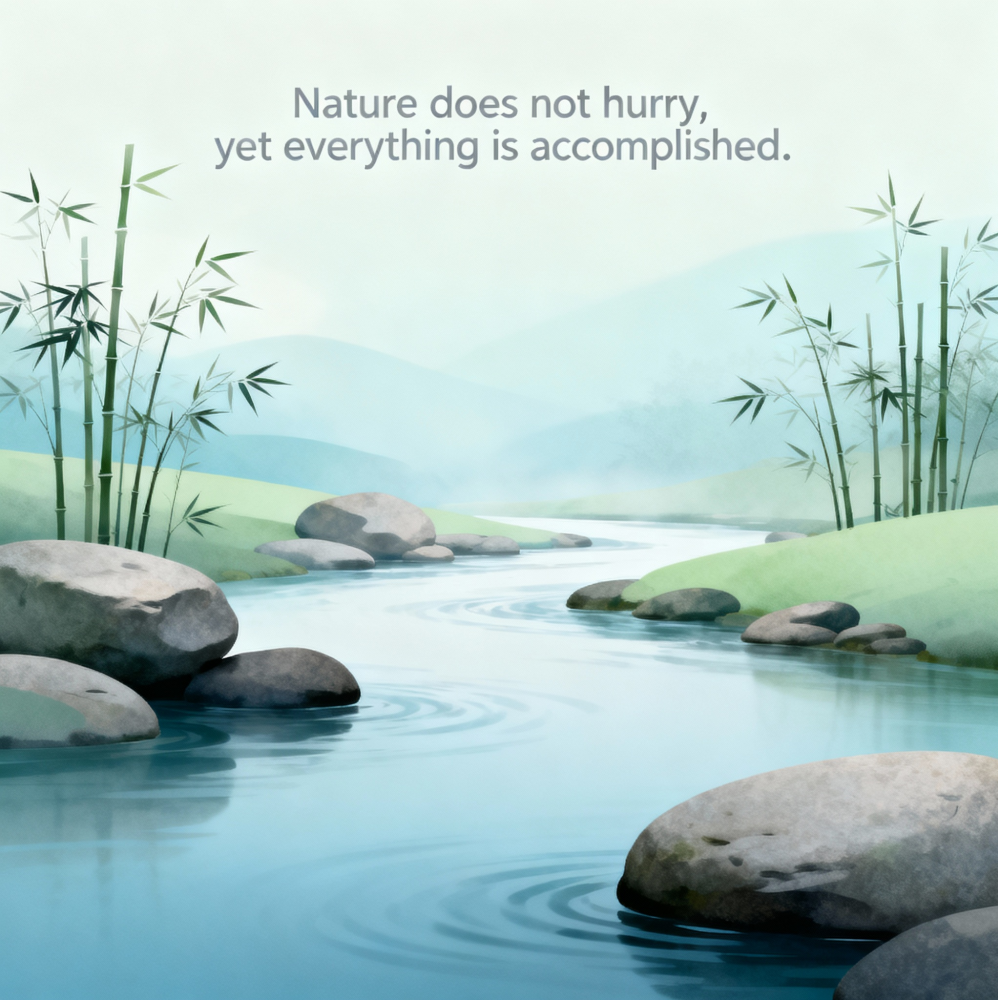
One core Taoist principle is Wu Wei (pronounced “woo-way”). It gets translated as “non-doing” or “effortless action.” That doesn’t mean sitting back and doing nothing. It just means acting with the grain of things, not struggling against them.
As the ancient Taoist text, the Tao Te Ching, puts it: “Nature does not hurry, yet everything is accomplished.” This simple line has saved me more times than I can count.
Stress and anxiety often surge when I’m forcing solutions, double-checking, micromanaging, or overpreparing. You know the feeling: jaw tight, breath shallow, mind spinning scenarios. Wu Wei for stress means catching that moment and stepping back instead of pushing harder.
I like to pause, breathe, and notice: “Wow, I’m gripping this really tightly.” Then I ask, “What if I allowed things to unfold, instead of managing every detail?” More often than not, something changes inside me.
Try it now:
Next time you’re tense, exhale slowly and imagine your effort softening by 10%. Remind yourself of that line from the Tao Te Ching: nature doesn’t hurry, yet everything gets done.
This isn’t some mystical trick. It’s about surfacing and releasing patterns of over effort, letting your natural rhythm return. The next time your mind spirals about a meeting, a conversation, or a deadline, notice the urge to control the outcome and see if you can ride the current instead of fighting it.
Even little experiments with Wu Wei can quiet anxious energy fast. How Wu Wei calms the mind is beautifully simple: it teaches us that we don’t have to exhaust ourselves to be effective.
Ziran and Self-Acceptance: Embracing Your Natural State
Taoism talks a lot about Ziran (pronounced “dzuh-ran”), which means “naturalness” or “spontaneity.” It means being unforced, authentic, just as you are. For Taoism and anxiety, this idea can be a profound relief, especially when you’re tired of holding everything together or keeping up an image.
Most of my own anxiety bubbles up when I judge myself, put on a front, or worry I’m falling short. Maybe you’ve felt that pressure to meet everyone’s expectations, perform at work, or always seem “fine.”
In Taoism, you’re encouraged to drop those roles and let yourself be real. There’s no such thing as a “perfect” state of mind or a flawless you. Being natural matters more than measuring up.
A daily Ziran practice:
Try relaxing the urge to perform for others—or even yourself—just for a few minutes. Ask, “What if I let myself be how I actually feel right now?” You don’t have to fix sadness, tension, or restlessness.
Noticing and accepting your natural state, without adding more labels or pressures, starts to dissolve anxiety on its own.
I like to think of this as presence, not forced meditation. When I pause, take a breath, and let myself be exactly as I am (no fixing, no faking), stress calms down. You don’t stop wanting to improve things, but you stop fighting yourself.
Last week, I caught myself putting on my “enthusiastic voice” during a video call even though I was exhausted. Midway through, I just… stopped. I let my real tiredness show, and you know what? The conversation got better. More honest, more connected. That’s Ziran—dropping the mask and trusting that who you are is enough.
Yin and Yang of Emotion: Balancing Inner Forces
Another Taoist image I lean on is Yin and Yang, two complementary forces that keep life in balance. Yang is about action, striving, and outward energy. Yin is rest, softness, and stillness.
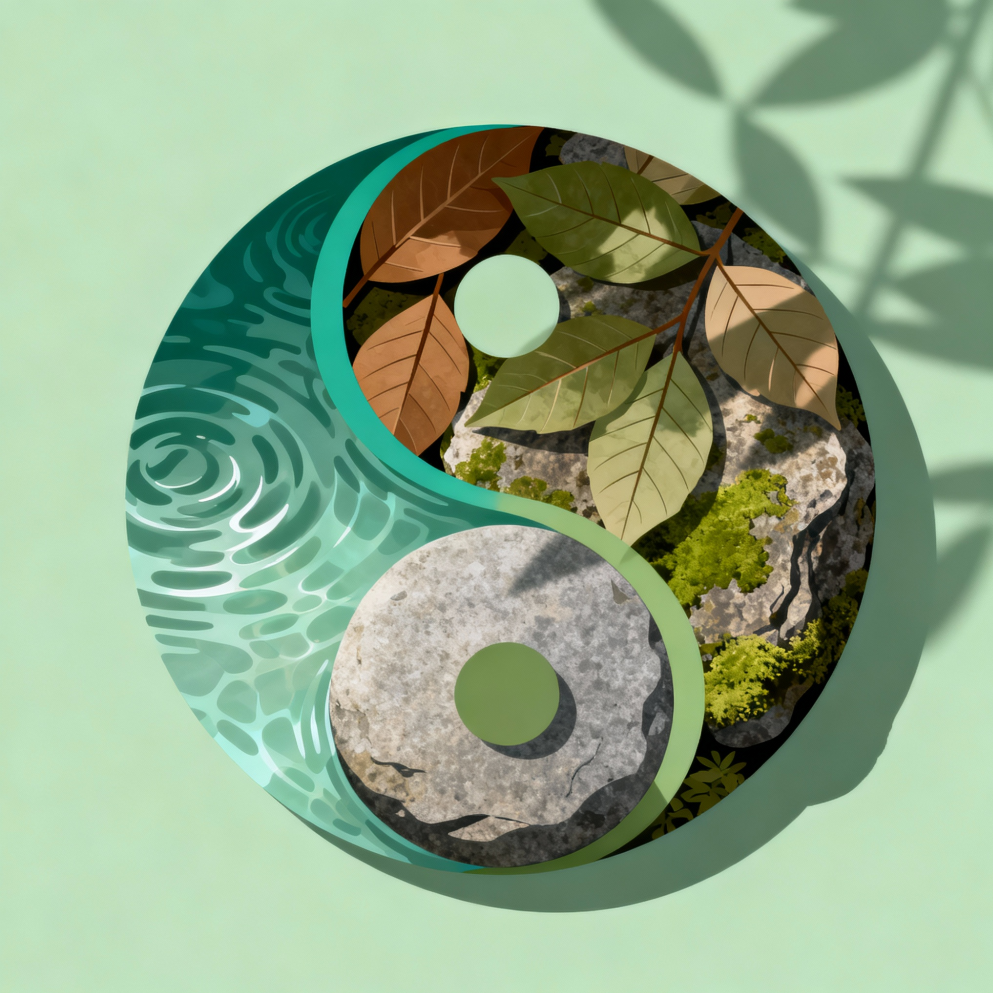
A lot of my anxiety comes from constant Yang: pushing, achieving, and rarely pausing to recharge. When I ignore my need for Yin, stress piles up, and my mind gets loud.
Taoism gently suggests I can invite more balance by letting in silence, relaxation, and gentle reflection to match all the effort. Some days, that means closing my laptop and stepping outside, lying on the grass, or just sitting quietly for a bit. I notice my breathing and let my thoughts slow down.
Balancing practice:
If you end your workday with shallow breaths and a tense jaw, try this: Take three slow, deep breaths. On each exhale, imagine letting go of the day’s tension. That’s Yin in action—giving yourself permission to rest and reset.
Nature does this all the time, cycling between day and night, growth and rest. You don’t have to overhaul your routine. Adding small Yin moments—quiet music, gentle walks, even daydreaming—can help smooth anxiety and bring you back to center.
Over time, it teaches your nervous system a new pattern: it’s safe to relax, not just perform.
Something I’ve noticed is that when I honor my body’s need for rest, my mind feels clearer and more creative. It’s the simplest way to recharge. Regularly inviting Yin isn’t just a stress management tool—it’s a way to reconnect with your deeper self.
Even if it sounds tricky at first, try noticing your own rhythm and see if you can spot places in your day for a quick breath or an extra minute of stillness. Taoism for peace of mind is really about this dance between doing and being.
Empty the Cup: Taoist Simplicity and Mental Clarity
There’s a saying in Taoist circles: “Empty your cup.” It means making space, inside and out.
These days, my cup fills up fast. There’s noise everywhere: notifications, news, endless thoughts. Taoist wisdom for stress relief encourages me to practice simplicity and let go of what I don’t need, inside my mind and in daily life.
Tension builds in mental clutter—the loop of worries, old arguments, self-criticism. Emptying the cup doesn’t mean erasing every thought. It means not holding so tightly to each one.
Try this:
Write down your biggest worries on paper. Read them, then close your eyes and imagine each one as a cloud slowly drifting away. With every breath, see if you can let them float off, leaving room for new ideas or calm.
This practice isn’t about having zero problems. It’s about not carrying them all the time. I find that when I accept “not knowing” or let go of mental clutter, I feel lighter. Simplicity opens space for peace to return.
Sometimes, letting go of needing every answer is the most freeing thing I do all week.
You might even try taking time each week to clear physical clutter—a drawer, a desktop, an inbox. The act of making space in your outer world can have a big effect mentally, reminding your brain that there’s always a chance to renew and reset.
Integrating Taoist Calm into Daily Life
Bringing Taoism and peace of mind together doesn’t happen overnight. I return to these four principles—flow instead of force, natural self-acceptance, balance through Yin and Yang, and emptying the cup—whenever stress peaks.
Practicing these values doesn’t require sweeping lifestyle changes, just a willingness to pay attention and try something different.
Here’s one daily ritual that helps me:
Pause before responding to emails or texts. Ask, “Am I acting from tension or calm?”
Take short breaks outside, even if it’s just a few steps under the sky.
Breathe with awareness while waiting—in traffic, in line, anywhere.
Let myself “not know” everything and resist fixing things immediately.
Try picking just one of these Taoist stress relief practices and see what happens over a week. You might be surprised by how a tiny shift in your approach lets your mind reset.
If tackling all four ideas at once feels like a lot, just start with one. Practice Wu Wei on a stressful day or bring a little Yin in the evening. Watch how your mind and body respond. Every small step toward stillness makes a real difference.
I love how Taoist teachings line up with modern mindfulness. If you want to dig into more, you might enjoy my guide to The Tao of Flow or the piece on Ancient Wisdom for Modern Life. There’s plenty to explore if you enjoy the gentle, practical side of these ideas.
Taoist practices often pair well with mindfulness journaling, nature walks, or even simply sitting quietly for a few minutes. Try experimenting to see what works for you. You might also find value in learning How to Stop Overthinking or exploring Mindfulness Without Meditation.
Returning to the Natural Flow of Life

Peace isn’t something you achieve by grinding harder. Taoist wisdom for stress relief reminds me that calm is stumbled upon, not conquered. It’s about aligning with the flow, relaxing the urge to force, and trusting the natural rhythm of things—even in chaos.
I’ve found that even on the busiest, messiest days, a few moments of Taoist presence are enough to shift my mood. Each time you pause, accept yourself, or let go just a little, you’re learning to ease with life, not push against it.
Stress and anxiety may still come and go, but they become gentler and less sticky. They pass through like weather, and you remember you’re the sky, not the storm.
You don’t need a retreat in the mountains or a break from your whole world to find relief. A tiny shift—breathing, being, letting be—can remind you of your own resourcefulness. You already have what it takes to feel a bit steadier right now.
Here’s what I want you to remember: calm isn’t the absence of stress. It’s your ability to flow through it. That distinction changes everything.
Little shifts truly add up. If you’d like more support, check out guides on How to be Present or tips for letting go. The journey into ease and calm is ongoing, and you’re not alone on the path.
Step by step, Taoism and anxiety can meet—and in that meeting, you find your own gentle strength. No matter what comes next, you can meet it with steadiness and softness.
Frequently Asked Questions
What is Wu Wei and how does it reduce anxiety?
Wu Wei means “effortless action” or “non-forcing.” It reduces anxiety by teaching you to work with life’s natural flow instead of against it. When you stop trying to control every outcome and allow things to unfold, you release the mental tension that fuels anxious thoughts. It’s not about doing nothing—it’s about doing things without struggle or resistance.
How can Taoism help with modern stress?
Taoism offers ancient principles that are surprisingly relevant today. It teaches you to let go of the need to control everything, accept yourself as you are (Ziran), balance action with rest (Yin-Yang), and simplify your mental load. These practices directly counter modern stress triggers like overwork, perfectionism, and constant digital stimulation.
Do I need to meditate to use Taoist wisdom?
Not at all. While meditation can complement Taoist practices, the core principles work through simple awareness and small adjustments in how you approach daily life. Pausing before reacting, taking a mindful breath, or noticing when you’re forcing—these are all Taoist practices that take seconds, not formal meditation sessions.
What’s the first step to practice Taoist calm?
Start with the Taoist Calm Protocol: Next time you feel stressed, pause, take a slow exhale, and ask yourself, “Where am I forcing or controlling right now?” Then soften your effort by just 10%. This tiny shift begins retraining your nervous system to relax into life rather than fight it.
Can Taoism complement therapy or mindfulness?
Absolutely. Taoist wisdom pairs beautifully with modern therapeutic approaches and mindfulness practices. Many therapists incorporate principles like acceptance, non-resistance, and balance into their work. Taoism simply offers a different lens—an ancient framework—for understanding the same truth: peace comes from working with yourself and life, not against it.
Want to see these ideas in action?
Watch my video on “How to Stop Overthinking — The Power of Now in Action” on the Daily Self Wisdom YouTube channel or below. It’s a practical, Tao-inspired guide to bringing calm into real moments.
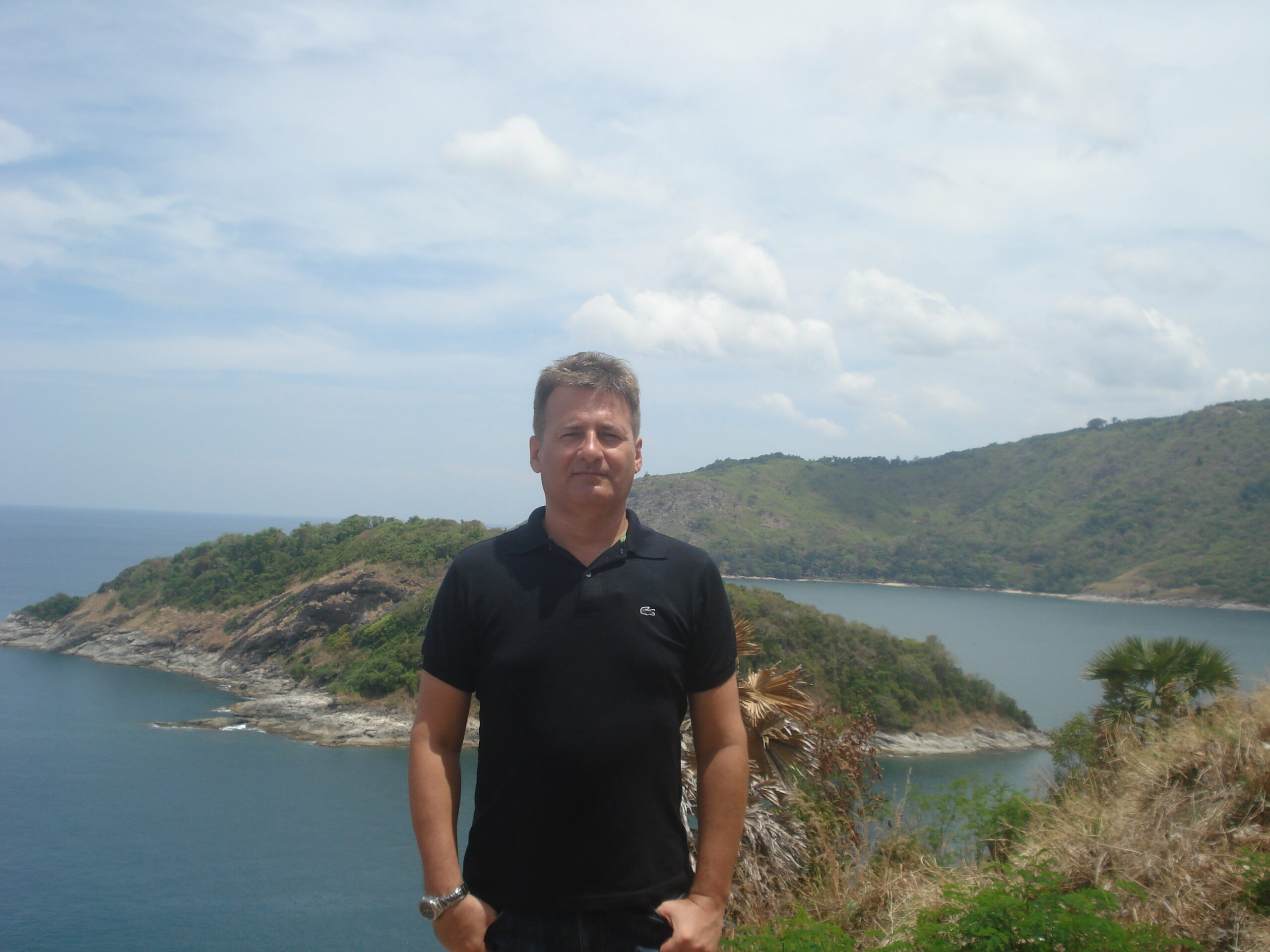
Chris is the voice behind Daily Self Wisdom—a site dedicated to practical spirituality and inner clarity. Drawing from teachings like Eckhart Tolle, Ramana Maharshi, and timeless mindfulness traditions, he shares tools to help others live more consciously, one moment at a time.Learn more about Chris →
Leave a Reply